



Red Brown Desk
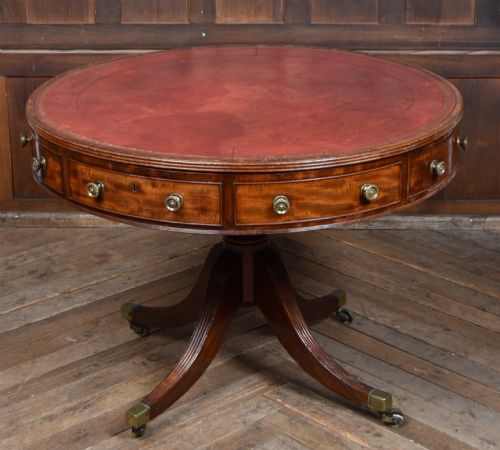
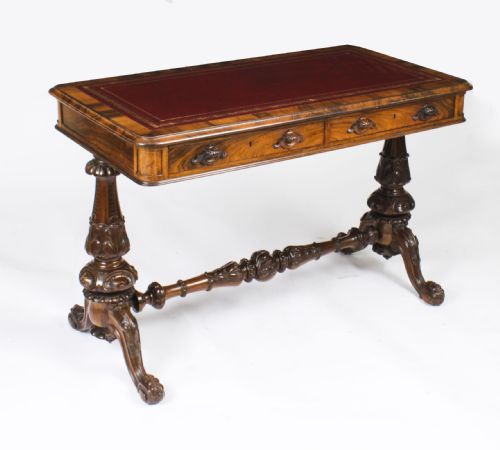
A red brown desk brings warmth and a working surface of leather to a study, built from mahogany, walnut and oak across Georgian and Victorian centuries.
Red Brown Desk
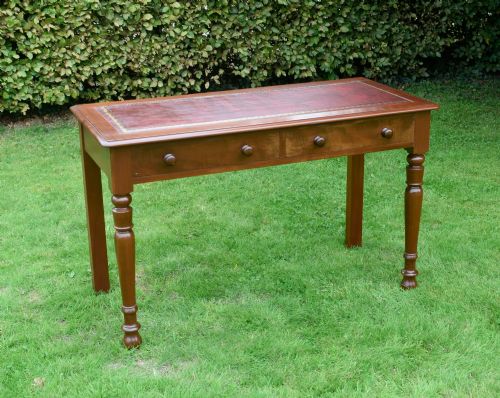
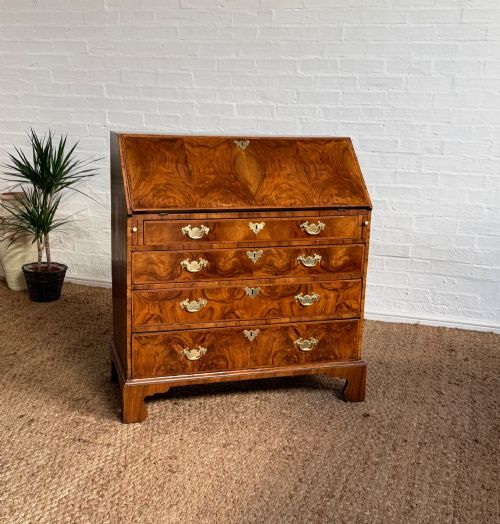
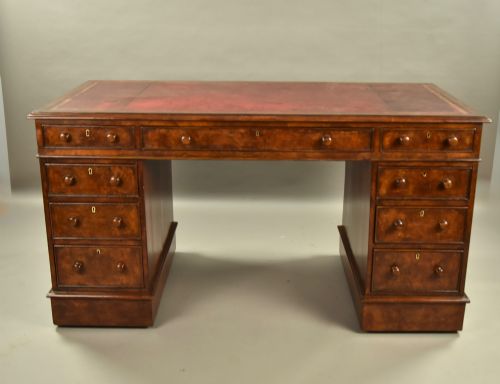
A red brown desk covers pedestal forms, writing tables and bureau styles rendered in mahogany, walnut and oak. These pieces span Georgian, Victorian and Edwardian periods, offering functional work spaces with inset writing surfaces.
The buyer meets pedestal desks with multiple drawers, smaller writing tables with single drawers, and bureau forms. Many incorporate leather writing panels framed in timber.
Originating largely from British workshops of the nineteenth and early twentieth centuries, these writing surfaces serve modern studies through traditional craftsmanship and durable timbers.
How they were made
Cabinet makers utilised dense hardwoods like mahogany, walnut and oak for the primary structures, often incorporating figured veneers to display rich grain patterns. Drawer linings commonly employ secondary timbers joined with hand-cut dovetails.
Writing surfaces were inset with panels of leather, sometimes tooled with gilt decoration around the perimeter. Brass handles, key escutcheons and swivel mechanisms completed the construction of functional office furniture.
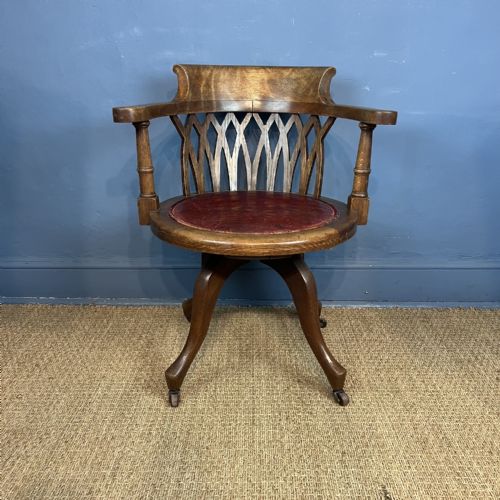
A majolica pottery gnome ornament watches silently over the writing tables and library chairs.
What varies in quality
Quality rests in the selection of timber figures, such as burr walnut or figured mahogany, and the crispness of any carved details. Superior examples maintain original hardware, matched veneer grains and stable carcass construction without excessive restoration.
Internal secondary woods, the neatness of dovetail joints and the thickness of the solid timber top rather than veneer alone separate standard utilitarian pieces from exceptional workshop productions.
Edwards & Roberts·Gillows of Lancaster·Kendrick & Jefferson
The Red Brown Desk Glossary
- Pedestal desk
- A heavy office desk featuring two separate banks of drawers beneath the main writing surface.
- Bureau
- A sloping writing flap that opens down to reveal internal pigeon holes and small drawers above a set of full-width drawers.
- Writing table
- A freestanding table designed primarily for correspondence, usually fitted with one or more shallow drawers beneath the top.
- Dovetail
- A traditional interlocking joint utilised in drawer construction to ensure durable corners without metal fasteners.
- Veneer
- A thin layer of figured timber applied over a secondary wood carcass to display decorative grain patterns.
Red Brown Desk: Frequently Asked Questions
What is a pedestal desk?
A pedestal desk is a large, freestanding piece of furniture consisting of a rectangular top supported by two separate pedestals or banks of drawers. These are typically arranged on either side of a central kneehole space.
Such desks provide substantial storage and a large writing area, often inset with leather or hide panels. They appear frequently in Victorian and Georgian timber forms.
How do I date a wooden desk?
Dating relies on observing construction methods, timber choices and hardware styles across the piece. Georgian examples often show simpler internal drawer linings, while Victorian pieces incorporate heavier pedestal designs and varied veneer figures.
Examining the secondary woods inside drawers and the style of the brass handles helps narrow the period of manufacture. Construction marks and secondary timbers provide further clues to workshop origins.
What timber was used for desks?
Mahogany, walnut and oak form the primary timbers seen in these writing pieces. Cabinet makers selected these dense hardwoods for their durability and rich natural grain patterns.
Secondary woods such as pine or deal often appear inside drawer boxes and internal partitions. Veneers of burr walnut or figured mahogany were frequently applied to primary surfaces for decorative effect.
How do I clean a leather top?
Leather writing surfaces require gentle cleaning with a slightly damp cloth to remove dust and surface grime. Strong chemical cleaners must be avoided to protect the underlying hide and any gilt tooling.
Applying a suitable leather balm or wax helps maintain the suppleness of the material over time. Regular light maintenance preserves the colour and finish of the writing panel.