





Red and Gold Lacquer
Red and gold lacquer pieces bring rich orientalist warmth to a room through layers of vermilion pigment and brilliant gilt highlights.
Red and Gold Lacquer
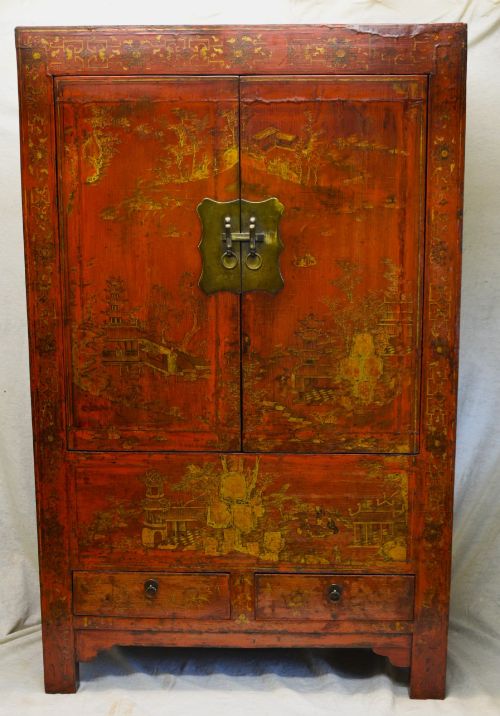
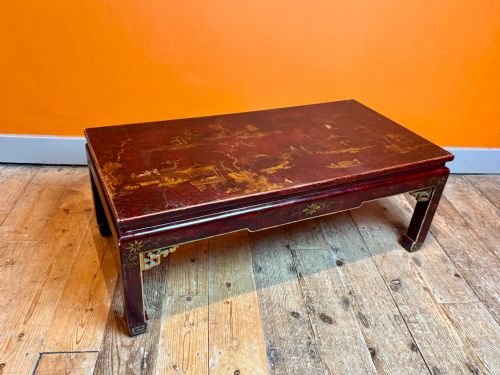
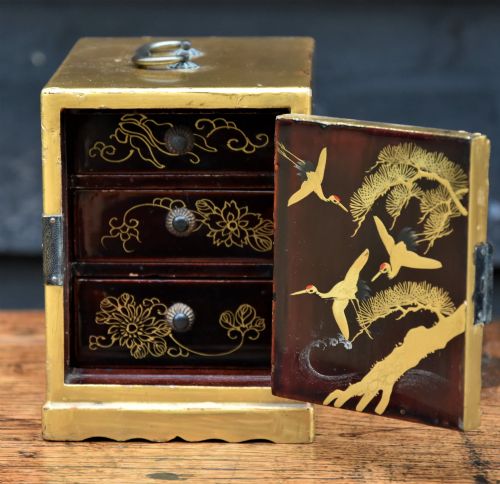
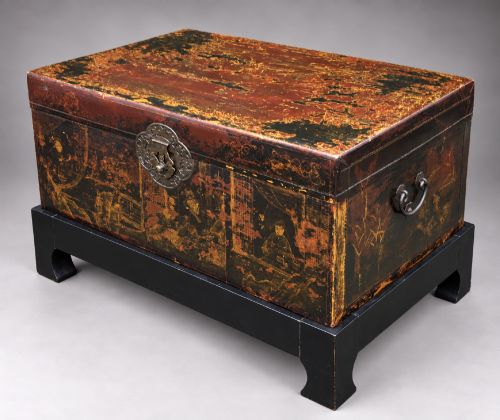
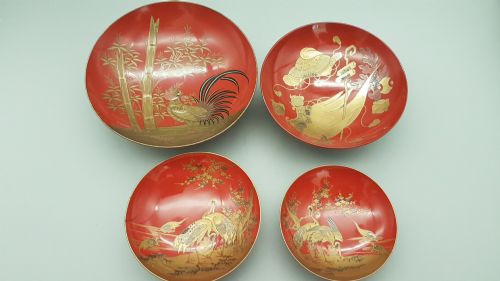
Red and gold lacquer encompasses functional and decorative items ranging from large coffee tables and blanket boxes to smaller items such as jewellery boxes and sake cups. The selection spans distinct cultural traditions, including Chinese Chinoiserie, Japanese Meiji pieces, Kashmiri papier-mâché, and Georgian or Regency European interpretations.
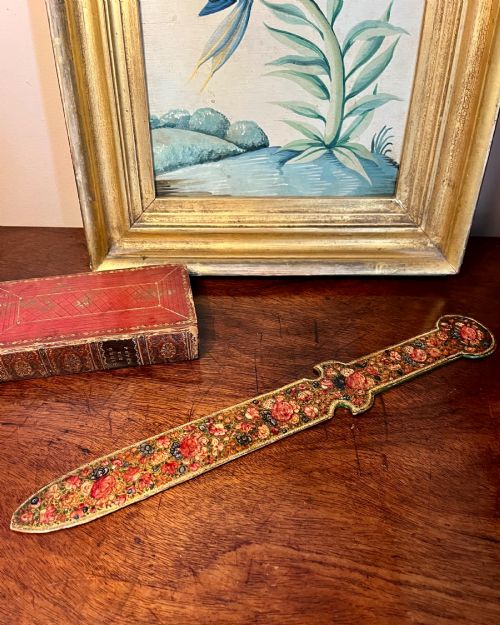
Mirrors and cabinets dominate the larger furniture forms, often utilising Chinoiserie styles or Japanned techniques developed in Britain and Italy. Smaller decorative objects like letter openers and trays display intricate surface painting that brings depth to domestic interiors.
Materials and Techniques
Wood serves as the primary structural foundation for most pieces, though papier-mâché appears in specific trays and letter openers. Artisans applied layers of lacquer to seal the base before building up decorative schemes.
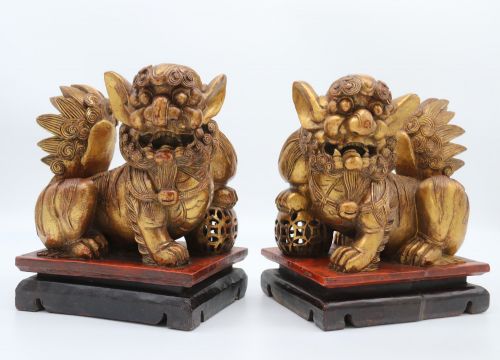
Gold leaf and paint provide the striking contrasting details characteristic of these items, often finished with giltwood accents or brass fittings. The interaction between red surfaces and gold leaf defines the visual identity of the craft.
Red and Gold Lacquer Retail Price Guide 2026
Typical asking prices for red and gold lacquer among the pieces listed under this phrase on Sellingantiques today, from the lower quarter to the upper quarter. They describe what is for sale here now, not the wider market.
Several sets of tiny sake cups quietly wait inside their boxes, ready for a very miniature toast.
Assessing Quality and Execution
The precision of the painted or carved surface decoration distinguishes finer examples from simpler production. Subtle variations in the application of gold leaf and the depth of the red lacquer layers indicate the maker's skill.
The integrity of the underlying wooden or papier-mâché structure maintains the piece over centuries. Original decorative surfaces hold greater interest for collectors than later overpainting or restoration work.
James Smith London
The Red and Gold Lacquer Glossary
- Chinoiserie
- European decorative style reflecting Chinese artistic influences, popular across furniture and mirrors. It employs painted scenes of figures and landscapes.
- Japanning
- European imitation of East Asian lacquerwork, developed in the seventeenth century. It uses heat-treated varnishes and gold dust to mimic oriental finishes.
- Meiji
- Japanese historical period spanning the late nineteenth and early twentieth centuries. Items from this era often feature refined lacquer techniques.
- Papier-mâché
- Composite material made from paper pulp or layers of paper bound with glue. It provides a lightweight base for painted lacquer trays and small accessories.
- Giltwood
- Wood that has been treated with gold leaf or gold paint. It frequently frames mirrors and supports cabinets in matching red and gold schemes.
Red and Gold Lacquer: Frequently Asked Questions
What is red and gold lacquer?
Red and gold lacquer refers to decorative objects and furniture finished with vibrant red pigments and detailed gold leaf or painted highlights. These pieces draw from both Asian traditions and European revival styles.
The category includes items ranging from substantial cabinets and mirrors to delicate boxes and sake cups, spanning several centuries of craftsmanship.
How do I care for lacquer furniture?
Lacquer surfaces require gentle handling to protect the delicate layers of paint and gold leaf from scratching or moisture damage. Dusting with a soft, dry cloth preserves the finish without abrasive cleaners.
Keep these pieces away from direct sunlight and extreme temperature fluctuations to prevent the wood or lacquer from cracking over time.
What is the difference between Chinoiserie and Japanning?
Chinoiserie is a broader European style inspired by general Chinese and East Asian aesthetics, expressed through painted and carved motifs. Japanning is a specific European varnishing technique designed to replicate genuine Japanese lacquer.
Both methods result in the characteristic red and gold visual language seen on eighteenth and nineteenth-century furniture and mirrors.
Where were these pieces made?
The pieces originate from diverse workshops across East Asia, including China and Japan, as well as Kashmir. European makers in Britain and Italy also produced significant quantities using local materials.
This geographic spread accounts for the variety of forms, from Meiji period sake cups to Georgian English wall mirrors.