


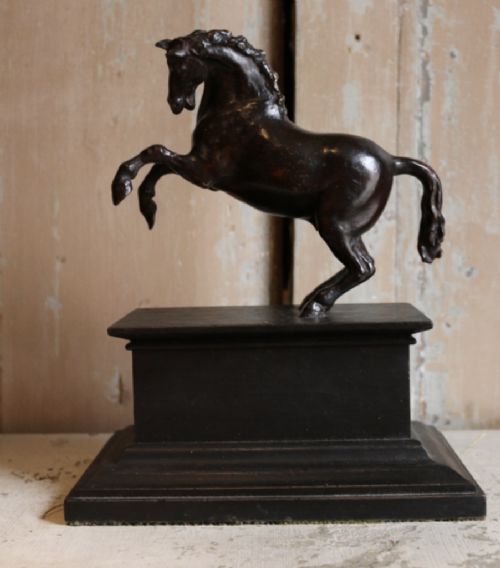



Rearing Horse Statue
A rearing horse statue captures dynamic equestrian energy, bringing sculptural movement and historical presence into a room.
Rearing Horse Statue
When you search for a rearing horse statue, you are looking at dramatic sculptural representations of horses balanced on their hind legs, capturing intense motion. The pieces available here span several centuries and styles, ranging from heavy metal casts to stitched organic hides.
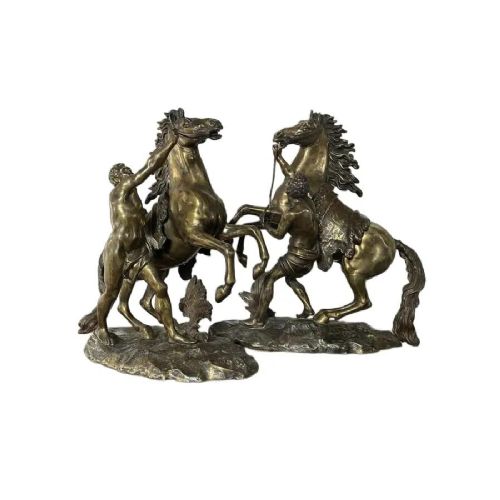
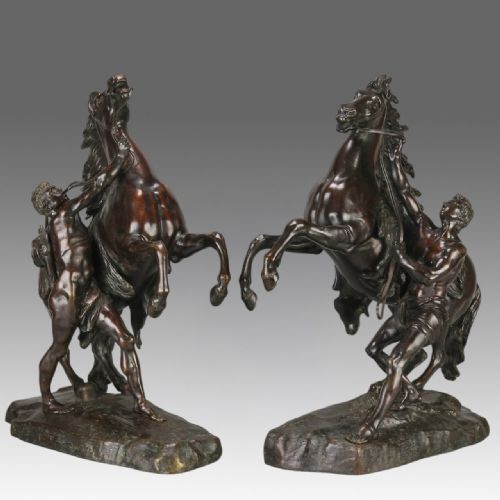
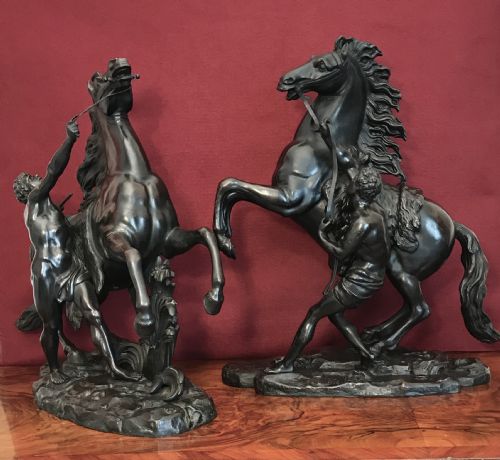
The most common examples you will meet on this page are Victorian bronze interpretations of the famous Marly Horses after Guillaume Coustou. These French Neoclassical and Baroque-influenced works depict straining equines alongside attendants, showing the enduring popularity of this powerful motif.
How they were made
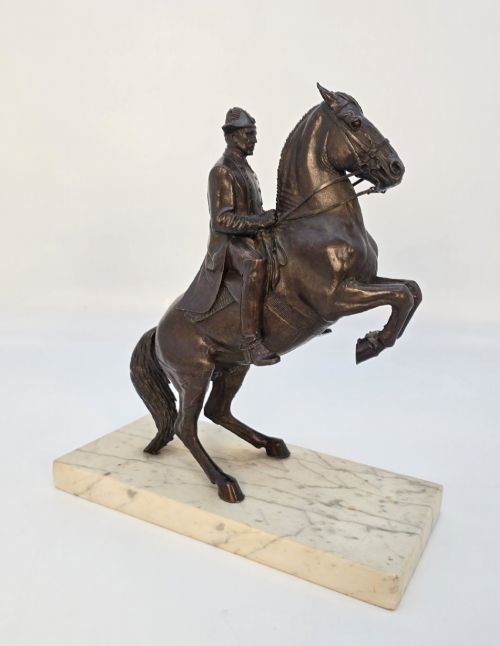
The metal statues rely on traditional foundry methods, using bronze and brass to achieve muscular definition and weighty stability. Many of these pieces feature a patinated finish that enhances the texture of the horse's coat and the tension in its limbs.
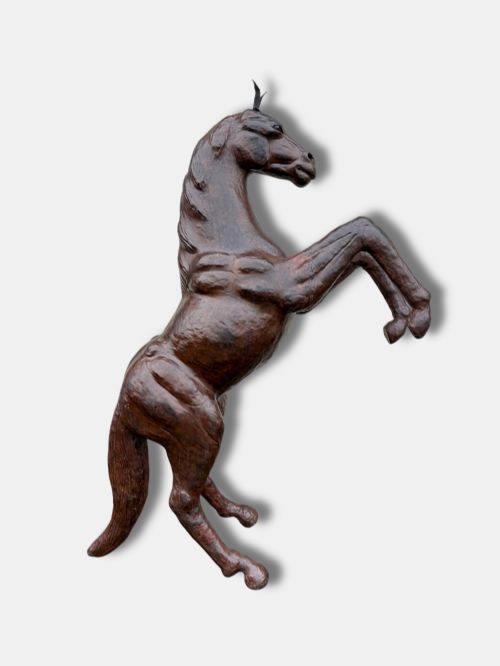
Leather models from the Arts and Crafts period demonstrate an entirely different material approach, utilising moulded and stitched hide over supportive structures. This technique creates a tactile, substantial figure with visible craftsmanship in every seam.
Rearing Horse Statue Retail Price Guide 2026
Typical asking prices for rearing horse statue among the pieces listed under this phrase on Sellingantiques today, from the lower quarter to the upper quarter. They describe what is for sale here now, not the wider market.
Bronze dominates the metal selection, while leather appears exclusively within the Arts and Crafts period.
What varies in quality
Quality in these sculptures rests upon the fidelity of the anatomical modelling and the crispness of the casting or shaping. Superior examples display a deep understanding of equine anatomy, where the strain of the muscles and the torsion of the spine look convincing and fluid.
The sophistication of the surface finish dictates the visual depth of the piece, with richer patination and careful hand-finishing distinguishing finer works. Maker attribution also elevates certain pieces, particularly those referencing established sculptors such as Coustou or Crozatier.
The Rearing Horse Statue Glossary
- Patinated bronze
- Bronze treated with chemical solutions to produce a specific surface colour and aged appearance. This finish protects the underlying metal while accentuating sculptural details.
- Marly Horses
- Monumental marble sculptures commissioned for the Chateau de Marly, depicting horses restrained by grooms. Reduced bronze copies became immensely popular during the nineteenth century.
- Arts and Crafts
- A design movement valuing handcraftsmanship and traditional materials over industrial mass production. Leather models from this period emphasise visible stitching and organic textures.
- French Neoclassical
- A style reviving classical Roman and Greek artistic principles, emphasising balance, heroic scale, and dramatic action. This aesthetic heavily influences nineteenth-century equestrian bronzes.
Rearing Horse Statue: Frequently Asked Questions
What periods do these statues come from?
The pieces span from the seventeenth century through the Victorian era up to the mid twentieth century. This timeline covers diverse aesthetic movements including Baroque, French Neoclassical, and Arts and Crafts.
Victorian interpretations and late nineteenth-century bronze casts form a substantial portion of the available selection. Earlier seventeenth-century examples and mid-century studies appear less frequently.
Which materials were used for these sculptures?
Makers utilised bronze and brass most frequently, often applying patinated finishes to enhance surface texture. Leather also appears in specific Arts and Crafts models.
Supporting elements occasionally incorporate marble, wood, and glass. Each material contributes a distinct weight and visual character to the finished piece.
Who made the famous Marly Horse copies?
Many nineteenth-century bronze casts derive from the original monumental sculptures created by Guillaume Coustou. Later French makers such as Charles Crozatier also produced notable equestrian figures.
These pieces were frequently cast as pairs, depicting the horses rearing alongside their grooms. They reflect the enduring influence of French academic realism on nineteenth-century decorative arts.
How should I display a heavy bronze statue?
Due to the substantial weight of bronze and marble compositions, place these sculptures on sturdy, level furniture. Ensure the support can comfortably bear the concentrated load of the metal base.
Keep the pieces away from direct heat sources and moisture to protect the patinated metal surfaces. Regular dusting with a soft, dry cloth helps maintain the finish without harming the material.