
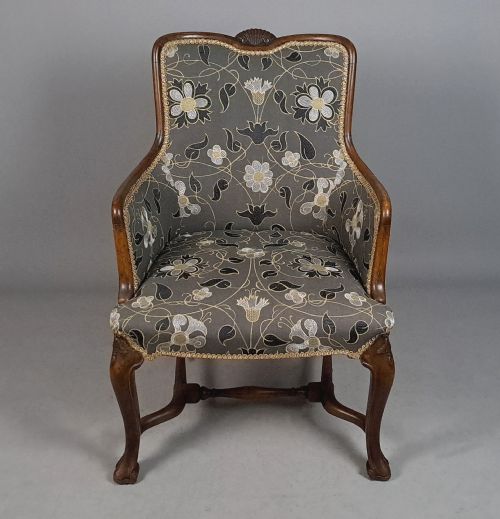


Queen Anne Style Wing Chair
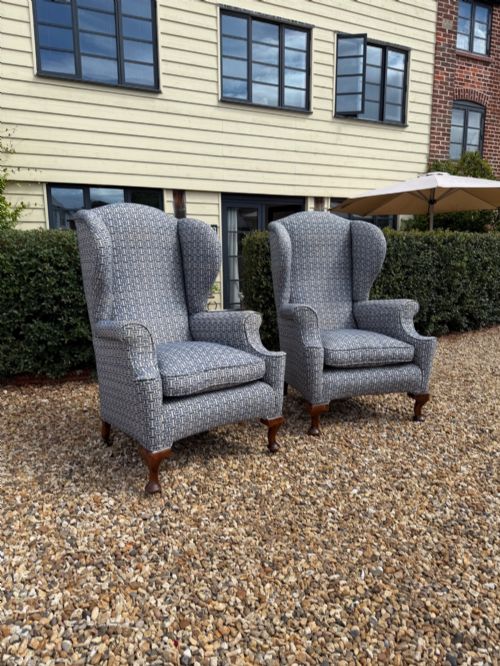
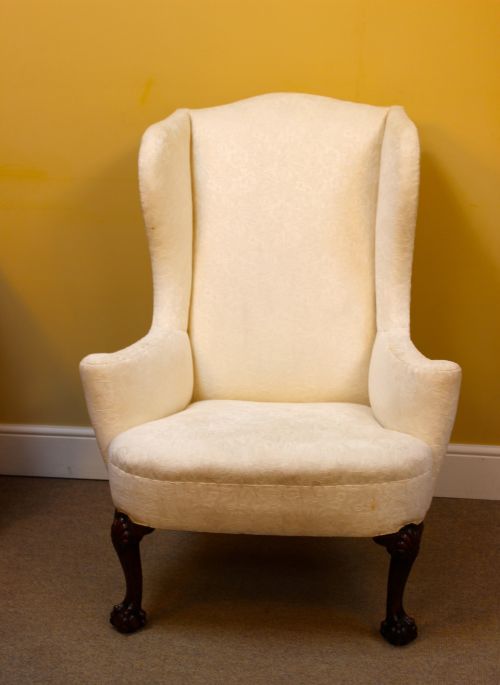
A queen anne style wing chair wraps you in upholstered comfort, offering high sides and padded wings that keep fireside warmth close.
Queen Anne Style Wing Chair
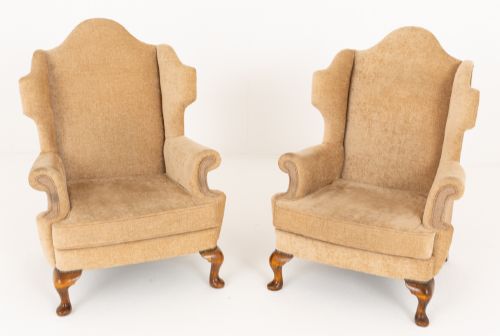
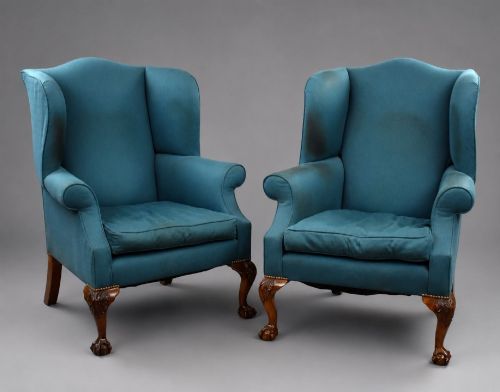
A queen anne style wing chair is an upholstered armchair designed with protective side panels, known as wings, attached to the arms and back to block draughts. The pieces seen here span from the eighteenth century through nineteenth and twentieth century revivals, capturing the enduring appeal of the form.
The version most commonly met on this page is the walnut framed revival piece from the nineteen-twenties or late Victorian decades. These chairs combine deep seat padding with traditional proportions, often sitting upon cabriole legs.
Makers through the nineteenth and twentieth centuries adapted the historic silhouette into fireside armchairs and barrel backed variants. Walnut and mahogany woods feature prominently alongside various fabric, leather, and hide coverings.
Materials and construction
Makers shaped the structural frames from hardwood, selecting walnut and mahogany for visible elements such as legs and arm supports. Beech and general timber also appear in underlying structures.
Upholstery relies on traditional textiles, including damask fabric, velvet, and textile coverings, alongside leather and hide. Padding and webbing secure the sprung seat and high winged back.
Those wings were originally designed to trap heat from the fire and keep your ears warm on a drafty evening.
Distinctions in quality
The refinement of the wooden frame sets examples apart, particularly the carving and proportion of the cabriole legs. Smoother lines and better timber selection elevate a piece above simpler framing.
Upholstery execution and the choice of covering material dictate the tactile success of the chair. Finer textiles, damasks, and well-fitted leather elevate the seating experience.
The Queen Anne Style Wing Chair Glossary
- Cabriole leg
- A furniture leg that bends outward in a convex curve and tapers inward in a concave curve, ending in a pad or foot. This form derives from classical furniture design and defines many revival seating pieces.
- Wingback
- An upholstered chair back featuring lateral projections designed to shield the face from fireside heat or cold draughts. These upholstered extensions form the signature silhouette of the armchair.
- Barrel back
- A seating form where the back and arms form a single, continuous semi-circular curve. This creates a deeply enclosed seat distinct from traditional flat-backed chairs.
- Damask fabric
- A reversible figured fabric woven on a jacquard loom, featuring patterns created through contrasting warp and weft satin weaves. It provides a textured surface for traditional upholstery.
- Hide
- Animal skin prepared for upholstery, offering a durable and smooth finish. This material appears on late nineteenth and twentieth century seating.
Queen Anne Style Wing Chair: Frequently Asked Questions
What is a queen anne style wing chair?
A queen anne style wing chair is a high-backed upholstered armchair featuring protective side wings designed to block draughts. These pieces draw on eighteenth-century design principles.
Most examples found on the market stem from nineteenth and twentieth century revival periods, utilising walnut frames and varied textile coverings.
How do I date an older wing chair?
Dating relies upon examining the timber, construction methods, and upholstery techniques visible beneath the surface. Walnut framing and specific turning styles offer chronological clues.
Many pieces reflect nineteenth or early twentieth century revival craftsmanship rather than eighteenth-century origins.
Are these chairs comfortable for daily use?
The deep padding and high back offer substantial physical support, making them suitable for prolonged sitting by a fireside. The enclosed wings provide a sense of physical shelter.
Some vintage examples may require re-upholstery to restore optimal seating comfort and interior padding.
What materials were used for the frames?
Hardwood frames form the structural core of these armchairs, with walnut and mahogany appearing frequently in surviving pieces. Beech was also utilised for internal framing components.
Visible woodwork is typically polished or stained to highlight the grain of the timber.