

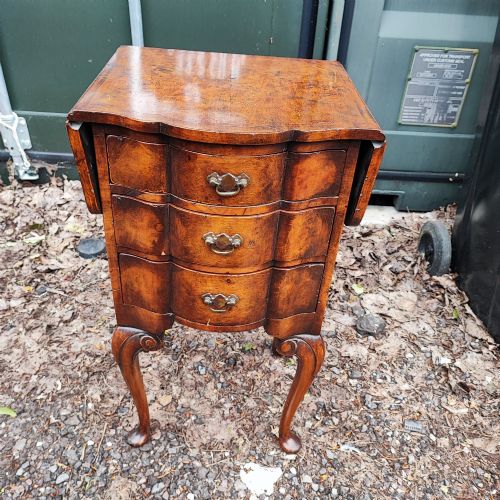


Queen Anne Nightstand Table
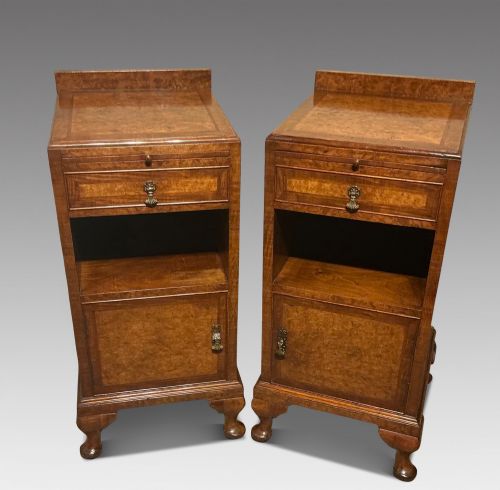
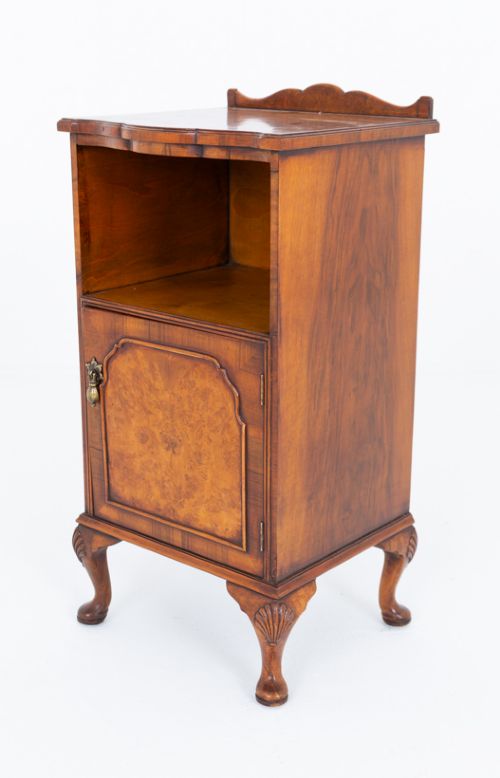
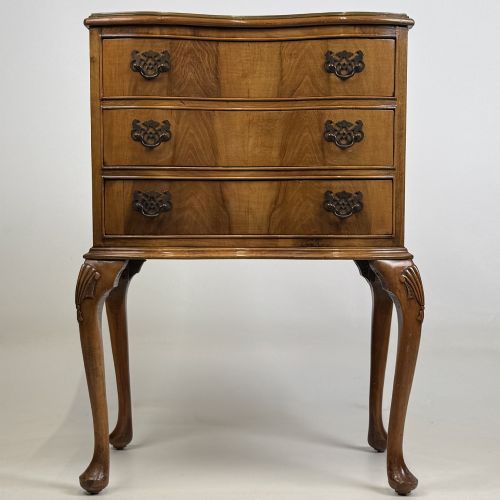
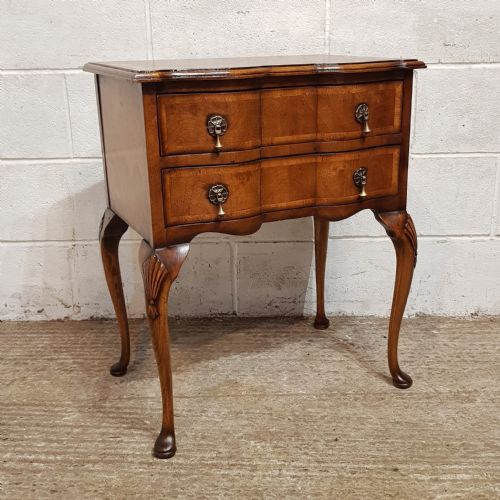
These queen anne nightstand table pieces bring walnut and burr walnut charm to the bedside, offering elegant period form for everyday use.
Queen Anne Nightstand Table
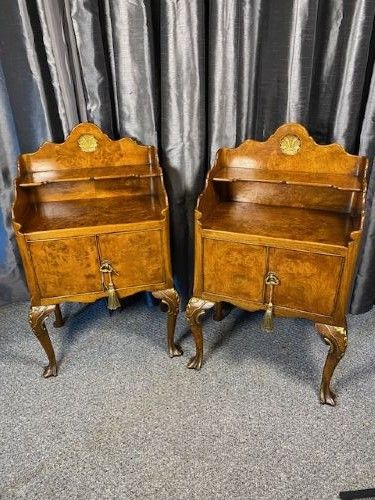
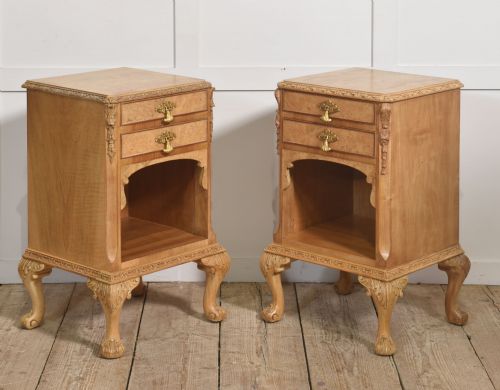
Most examples date from the nineteen twenties and nineteen thirties, alongside pieces from nineteen ten, nineteen hundred, and the Edwardian period. You will frequently encounter matching pairs of bedside cabinets alongside individual lamp tables and compact chests of drawers.
The forms draw heavily upon Queen Anne design principles, incorporating characteristic silhouettes executed in rich timber. These pieces bridge the gap between historical aesthetics and twentieth century domestic practicality.
What varies in quality
The distinction between standard examples and the finest pieces lies in the selection of the wood veneer and the crispness of the shaping. Burr walnut with deep, striking figures elevates the visual presence of a bedside cabinet.
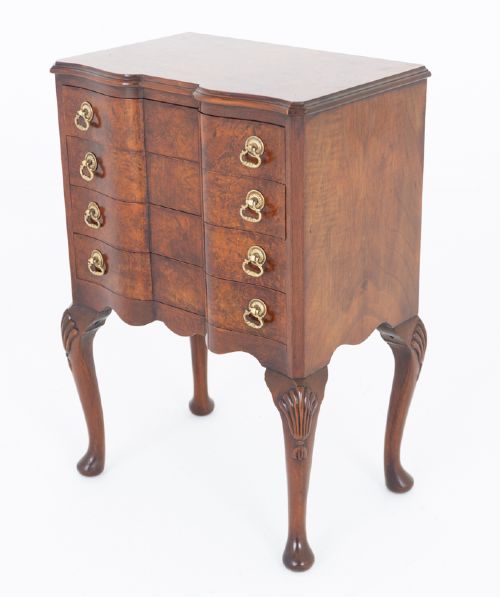
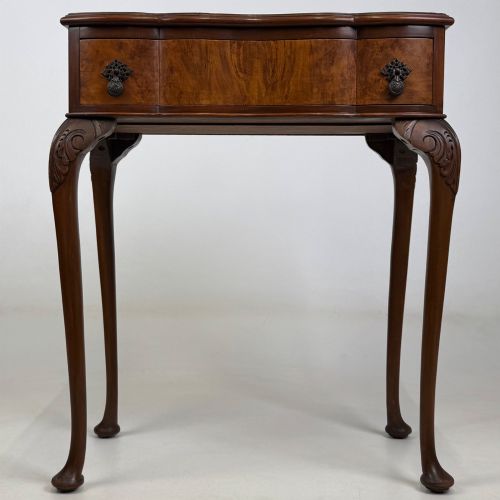
Proportion and cabinetwork finesse also separate the ranges. Superior items display harmonious curves, particularly on serpentine and bowfront forms, paired with balanced joinery that stands the test of time.
One industrious maker even fitted a serpentine front to keep midnight essentials from rolling onto the floor.
Maple & Co
The Queen Anne Nightstand Table Glossary
- Burr walnut
- A specialised wood veneer taken from the wart-like growths on walnut trees, prized for its swirling and intricate grain patterns. It provides a highly decorative surface on cabinet fronts and tabletops.
- Queen Anne style
- A revival aesthetic drawing on eighteenth-century British design, noted for graceful curves and refined proportions. It defines the silhouette of many twentieth-century bedside tables and cabinets.
- Bedside cabinet
- A closed piece of furniture designed to sit beside a bed, usually featuring a door or drawers for storage. These units keep nighttime essentials neatly tucked away.
- Side table
- A versatile small table intended for placement against a wall or beside seating. In bedroom settings, these frequently serve as lamp stands or nightstands.
- Tray top
- A tabletop finished with a raised rim or edge to prevent items from rolling off. This practical detail appears on select occasional tables.
Queen Anne Nightstand Table: Frequently Asked Questions
What periods do these nightstands come from?
The pieces seen here belong to the early twentieth century, spanning from nineteen hundred through the Edwardian era and into the nineteen thirties. They represent revival movements rather than original eighteenth-century production.
Craftsmen of this later period reinterpreted historical aesthetics to suit contemporary homes, utilising walnut veneers and traditional cabinet forms.
Are pairs common for these bedside cabinets?
Matching pairs appear frequently alongside individual tables. Finding a true pair allows for symmetrical arrangement on both sides of a bed.
Makers often produced these cabinets in sets to meet the demands of twentieth-century bedroom styling.
How do I identify Queen Anne style?
Queen Anne style is recognised through curved lines, polished wood surfaces, and restrained ornamentation. Cabinets often feature shaped fronts and refined proportions without heavy carving.
This aesthetic prioritizes smooth silhouettes and the natural beauty of figured timber.
What woods are used in these pieces?
Walnut is the predominant timber across this selection, appearing in both plain and highly figured forms. Burr walnut veneer provides dramatic, swirling patterns on prominent surfaces.
Supplementary materials include mahogany and brass hardware used for pulls and handles.
How can I use a nightstand table in a modern bedroom?
These compact cabinets and tables fit comfortably beside modern beds while offering concealed storage or surface space for a lamp. Their modest proportions suit smaller spaces without dominating the room.
They bring historical character and warmth to contemporary interiors through rich wood tones.