


Quarter Sawn Oak
Quarter sawn oak furniture brings distinctive medullary rays and enduring strength to sideboards, tables, and cabinets from the Victorian era to the 1930s.
Quarter Sawn Oak
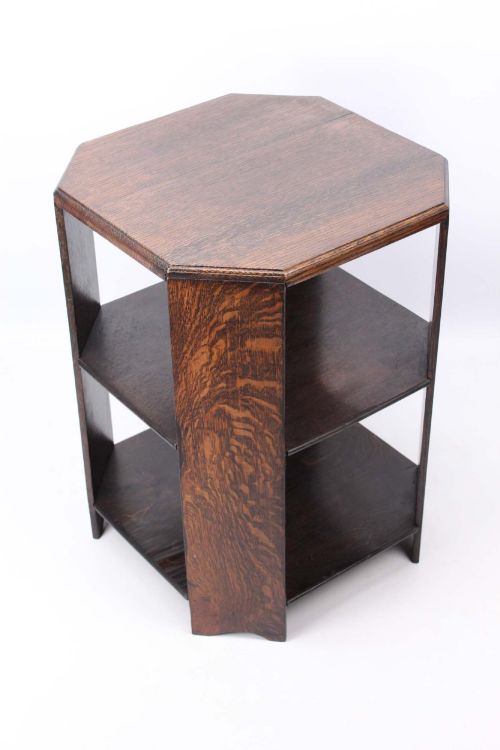
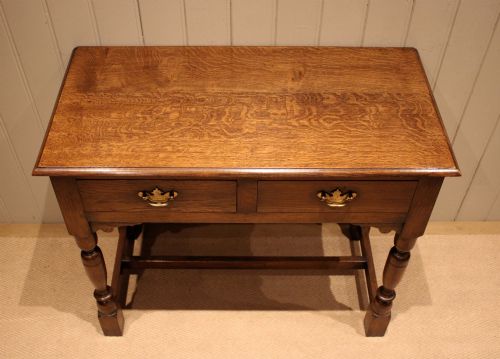
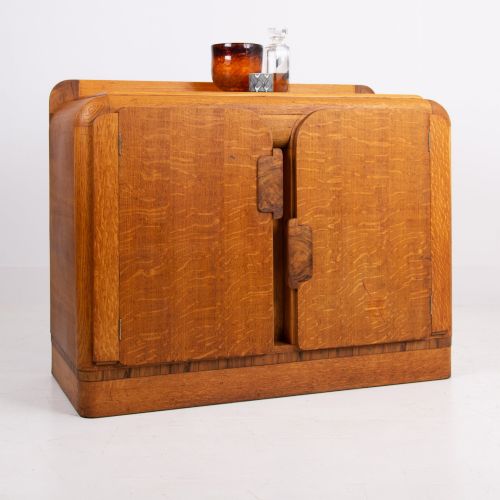
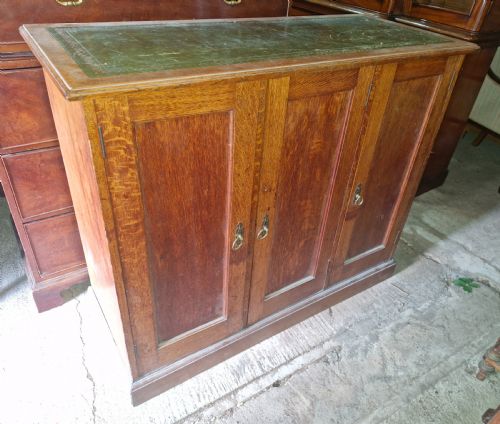
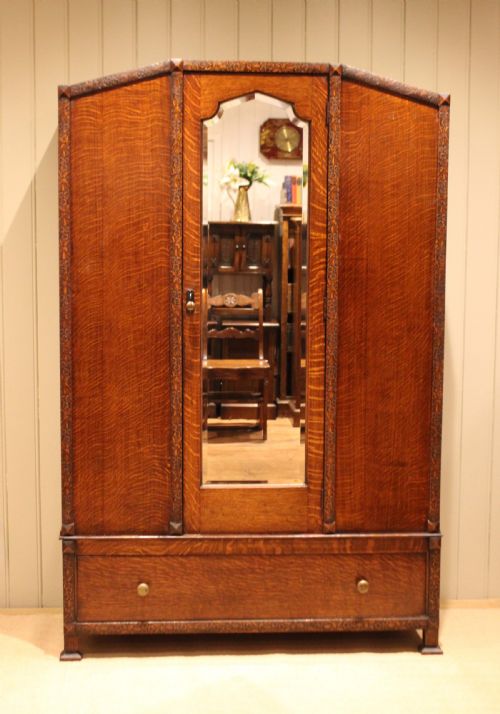
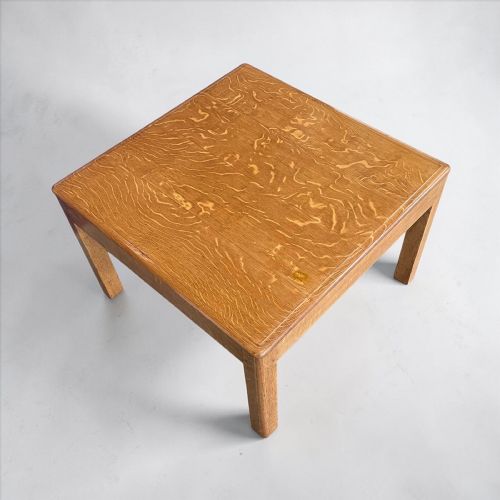
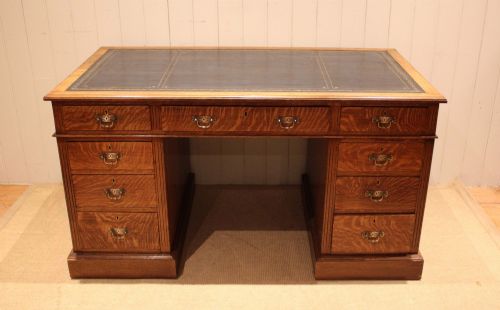
The version most commonly met on this page is the solid oak table or storage cabinet from the Arts and Crafts and Edwardian periods, often linked to prominent workshops. These items display the characteristic figuring produced by cutting the timber at right angles to the growth rings, creating a striking aesthetic that defines the style. Side tables, wardrobes, and dressers from these decades dominate the available forms.
Assessing Quality in Quarter Sawn Oak
The distinction between ordinary production and finer items rests upon the prominence and consistency of the quartered oak figuring across the primary surfaces. Superior examples display dense, evenly distributed medullary rays that catch the light, paired with thoughtful proportions and restrained ornamentation suited to the Arts and Crafts or Art Deco aesthetic.
Construction integrity and original hardware also dictate the standing of a piece, with maker-labelled items or attribution to known workshops commanding greater interest. The handling of edges, drawer linings, and the integration of functional elements like adjustable shelves or drop-front mechanisms reflect the underlying standard of the maker's workshop.
Some tables hide clever folding mechanisms for games, proving that historical ancestors enjoyed a secret card night just as much.
Heals·Gomme·Betty Joel·Carters of London
The Quarter Sawn Oak Glossary
- Medullary rays
- The ribbon-like cellular structures radiating from the centre of a tree trunk that become visible as shimmering flakes when timber is quarter sawn.
- Quarter sawn
- A method of milling logs where the timber is cut perpendicular to the growth rings, producing stable boards with pronounced grain figuring.
- Arts and Crafts
- A design movement spanning the late nineteenth and early twentieth centuries that emphasised honest construction, simple forms, and visible handcraftsmanship.
- Gateleg table
- A dining or occasional table featuring hinged leaves supported by swing-out legs that resemble a swinging gate.
- Book matched
- A technique where two adjacent wood veneers or boards are opened like a book to create a symmetrical mirrored pattern across a surface.
Quarter Sawn Oak: Frequently Asked Questions
How do I identify quarter sawn oak?
Look for distinctive, flake-like patterns and straight grain lines across the timber surface. These markings are the medullary rays exposed by radial cutting.
This grain structure not only provides a unique decorative appearance but also indicates a stable board less prone to warping over time.
What periods are common for these pieces?
Most items originate from the late Victorian and Edwardian eras through to the 1920s and 1930s. The Arts and Crafts movement heavily influenced furniture production during this timeframe.
You will frequently encounter pieces reflecting styles such as Gothic Revival, Art Deco, and Jacobean Revival alongside plain Edwardian designs.
How were these tables and cabinets used?
They served primary functions in dining rooms, libraries, and hallways as gateleg tables, sideboards, chests of drawers, and bookcases. Many incorporated clever mechanisms for adjustable heights or folding games surfaces.
Their robust construction made them suitable for heavy daily use in domestic and professional settings alike.
How do I care for antique oak furniture?
Maintain the wood by keeping it away from direct heat sources and fluctuating humidity. Apply traditional beeswax periodically to nourish the surface and preserve the finish.
Avoid using modern silicone-based sprays, which can penetrate the grain and damage the antique patina over time.