


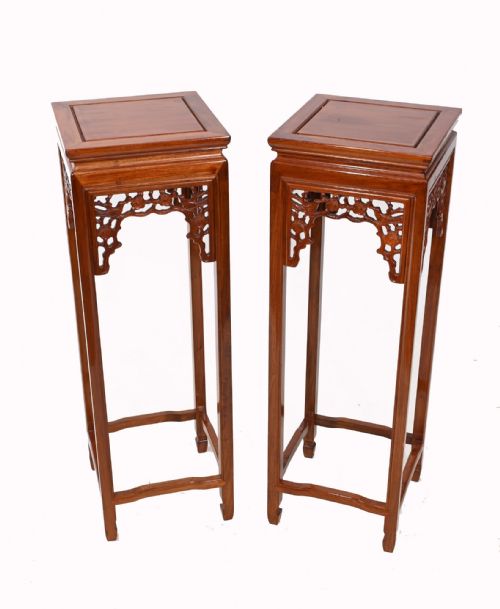

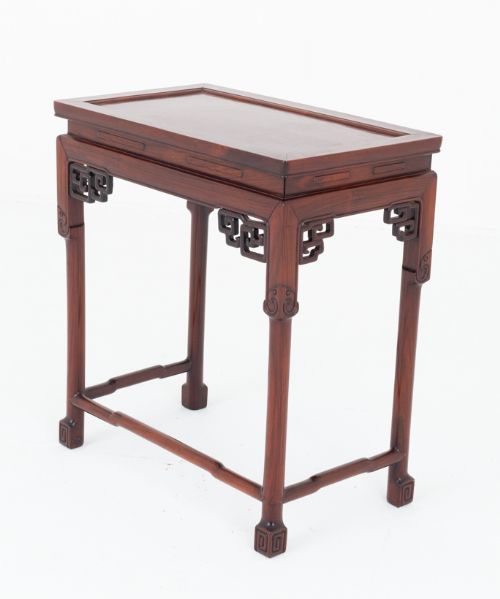


Qing Style Side Table
A qing style side table brings classical Chinese form and dense timber into a room, offering a sturdy surface with distinct historical character.
Qing Style Side Table
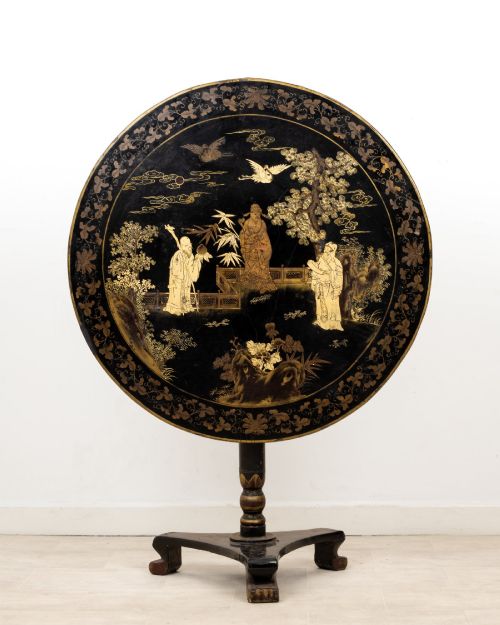
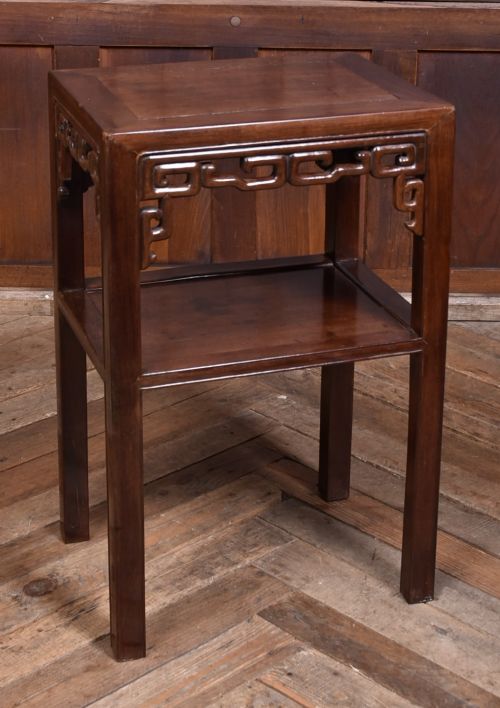
A qing style side table encompasses a variety of low tables, console tables, and plant stands produced across the nineteenth and early twentieth centuries. These pieces draw upon traditional Chinese forms, ranging from altar tables with upturned ends to nested tables and small occasional tables set on corner legs.
The versions most frequently met on this page date from the Victorian era up to the nineteen-twenties, often created for export or within traditional Chinese workshops. They serve practical roles as lamp tables, jardiniere stands, or display surfaces while retaining distinct regional joinery and proportions.
Materials and Construction
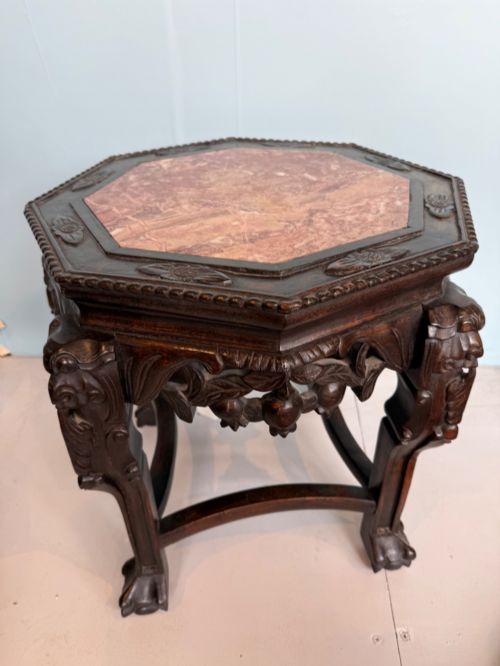
Makers utilised dense timbers such as hardwood, rosewood, elm, and huanghuali, selecting them for their natural grain and structural strength. Surface decoration frequently incorporates inset marble panels, mother of pearl inlay, lacquer, and gold leaf.
Joinery relies on traditional interlocking techniques that allow the wood to expand and contract without metal fasteners. Carved details and turned elements define the frames of console tables and pedestal stands alike.
Listings feature pieces spanning the eighteenth century to the nineteen-twenties, constructed from elm, rosewood, and hardwood with marble and lacquer accents.
Craftsmanship and Material Selection
The standard of a qing style side table rests upon the choice of timber and the precision of the carving. Dense, heavily figured hardwoods and well-matched grain patterns indicate superior execution, whereas simpler secondary timbers appear on more utilitarian pieces.
The integration of inset marble, lacquer work, or mother of pearl inlay demonstrates the maker's skill. Clean joinery without excessive adhesive or replacement parts distinguishes finer examples from later reproductions or heavily altered items.
The Qing Style Side Table Glossary
- Altar table
- A long, narrow console table traditionally featuring upturned flanges at the short ends. These pieces originated in temples and formal halls before finding a place in Western domestic interiors.
- Jardiniere stand
- A tall, compact pedestal table designed to hold a ceramic flower pot or plant bowl. They often feature circular or octagonal marble tops inset into carved wooden frames.
- Nest of tables
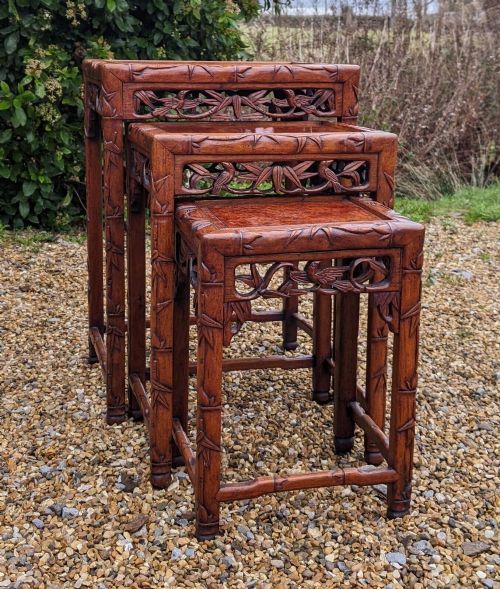
- A set of graduating tables designed to fit neatly beneath one another when not in use. They typically appear in sets of three or four in rosewood or other hardwoods.
Qing Style Side Table: Frequently Asked Questions
Where should I place a qing style side table?
These tables suit hallways, living rooms, and studies where a compact surface is required. Console and altar tables sit flat against walls, while occasional tables and stands fit easily beside armchairs.
Their robust timber construction allows them to hold lamps, ceramics, or books safely. Mixing them with contemporary furniture adds depth and texture to a room.
How do I care for marble top tables?
The inset marble panels require simple dusting and occasional wiping with a damp cloth. Avoid harsh chemical cleaners that can dull the polished surface.
Using coasters beneath glasses protects the stone from staining, while regular waxing of the surrounding hardwood keeps the timber nourished.
What is the difference between an altar table and a console table?
Altar tables typically feature distinctive upturned flanges at the ends of the top board, a detail derived from their traditional temple origins. Console tables often have flat or moulded edges and simpler rectangular profiles.
Both serve similar functional purposes in modern interiors as narrow display surfaces against a wall.
Are nest of tables practical for daily use?
Nest of tables offer exceptional versatility because the smaller units pull out when surface space is needed and tuck away compactly otherwise. They function well as individual side tables for drinks or reading materials.
The interlocking design requires careful handling to avoid scratching the polished surfaces of the nested tiers.