
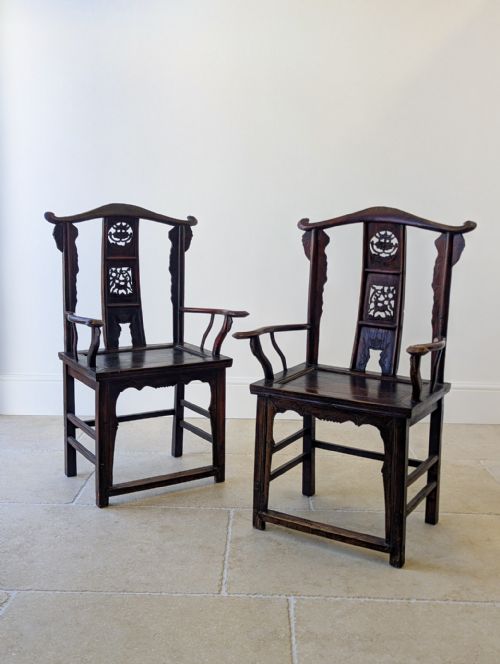


Qing Dynasty Yoke Chair
A qing dynasty yoke chair brings sculptural discipline and structural poise to a modern room.
Qing Dynasty Yoke Chair
A qing dynasty yoke chair is defined by its distinctive crest rail that curves outward like a carriage yoke, providing both ergonomic support and a striking silhouette. You will encounter armchairs, side chairs, and occasional hall chairs spanning the nineteenth century down to the early twentieth century. Many surviving examples originate from traditional Chinese workshops, employing classic forms designed for scholars, officials, and domestic interiors.
How they were made
Cabinetmakers constructed these chairs using dense native timbers, predominantly elm and various hardwoods, joined with sophisticated mortise and tenon joinery that required no metal nails. This traditional joinery allows the wooden frame to expand and contract naturally with changes in humidity over the centuries.
Surface treatments vary from exposed grain finished with clear lacquers to vibrant red lacquer coatings enhanced with gold leaf details or simple painted wood surfaces. Artisans shaped the distinctive sweeping armrests and crestrails by steaming or carving solid timber blocks into fluid, ergonomic curves.
Listings feature elm, hardwood, and softwood constructions, alongside red lacquer and gold leaf surface treatments from the nineteenth and eighteenth centuries.
What varies in quality
The distinction between ordinary seating and exceptional examples lies in the purity of the timber selection and the crispness of the joinery. Superior pieces display tight, flush joints and beautifully figured grain on the back splat, whereas lesser versions rely on heavier painted finishes to conceal repairs or inferior wood stock.
Proportion and balance dictate the visual success of a yoke-back chair, where subtle refinements in the sweep of the crest rail and the rake of the legs create an effortless posture. The survival of original surface finishes, such as aged red lacquer or undisturbed patinated elm, significantly elevates the integrity of the piece.
The Qing Dynasty Yoke Chair Glossary
- Yoke-back
- A chair style featuring a top crestrail that extends beyond the upright rear posts, resembling an ox yoke. This defining architectural feature creates a comfortable headrest for the sitter.
- Elm
- A durable, fibrous hardwood favoured by traditional Chinese cabinetmakers for its strength and expressive grain patterns. It takes organic finishes and lacquers exceptionally well.
- Lamp hanger chair
- A colloquial term for a specific form of Chinese chair with a high crestrail, historically associated with seating placed near hanging oil lamps. The elevated backrest protects the occupant from drafts.
- Lacquer
- A natural resin applied in multiple thin layers to wooden surfaces to create a smooth, protective, and decorative coating. It often serves as a base for painted or gilt ornamentation.
Qing Dynasty Yoke Chair: Frequently Asked Questions
How do I use a yoke chair today?
A yoke chair works exceptionally well as a striking standalone accent piece in a hallway, bedroom, or living room. Its sculptural silhouette also allows it to serve as a functional desk chair or an elegant dining seat.
Because these chairs are historically significant, pairing them with modern minimalist furniture creates a balanced, sophisticated interior without overwhelming the room.
Are these chairs comfortable to sit in?
The ergonomic curved crestrail and high back provide surprisingly good upright support, designed for prolonged periods of reading or contemplation. Most examples feature wooden seats that can be softened with loose linen or silk cushions if desired.
While they lack the deep squab padding of modern armchairs, their geometry promotes an upright and dignified posture.
How do I date a qing dynasty chair?
Dating relies on examining the joinery methods, timber shrinkage, and the degree of wear on the footrests and seat surfaces. Nineteenth-century examples often display softer timber patination and minor structural shifts accumulated over generations of use.
Comparing the specific curve of the back splat and the thickness of the elm components against dated comparative pieces helps narrow down the period.
How do I care for antique elm furniture?
Keep these wooden chairs away from direct heat sources and dramatic humidity fluctuations to prevent the ancient timber from splitting or warping. Dust them gently with a dry, soft cloth and avoid chemical polishes that can degrade historical finishes.
Applying a microcrystalline wax occasionally will protect the surface while preserving the natural patina built up over a century or more.