
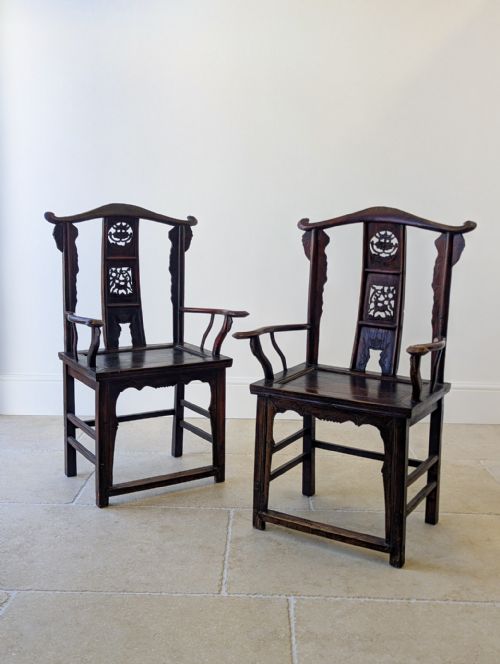


Traditional Chinese Yoke Chairs
Traditional chinese yoke chairs are architectural seating pieces shaped by centuries of woodworking tradition, prized by collectors for their clean lines and structural elegance.
Traditional Chinese Yoke Chairs
Traditional chinese yoke chairs encompass seating forms defined by their distinctive crestrail resembling an ox yoke, designed to encourage upright posture. Collectors find these pieces in forms such as armchairs, side chairs, hall chairs, and benches originating from the Qing dynasty and later periods.
The examples most commonly met on this page date from the nineteenth century, including roughly eighteen-eighty and eighteen-seventy, alongside pieces from nineteen-twenty and Victorian eras. These items arrive in matched pairs or individual formats, reflecting historic domestic and scholarly interiors.
How they were made
Craftsmen built traditional chinese yoke chairs primarily using elm and assorted hardwoods, sometimes incorporating softwood foundations. Joinery relied on precise mortise and tenon techniques that allowed the timber to move naturally with changes in humidity.
Surfaces frequently received treatments of red lacquer or paint, occasionally accented with gold leaf. This finishing process protected the timber while highlighting the natural grain of elm and blonde wood.
Object forms span armchairs, hall chairs, benches, and concubine chairs.
What varies in quality
Distinctions in quality rest upon the crispness of the joinery and the integrity of the original wood structure. Pieces that retain their balanced proportions and uncompromised structural alignment command greater interest from discerning buyers.
The survival of original surface finishes, whether painted wood or red lacquer, distinguishes preserved examples from those heavily restored. The clarity of the crestrail curve and the subtlety of the rear splat contour also separate standard items from finer works.
The Traditional Chinese Yoke Chairs Glossary
- Yoke-back
- A chair style featuring a crestrail that curves upwards and outwards, resembling a traditional animal yoke. This shape supports the shoulders and provides a comfortable headrest for scholars.
- Elm
- A resilient hardwood utilised extensively in traditional Chinese cabinetmaking due to its fibrous grain and strength. It takes lacquer and polish exceptionally well.
- Crestrail
- The top horizontal member of a chair back. In these pieces, it forms the defining yoke shape.
- Lacquer
- A durable natural resin applied in multiple coats to wooden surfaces. Red lacquer is particularly traditional for decorative seating.
- Scholar chair
- A formal seating form designed with upright proportions to maintain proper posture during reading and writing.
Traditional Chinese Yoke Chairs: Frequently Asked Questions
What is a yoke-back chair?
A yoke-back chair is a traditional Chinese seating form featuring a distinctive curved crestrail that resembles an ox yoke. The design developed to provide ergonomic support for scholars and officials.
These chairs often feature a central splat supporting the back and simple armrests that terminate in clean, understated joins.
How do I date a Chinese elm chair?
Dating relies on examining the joinery methods, timber patination, and wear patterns accumulated across centuries. Nineteenth-century examples often display specific tool marks and timber shrinkage consistent with their age.
Comparison with documented Qing dynasty pieces helps narrow the production period between eighteen-seventy and nineteen-twenty.
Were these chairs used for dining?
These pieces served primarily as formal seating in reception halls, studies, and scholar chambers rather than dining rooms. Their upright posture and architectural presence suited formal domestic rituals.
Pairs often flanked a tea table in the main hall of a traditional residence to receive guests.
How should I care for lacquered elm?
Lacquered elm requires stable indoor humidity and protection from direct sunlight to prevent timber movement and finish degradation. Gentle dusting with a dry microfibre cloth preserves the surface.
Avoid chemical polishes and abrasive cleaners that can damage the underlying lacquer or painted details.