

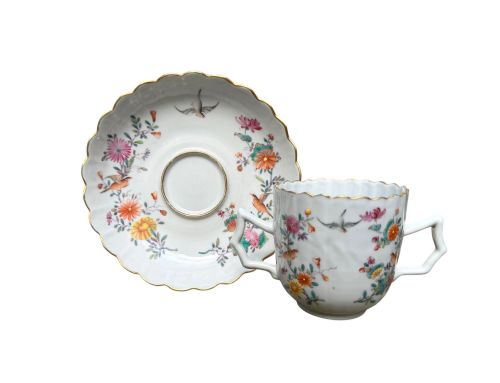


Qianlong Export Porcelain Cup
These qianlong export porcelain cup examples combine eighteenth century imperial ambition with European utility, offering delicate tea wares and robust mugs painted for Western tables.
Qianlong Export Porcelain Cup
When you search for a qianlong export porcelain cup, you encounter eighteenth century wares made during the Qing Dynasty, specifically within the years spanning 1736 to 1795. The forms range from simple tea bowls and teacups with matching saucers to larger mugs and tankards intended for daily service.
Most pieces you meet on this page originate from Chinese kilns before receiving overglaze enamel decoration, sometimes with later European embellishments such as Amsterdam Bont additions. The palette shifts between the soft greens of Famille Vert and the rich pinks of Famille Rose, occasionally incorporating detailed figure scenes like circus motifs.
Comprising individual teacups, stands, and paired sets, these objects represent the extensive trade between China and the West during the eighteenth century. They display standard forms from around 1750 to 1770, maintaining functional shapes designed for consumption.
Materials and methods of manufacture
The foundation of every qianlong export porcelain cup is hard paste porcelain, fired at high temperatures to create a dense, vitreous white body. Potters shaped these pieces by hand on the wheel or in moulds before applying the initial glaze.
Decoration relied heavily on overglaze enamel painting, applied in workshops using distinct colour palettes like Famille Rose and Famille Vert. Artisans frequently added gold leaf or gold gilt highlights to accentuate the borders and painted motifs.
Qianlong Export Porcelain Cup Retail Price Guide 2026
Typical asking prices for qianlong export porcelain cup among the pieces listed under this phrase on Sellingantiques today, from the lower quarter to the upper quarter. They describe what is for sale here now, not the wider market.
A few teacups depict acrobats and circus performers tumbling across the porcelain surface.
Assessing quality in export porcelain
The distinction between ordinary and superior examples rests upon the precision of the overglaze enamel work and the complexity of the painted narrative. Finer pieces display crisp brushwork in the facial expressions and garments of figures, whereas lesser items show hurried execution.
The purity of the hard paste porcelain body and the evenness of the glaze application also dictate worth. Wares featuring intact gold leaf or gold gilt highlights and well preserved enamel colours retain greater visual clarity.
The Qianlong Export Porcelain Cup Glossary
- Famille Rose
- A palette of opaque overglaze enamels dominated by pink or rose colours, introduced during the Qing Dynasty. This scheme allowed for delicate shading in floral and figural compositions.
- Hard paste porcelain
- A true porcelain composed of petuntse and kaolin, fired at extremely high temperatures to produce a durable, translucent white body. It resists scratching and forms the structural base for eighteenth century export wares.
- Overglaze enamel
- Coloured glass powders mixed with an oily medium and painted over a previously fired and glazed porcelain surface, then fixed in a muffle kiln at a lower temperature. This technique permits vibrant multi-coloured designs.
- Amsterdam Bont
- Eighteenth century Chinese porcelain decorated or augmented in workshops in Amsterdam, often adding extra enamels to plain or sparingly painted wares. This secondary painting created distinctive hybrid aesthetic results.
- Qianlong Period
- The era of the Qing Dynasty lasting from 1736 to 1795, associated with extensive porcelain production for international export markets. Pieces from this time exhibit technical mastery in both form and decoration.
Qianlong Export Porcelain Cup: Frequently Asked Questions
How were tea bowls and mugs used?
These items served daily dining and social rituals in European households during the eighteenth century, functioning as vessels for tea, coffee, or beer.
Smaller cups and tea bowls accompanied saucers for drinking hot infusions, while larger mugs and tankards handled heavier beverages.
How do I care for export porcelain?
Wash these fragile objects gently by hand in warm water using mild soap, avoiding abrasive sponges or modern dishwashers that damage the overglaze enamel.
Keep them away from rapid temperature changes and display them securely on stable surfaces to protect the delicate porcelain bodies.
How can I tell the period apart?
Look closely at the composition of the hard paste porcelain body, the weight of the piece, and the specific tones of the overglaze enamels.
Eighty year spans like the Qianlong reign exhibit distinct potting techniques and palette preferences that differ from later nineteenth century copies.