
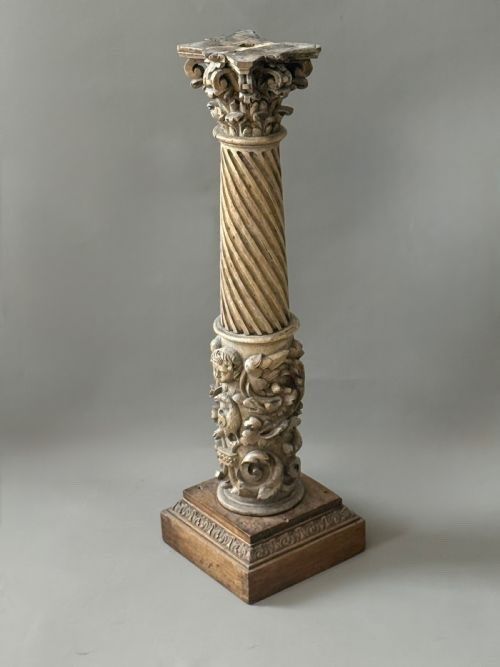
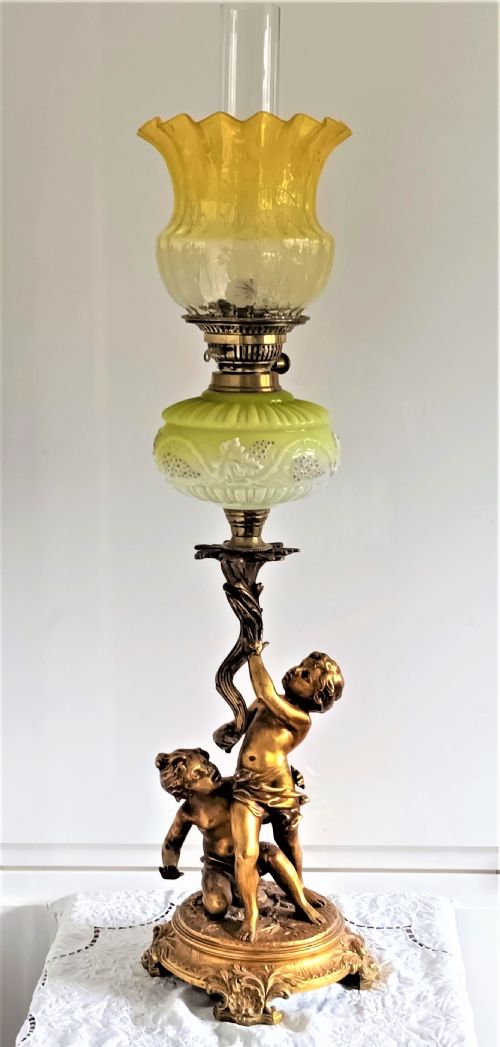
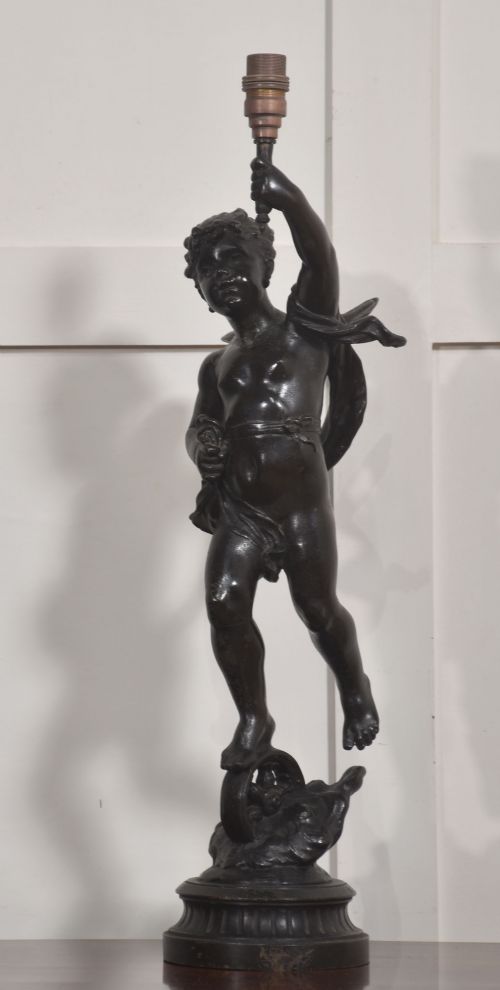
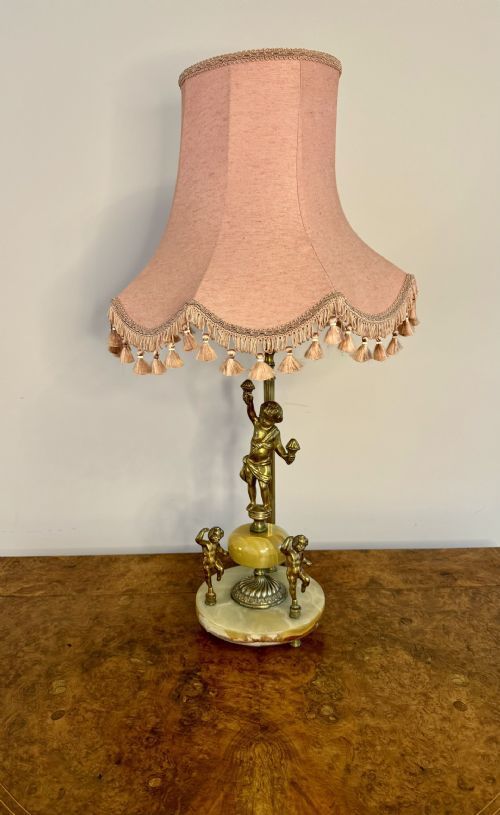
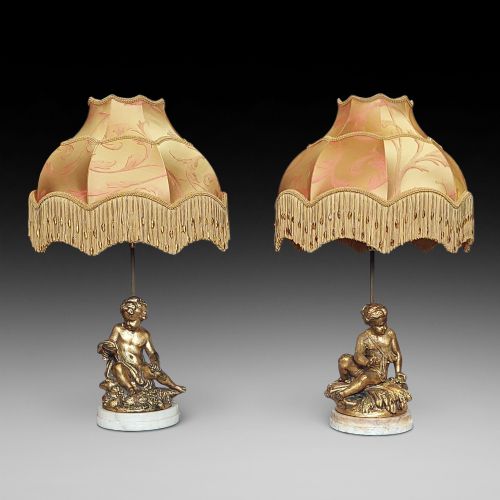


Putti Table Lamp
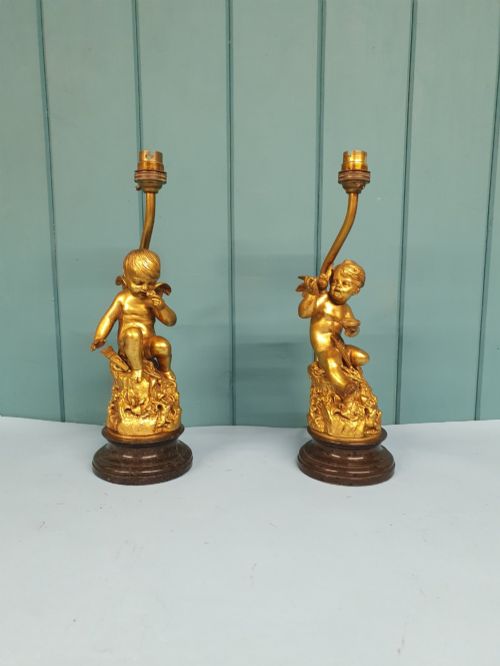
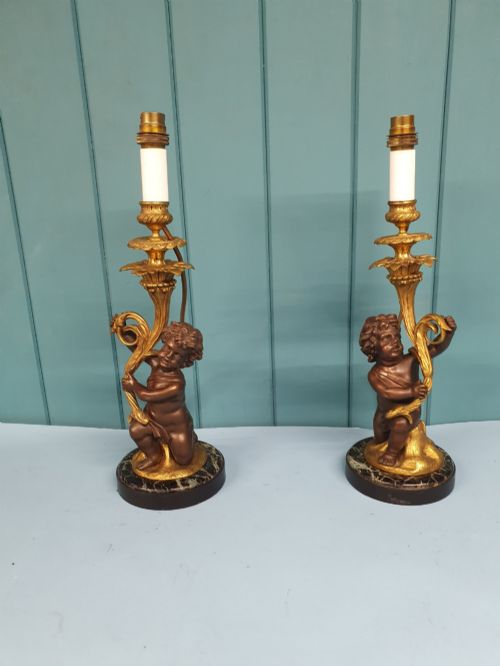
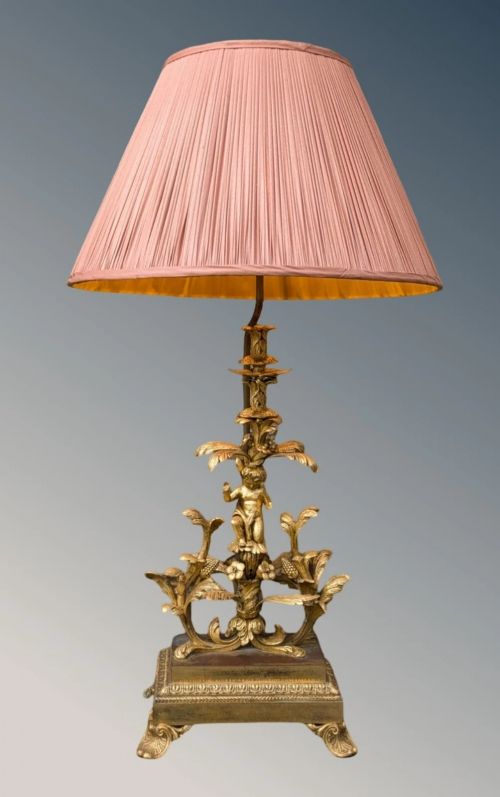
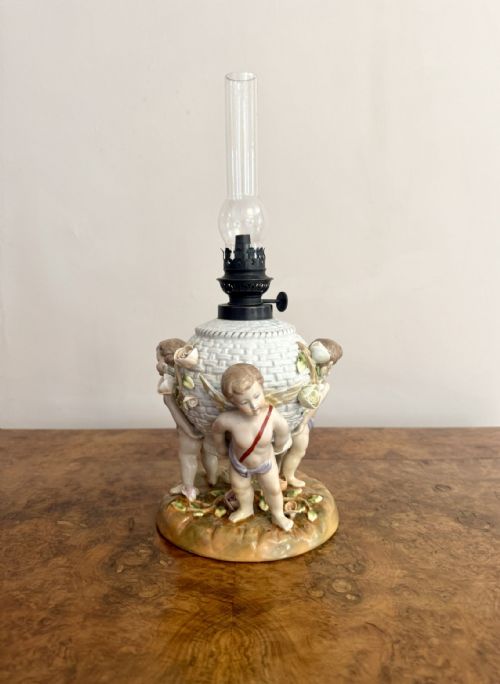
These putti table lamps bring sculptural charm to a room, featuring winged figures in bronze, porcelain and gilt metal.
Putti Table Lamp
A putti table lamp combines figural sculpture with domestic illumination, placing cherubic winged figures at the core of the design. When searching for a putti table lamp, collectors encounter pieces ranging from converted nineteenth-century oil lamps to twentieth-century bases designed specifically for electrical wiring.
The selections span the Victorian era into the early twentieth century, drawing on French Rococo Revival, Neoclassical and Continental Baroque styles. Pairs of lamps appear frequently alongside monumental single bases and converted candelabra.
Origins stretch across France, Italy, and England, utilising traditional sculptural forms that integrate figures holding torches, dolphins or floral garlands into the column of the lamp.
How they were made
Foundry casting dominates the metal examples, utilising bronze, gilt bronze, brass, or ormolu to render the cherubic figures with detailed wings, curls and musculature. Artisans often combined patinated bronze bodies with polished gilt highlights to create visual depth.
Ceramic models rely on porcelain bodies from factories like Sitzendorf and Meissen, sometimes paired with marble or alabaster bases for stability. Fabric shades, beaded fringes and gilt toleware components complete the top sections of the illuminated pieces.
Several cherubs double as marine companions, balancing on dolphins while bravely holding aloft the weight of the room's illumination.
What varies in quality
Porcelain quality rests on the delicacy of the hand-painting and the intact survival of intricate applied floral elements. Heavier stone bases and substantial ormolu mounts indicate higher workshop standards during the nineteenth and early twentieth centuries.
Aug. Moreau·Sitzendorf·Meissen·Sevres
The Putti Table Lamp Glossary
- Putti
- Winged infant figures, often male, derived from classical art and frequently depicted in Renaissance and Revival decorative objects. They form the central sculptural motif of these lamps.
- Ormolu
- Finely ground high-carat gold applied to a bronze base using a mercury amalgamation technique, common in French decorative arts. It provides a warm, lasting lustre.
- Toleware
- Painted or enamelled sheet metal items, often used for lamp components and shades in historical lighting. The technique allows for rich surface colours.
- Torchère
- A decorative stand or lamp modelled after a torch-bearer or torch-holder. In lighting, these figures hold aloft the light source.
- Candelabra
- Branched lighting fixtures designed to hold multiple candles, frequently converted to electricity in later periods. They offer symmetry and a grander scale.
Putti Table Lamp: Frequently Asked Questions
How do I date a putti lamp?
Dating relies on material composition, casting style and the method of electrical conversion. Nineteenth-century examples often show heavier bronze casting or period oil-lamp mechanisms.
Later twentieth-century adaptations integrate factory wiring channels and different patination techniques that distinguish them from earlier Victorian productions.
Were these always electric lamps?
Many examples began life as oil lamps, candelabra or bronze statuettes before receiving conversion for modern electrical use. Traces of original burners or reservoirs often remain visible beneath the fittings.
Conversions happened at various points in the twentieth century to accommodate changing domestic lighting habits.
How should I clean a bronze lamp?
Dusting with a soft, dry cloth preserves the historical patina on patinated and gilt bronze surfaces. Avoid aggressive commercial polishes that strip away the surface finish.
Specialist care helps maintain the integrity of delicate gilt-wood, ormolu, and porcelain elements attached to the base.
What styles are common in these lamps?
French Rococo Revival and Neoclassical styles dominate the aesthetic, featuring scrolls, floral garlands and classical drapery. These designs reflect nineteenth-century revivals of earlier European decorative epochs.
Italian and English variations also appear, incorporating local marbles and distinct regional casting characteristics.