


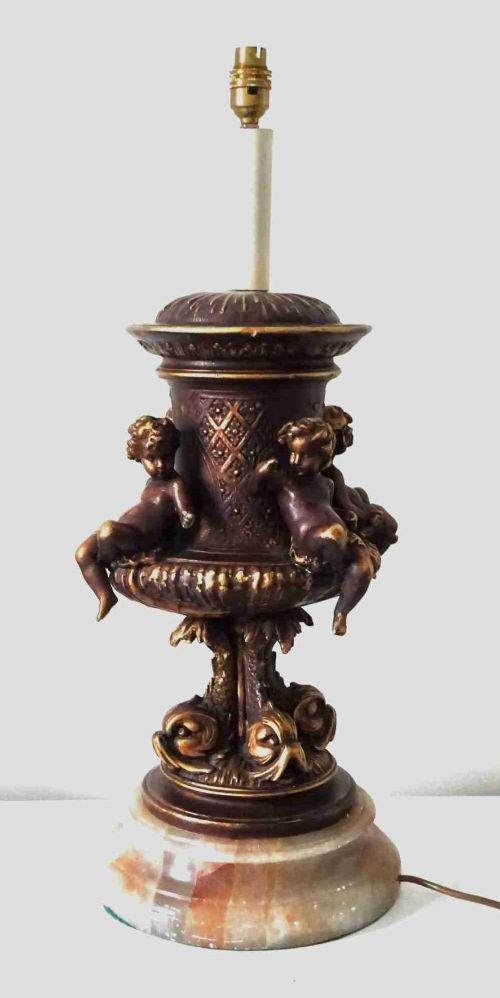
Classical Cherub Desk Light
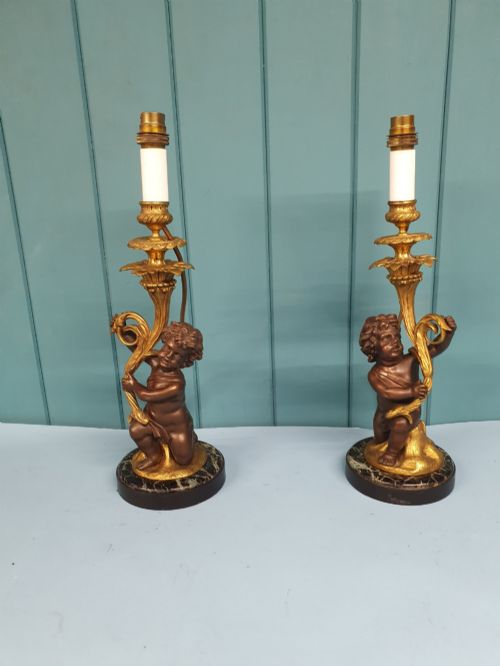
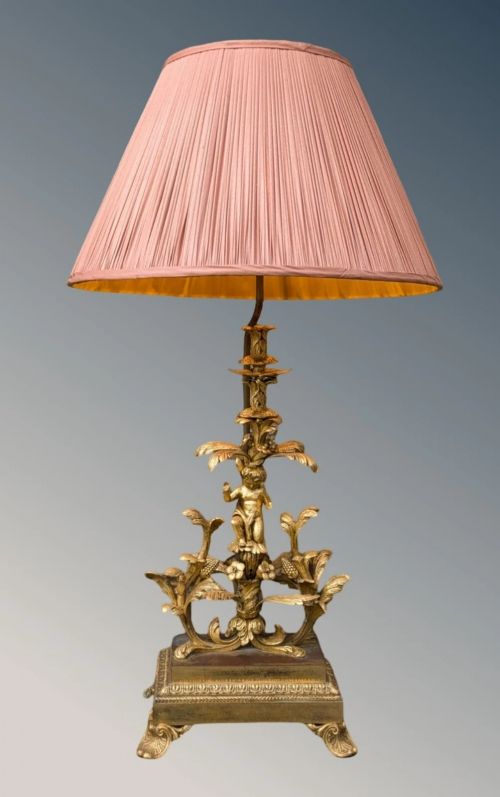
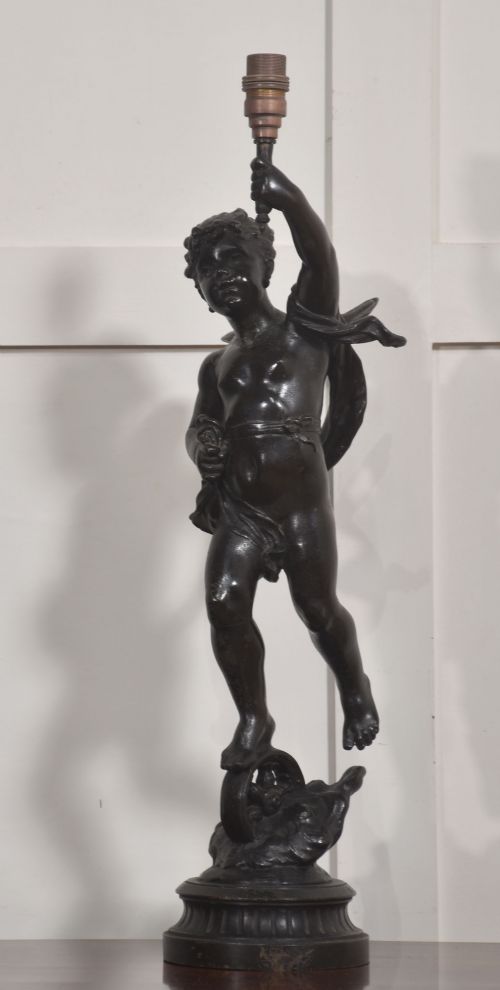
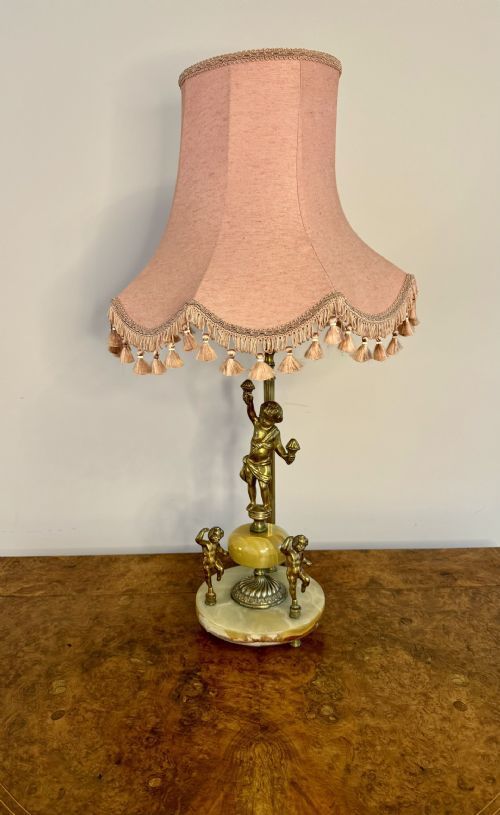
These classical cherub desk light pieces bring figural nineteenth-century charm to a room, cast in bronze, brass, or ormolu.
Classical Cherub Desk Light
A classical cherub desk light sits on a table or desk, combining figural bronze, brass, or ormolu work with functional lighting. These items emerge chiefly from the nineteenth century, including Victorian periods and Edwardian decades, alongside revivals spanning French Rococo, Neoclassical, and Baroque styles.
The most common version met on this page is a table lamp base featuring patinated bronze or gilt bronze figures, occasionally paired with onyx, marble, or fabric shades. Makers utilised traditional metalworking techniques to produce figures of cherubs, sometimes accompanied by dolphins.
Forms range from single table lamp bases to pairs of matching lights, constructed from media as varied as moulded plaster, oak, and tole peinte. The physical presence of these objects draws the eye through sculptural detail rather than simple utility.
How they were made
Foundry workers cast these pieces using bronze, gilt bronze, or brass, employing techniques that allowed for intricate figural rendering. Ormolu applications and patinated finishes gave the metals depth and varied surface tones.
Bases frequently incorporate stone elements such as marble or onyx, providing a solid foundation for the metal sculptures. Structural parts utilise turned wood like oak or moulded plaster in specific examples, demonstrating diverse workshop practices across the periods.
Several cherubs share table space with sculpted dolphins, proving that even celestial infants occasionally need marine company.
What varies in quality
Material combination also determines the caliber of a piece, where integrated marble or onyx mounts and original ormolu surfaces elevate the object. Heavier gauge metals and balanced proportions indicate higher workshop standards.
The Classical Cherub Desk Light Glossary
- Ormolu
- Gilded bronze, where finely ground high-carat gold is applied to a bronze base using a mercury amalgamation process. This technique produces a rich, lasting metallic lustre seen on French figural bases.
- Patinated bronze
- Bronze that has been treated with chemical solutions to alter its surface colour. It highlights sculptural contours through contrasting dark tones.
- Tole peinte
- Painted sheet metal, frequently utilised for decorative lamps and shades during the nineteenth century. The painted finish often mimics Japanning or floral decoration.
- Neoclassical revival
- A stylistic movement drawing inspiration from classical art and architecture of ancient Greece and Rome. Pieces in this style emphasise symmetry, proportion, and classical figural motifs.
Classical Cherub Desk Light: Frequently Asked Questions
How do I date a cherub lamp?
Dating relies on examining the materials, casting quality, and stylistic markers present in the bronze, brass, or ormolu work. Nineteenth-century pieces often display hand-chased details and heavier patination compared to later revivals.
Secondary components like marble bases or wiring setups offer further clues, though wiring is usually modernised for safety. Comparing the sculptural style to known Victorian or Edwardian periods helps narrow the decade of production.
Are these lamps safe for daily use?
Most antique lamps require rewiring by a qualified electrician to meet modern safety standards before regular daily use. The original brass and bronze structures remain sturdy, but internal vintage cords should be replaced.
Checking the weight distribution and base stability ensures the lamp sits securely on a desk or table. Pairing the heavy metal base with a suitably proportioned shade prevents tipping.
What is the difference between bronze and brass?
Bronze is an alloy primarily composed of copper and tin, prized for its durability and ability to hold fine sculptural detail in figural castings. Brass is an alloy of copper and zinc, generally exhibiting a brighter, more golden hue.
Victorian makers utilised both metals depending on the desired finish, with bronze often receiving patination and brass taking a polished or gilded surface.
How do I clean an ormolu lamp?
Cleaning requires only gentle dusting with a soft, dry cloth to protect the delicate gold leaf or mercury gilding. Water and chemical cleaners can strip the historical surface and ruin the finish.
Preserving the original patinated bronze or gilt surface maintains the visual integrity and character of the antique.