


Purple Stone Gold Pendant
When you handle a purple stone gold pendant, you touch pieces shaped by Victorian, Edwardian and later hands.
Purple Stone Gold Pendant
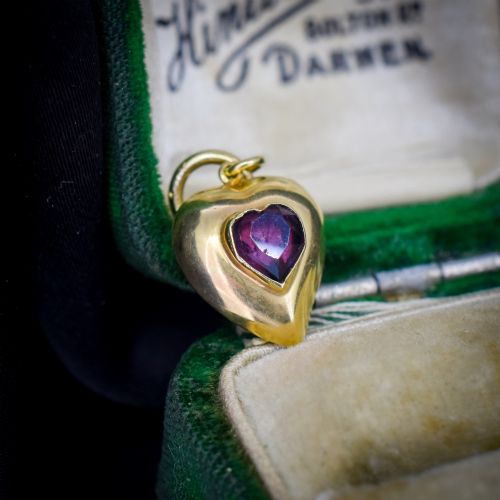
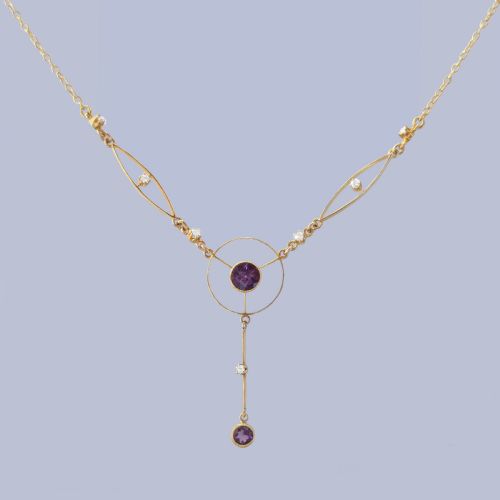
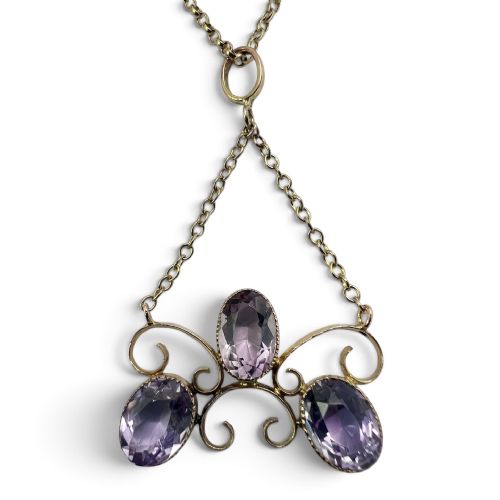
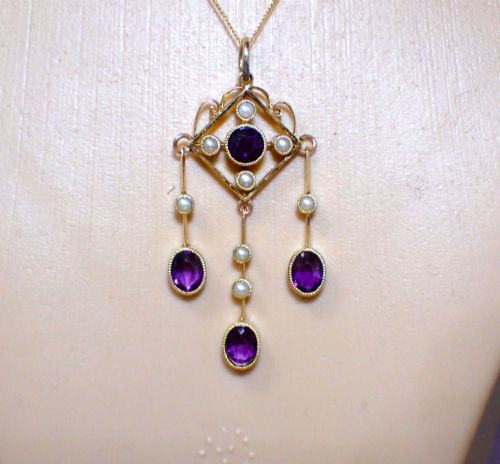
A purple stone gold pendant brings together rich violet stones and warm yellow or white precious metal, taking forms such as lavalieres, lockets, hearts and cluster drops. These items sit on necklaces, hang from brooches, or drop from ears, reflecting the shifts in jewellery design across the nineteenth and twentieth centuries.
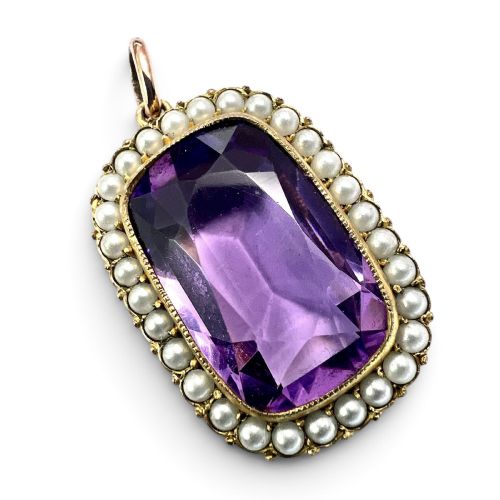
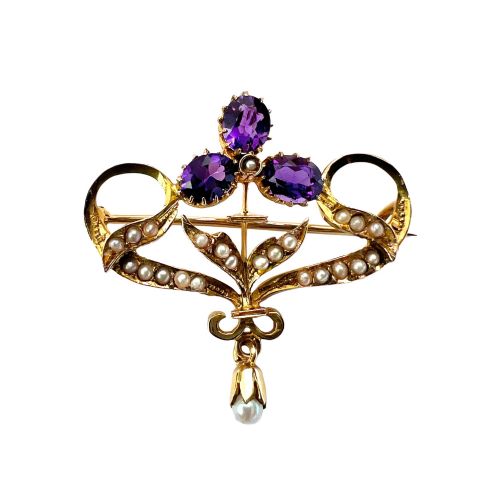
The version you are most likely to meet on this page is an Edwardian or Victorian creation, often combining gold with amethyst and seed pearls in delicate foliate motifs. Pieces stretch from early nineteenth-century examples to later twentieth-century designs, capturing varied interpretations of a purple stone set in gold.
How they were made
Goldsmiths worked with varying purities of metal, utilising nine carat, twelve carat, fourteen carat, fifteen carat and eighteen carat gold to form settings, chains and lockets. Stones were selected in oval, pear, faceted and paste cuts to catch the light within cluster, halo and drop configurations.
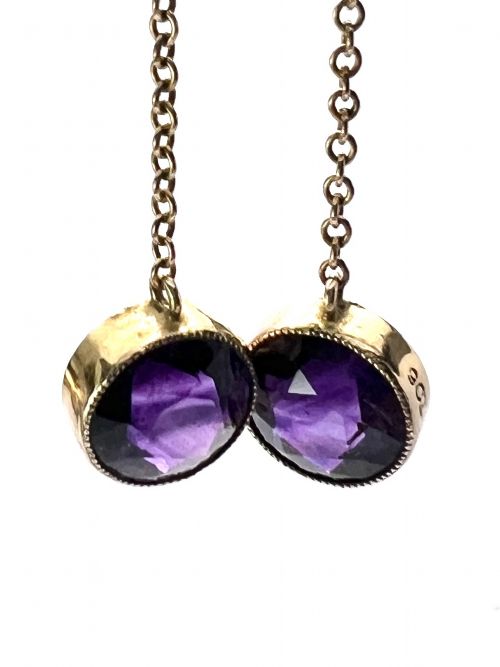
Craftsmen integrated seed pearls, diamonds, citrine and paste alongside amethysts, securing them within intricate wirework, bezel mounts and millegrain edges. These materials combined to produce balanced necklaces, pendants and convertible brooch-pendants characteristic of their respective eras.
Some Edwardian pieces cleverly double as both a brooch and a pendant, perfect for an indecisive morning dress routine.
What varies in quality
The distinction between standard items and superior examples lies in the depth of stone colour, the precision of metalwork and the integration of secondary gems like diamonds and pearls. Heavier carat gold and substantial stone weights elevate certain pieces above lighter, simpler iterations.
Artisanal execution defines the upper tier, where flowing Art Nouveau lines or detailed Victorian foliate chasing show superior craftsmanship. The balance of the drop, the security of settings, and the harmonious pairing of amethysts with pearls separate routine workshop production from finer studio output.
S. Blanckensee & Son
The Purple Stone Gold Pendant Glossary
- Amethyst
- A purple variety of quartz prized for hues ranging from pale lilac to deep violet. It serves as the primary stone in these pendants and necklaces.
- Lavalier
- A pendant necklace featuring a central drop stone suspended below a main motif, popular during the Edwardian and Art Nouveau periods. This design allows stones to swing freely with movement.
- Seed Pearl
- A very small, natural or cultured pearl used in clusters and floral arrangements alongside coloured stones. These delicate elements are typically half-drilled and glued or pegged onto gold stems.
- Paste
- Hand-cut glass or lead crystal used as a substitute for gemstones. Antique paste pieces exhibit high clarity and deliberate facet work.
Purple Stone Gold Pendant: Frequently Asked Questions
How do I date a gold pendant?
Dating relies on stylistic clues, such as the flowing organic lines typical of Art Nouveau or the symmetrical cluster work associated with Victorian designs. Hallmarks and gold carat standards also offer clear chronological markers.
Examining the type of stone cuts and the integration of pearls helps narrow down whether a piece belongs to the nineteenth or twentieth century.
Were these items worn daily?
Many Victorian and Edwardian pieces served as everyday ornaments for the middle and upper classes, shifting from daytime neckwear to evening additions. Convertible pieces, such as brooch-pendants, offered versatility for different outfits.
Their robust construction in nine or fifteen carat gold allowed them to withstand regular wear while retaining delicate decorative elements.
How should I care for my pendant?
Gentle cleaning with warm soapy water and a soft cloth maintains the gold and stone surfaces. Harsh chemical dips should be avoided, particularly when seed pearls are present, as moisture can weaken their fixings.
Store pieces separately in lined boxes to prevent scratching between the gold settings and harder diamond accents.
What is the difference between paste and amethyst?
Amethyst is a natural quartz crystal with distinct mineral inclusions and natural thermal properties. Paste is a manufactured glass composite shaped to mimic genuine gemstones.
Under magnification, paste may show tiny bubbles or different facet wear compared to natural quartz.