
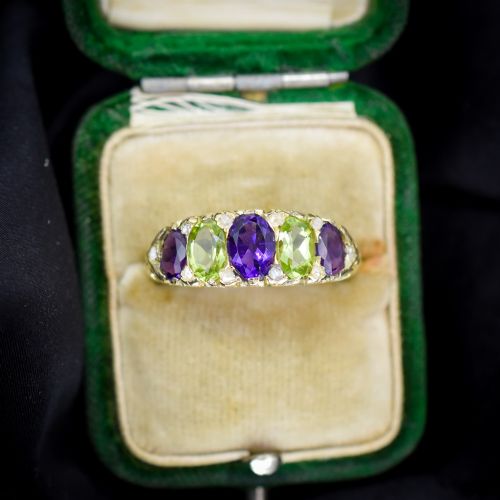
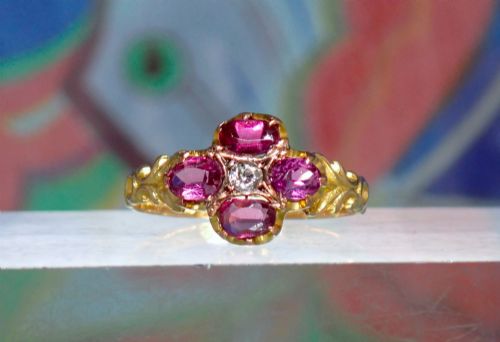
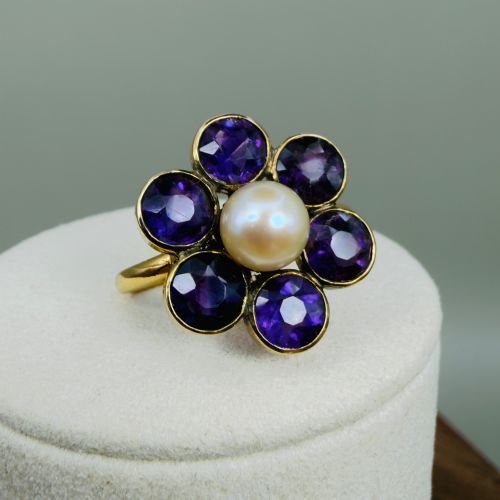
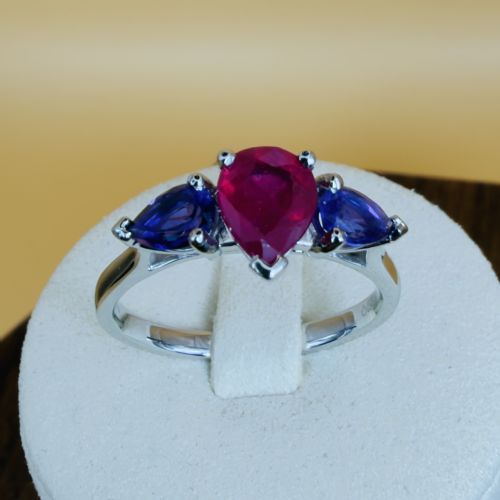






Purple Gemstone Cluster Ring
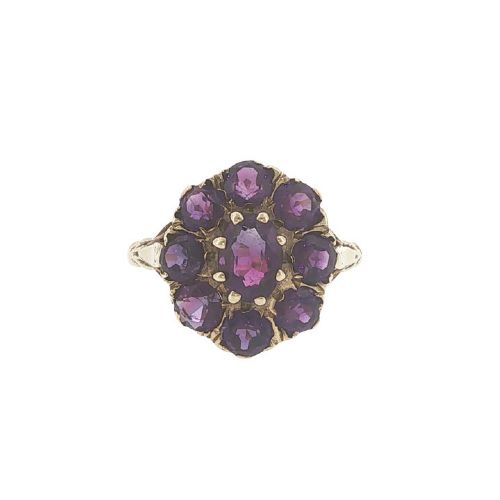
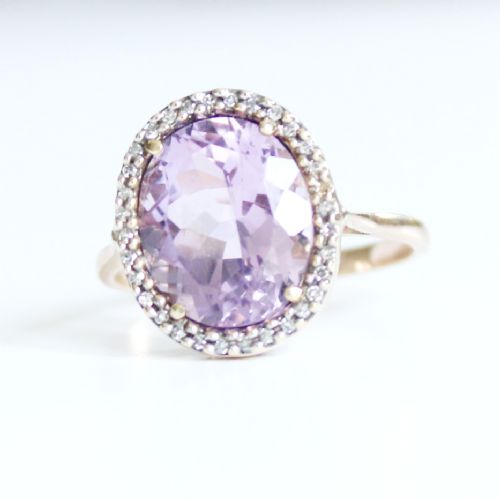
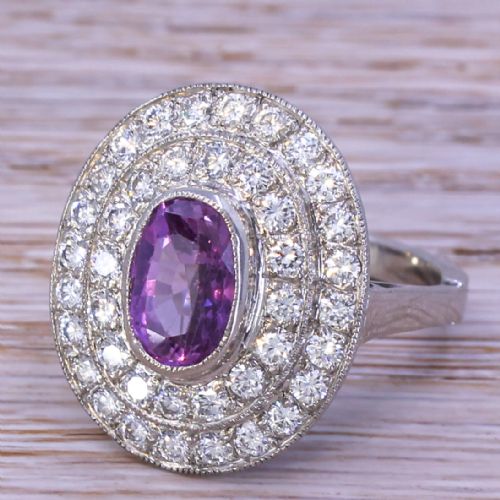
A purple gemstone cluster ring brings together rich violet stones and surrounding sparkle, offering a vibrant focal point for the hand.
Purple Gemstone Cluster Ring
A purple gemstone cluster ring centres on a violet stone, often amethyst, garnet, or purple sapphire, encircled by smaller accent gems.
The selections span from early Georgian and Victorian examples through Edwardian iterations to mid-century and later contemporary designs.
Settings frequently pair these purple centerpieces with diamonds, pearls, or peridot, mounted in yellow gold, rose gold, platinum, or silver.
Materials and construction
Goldsmiths worked with varying purities of gold, notably nine-carat, fifteen-carat, and eighteen-carat alloys, alongside platinum and silver.
Stones are secured in claw settings or close-set halo arrangements, where diamonds or pearls frame the central purple gem.
Some antique cluster rings double as political statements, echoing the purple, white, and green of the suffrage movement.
Judging quality in these rings
Depth of colour in the central purple stone and the matching of surrounding halo gems dictate visual balance.
The crispness of the metalwork, whether early hand-wrought detailing or later hallmarked casting, marks the standard of the piece.
The Purple Gemstone Cluster Ring Glossary
- Cluster ring
- A ring design featuring a central gemstone surrounded by a group of smaller accent stones. This layout maximises overall sparkle and presence on the hand.
- Halo
- An arrangement of smaller gems encircling a larger centre stone. It enhances the visual scale of the primary purple gemstone.
- Amethyst
- A purple variety of quartz frequently used in historic and vintage jewellery. Its violet shade ranges from pale lilac to deep plum.
- Almandine garnet
- A dense red-violet gemstone belonging to the garnet group. It provides a darker, heavier hue than typical amethysts.
Purple Gemstone Cluster Ring: Frequently Asked Questions
How do I clean my ring?
Warm soapy water and a soft brush suit most gold and platinum settings housing durable purple stones.
Pearls require extra care, as moisture and harsh chemicals can damage their organic nacre over time.
Are these rings suitable for daily wear?
Sturdier mountings in eighteen-carat gold or platinum handle regular use well when inspected periodically by a jeweller.
Pieces set with pearls need more mindful treatment to avoid impacts and scratches during daily tasks.
How can I tell the period?
Hallmarks, shank shapes, and gem-cut styles offer the clearest indicators of an item's manufacturing era.
Georgian and Victorian pieces often display hand-beveled backs and closed settings, while mid-century rings show cleaner casting lines.
What metals were commonly used?
Makers utilised yellow and rose gold in varying carats, alongside platinum and silver-topped gold for older mountings.
Later vintage examples frequently showcase standard nine-carat yellow gold and platinum claw work.