
Antique 18ct Gold Cluster
An antique 18ct gold cluster brings together high-karat gold settings and gathered gemstones, offering centuries of intricate craftsmanship.
Antique 18ct Gold Cluster
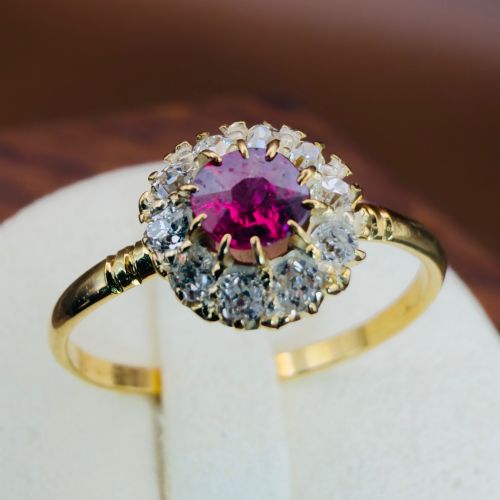
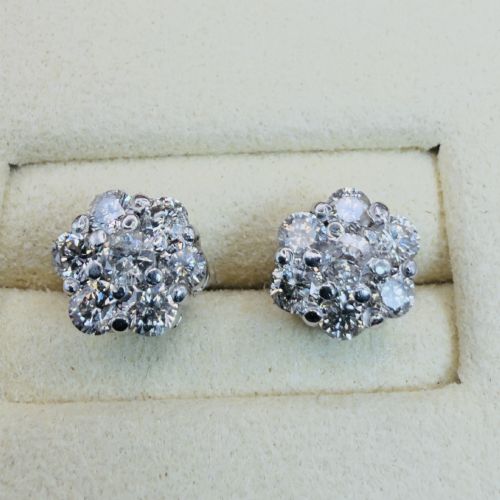
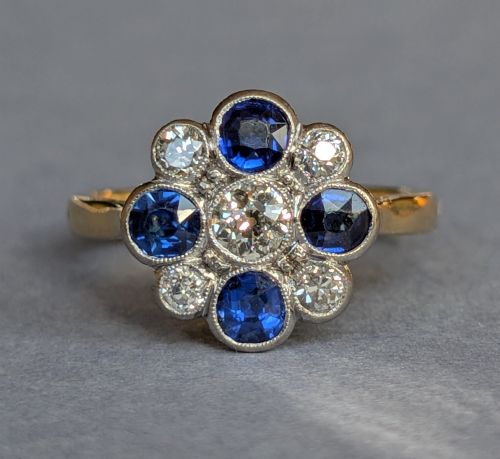
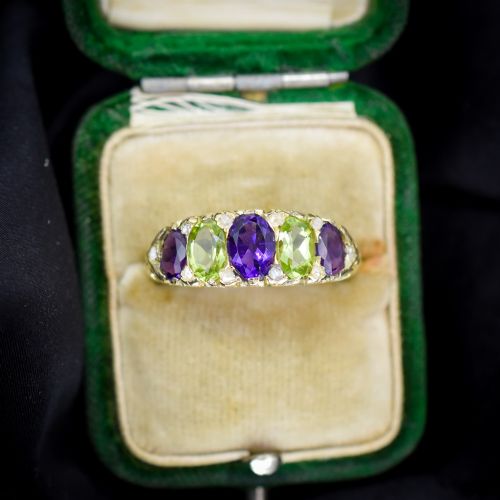
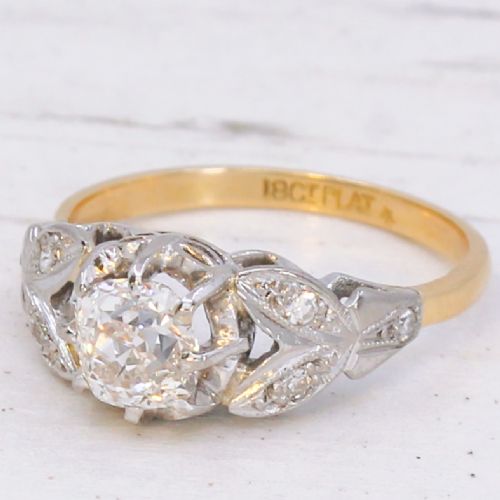
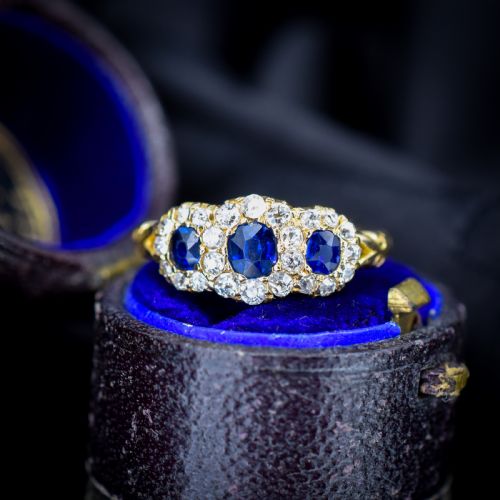
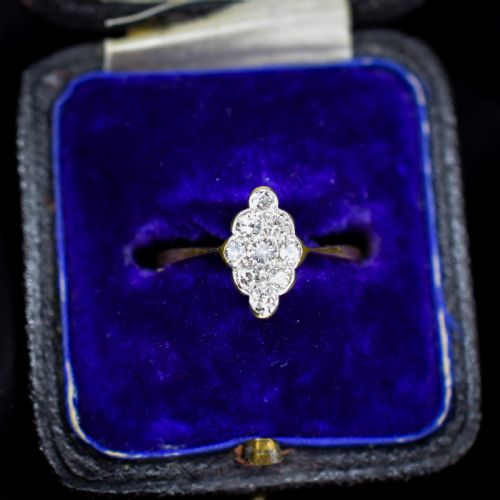
An antique 18ct gold cluster typically appears as a ring or brooch, dominated by a central stone surrounded by smaller gems. These pieces span the Georgian, Victorian, Edwardian, and Art Deco periods, evolving from early flowerhead designs to geometric arrangements.
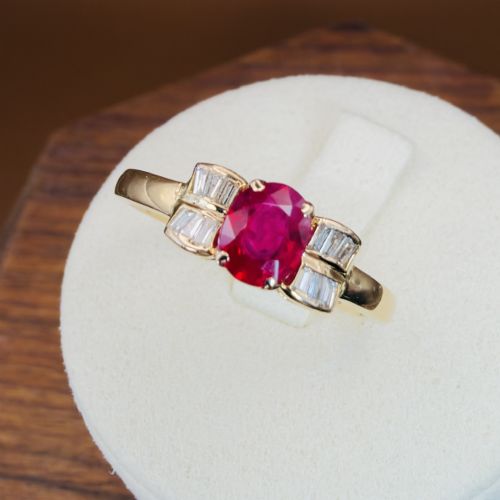
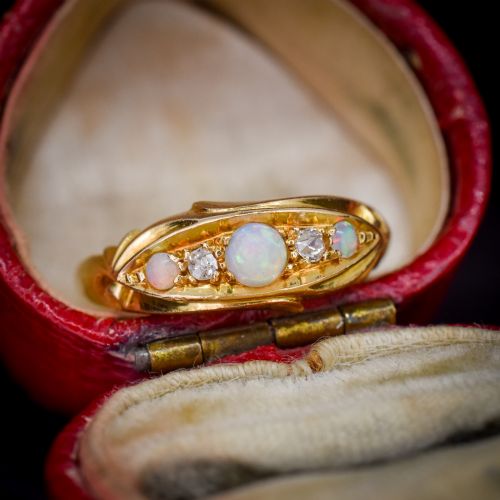
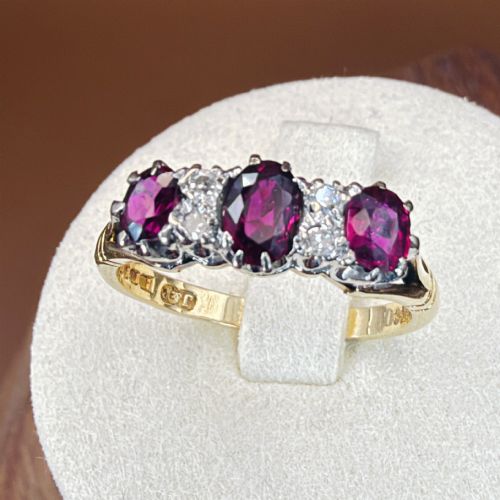
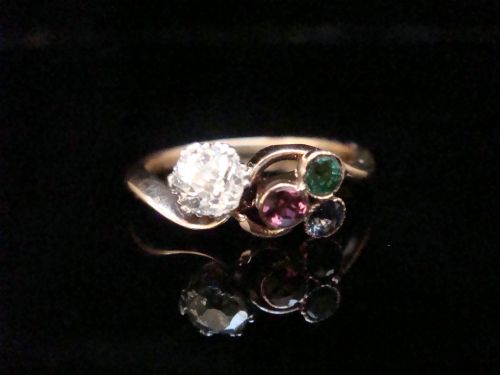
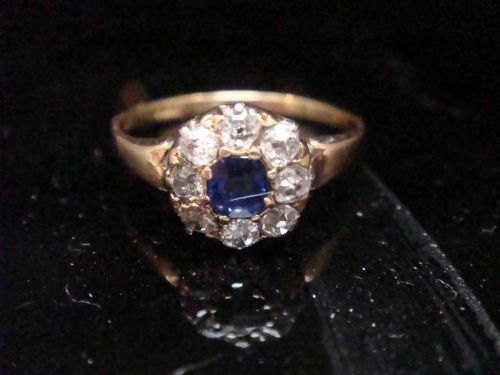
The most common formats on this page are rings featuring diamond, sapphire, ruby, emerald, opal, or pearl configurations. Makers from the nineteenth and twentieth centuries used yellow gold, white gold, and platinum to mount these stones.
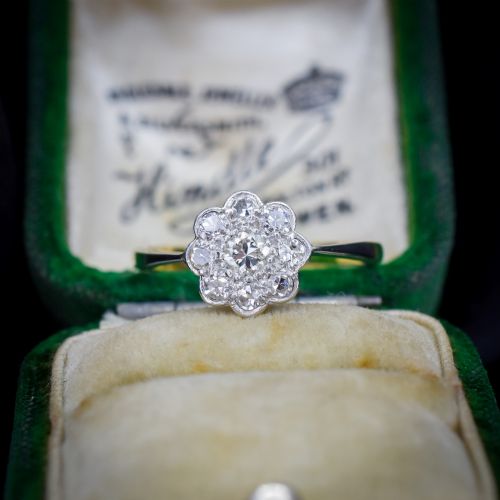
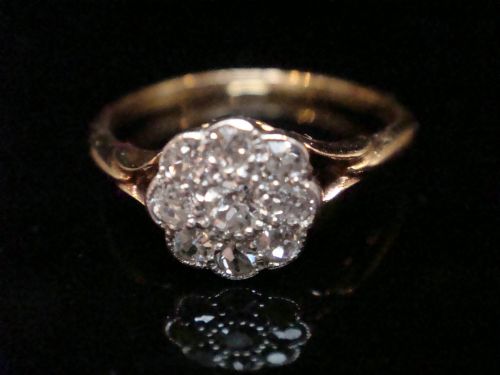
Forms vary from classic round daisy shapes to elongated navette, boat, and double-cluster silhouettes. Each piece reflects the aesthetic priorities of its decade of origin, from delicate Edwardian lace-work to bold Art Deco symmetry.
How They Were Made
Goldsmiths combined 18ct gold with platinum and silver settings to securely hold old-cut diamonds alongside coloured stones like rubies, sapphires, and opals. Platinum topped yellow gold in many Edwardian and Art Deco mounts to provide a bright, durable contrast for claw and milgrain settings.
Gemstones were shaped by hand, resulting in old-cut, table-cut, or cabochon stones that sit low or raised within the metal framework. Artisans utilised piercing, granulation, and engraved details to finish the shoulders and galleries of these rings and brooches.
Several pieces preserve nineteenth-century Chester assay office marks, reminding us that postmen once carried these tiny treasures across Britain.
What Varies in Quality
The caliber of an antique 18ct gold cluster depends on the matching and depth of the central and surrounding stones, along with the crispness of the metalwork. Hand-cut diamonds and well-saturated sapphires or rubies elevate a piece above standard commercial production.
Subtleties in structural integrity, such as undisturbed milgrain edges, robust gallery work, and clear hallmarks, separate superior examples from worn or heavily altered specimens.
The Antique 18ct Gold Cluster Glossary
- Cluster
- A ring or brooch design where a central gemstone is encircled by a border of smaller stones. This arrangement maximises the visual impact and sparkle of the combined carat weight.
- Old Cut
- A diamond-cutting style executed by hand before modern machinery, characterised by high crowns, small tables, and deep culets. These stones display a softer, candlelit glow under low illumination.
- Navette
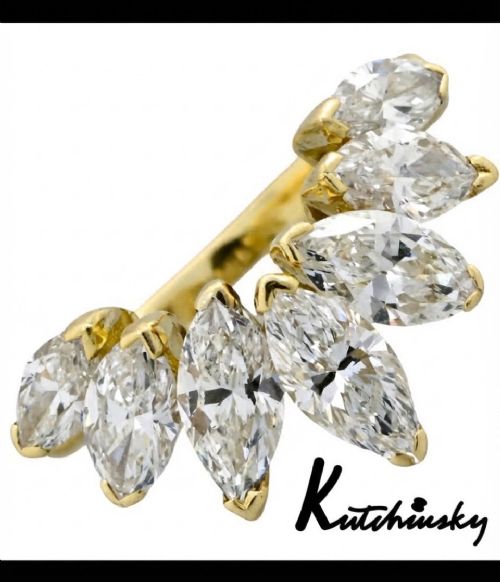
- A boat-shaped or marquise silhouette that tapers to points at both ends, popular in Georgian, Victorian, and Edwardian cluster designs. This geometry creates an elongated appearance on the finger.
- Milgrain
- A decorative border of tiny raised metal beads along the edge of a setting, common in Edwardian and Art Deco jewellery. It provides a soft texture that frames the gemstones.
- Daisy Cluster
- A circular floral arrangement featuring a prominent central stone surrounded by uniform petals of diamonds or pearls. This form remains a staple of Victorian and Edwardian engagement rings.
Antique 18ct Gold Cluster: Frequently Asked Questions
How do I wear an antique cluster ring daily?
Protect antique stones and delicate claws by removing rings during manual work, heavy lifting, or swimming.
Store them separately in lined boxes to prevent metal friction and stone abrasion.
Were these rings used as engagement rings?
Many clusters from the Victorian, Edwardian, and Art Deco periods served as engagement rings, as evidenced by central old-cut diamonds.
Alternative centre stones like sapphires, rubies, and opals were also widely chosen for betrothal jewellery.
How do I distinguish Edwardian from Victorian clusters?
Victorian examples often feature warmer yellow gold, heavier bezels, and rich coloured gems like garnets or deep rubies.
Edwardian and Art Deco pieces favor platinum-topped yellow or white gold with lighter, airier openwork and milgrain.
How should I clean my 18ct gold cluster?
Clean gently using warm water, mild washing-up liquid, and a very soft-bristled brush to reach beneath the stone settings.
Avoid harsh chemical dips, ultrasonic cleaners, and steam, which can damage softer gems like pearls and opals.