



Pug Painting
A pug painting captures the distinct character and wrinkled charm that made this small companion a favourite of European drawing rooms.
Pug Painting
A pug painting brings together oil on panel and watercolour works depicting the breed, alongside related terracotta and bronze sculptures shown across this page. These pieces date from the nineteenth century into the early twentieth century, spanning Victorian and Edwardian periods.
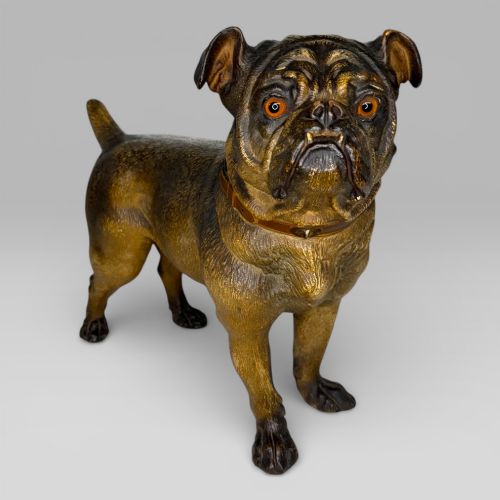
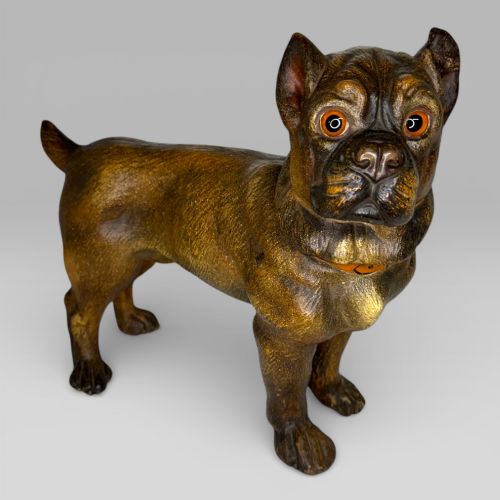
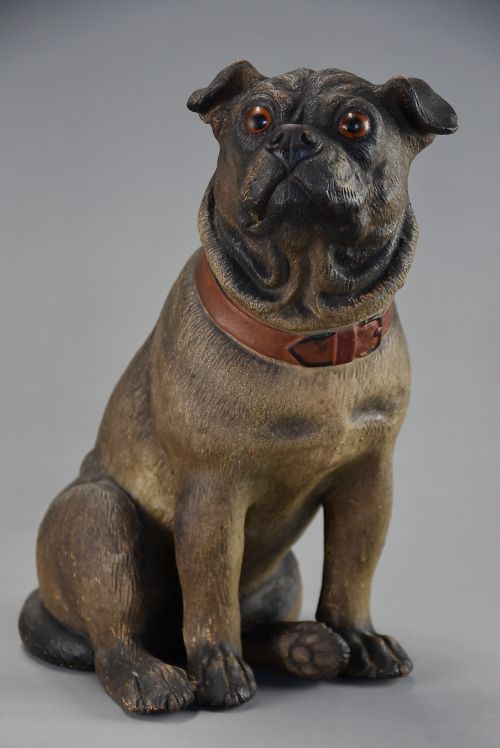
The most common formats on this page include framed paintings on panel or paper, alongside Austrian cold painted bronzes and life-size terracotta figures of the seated dog. Many examples originate from Austrian workshops working in the animalier style.
Buyers seek these works for their direct characterisation of the breed, capturing the characteristic folds, alert ears and stocky posture with the realism favoured by period artists.
Materials and construction
Paintings utilise oil on wood panel and watercolour on paper, housed within hardwood frames. The application shows fine brushwork suited to rendering the short coat and facial creases.
Three-dimensional pieces employ terracotta and bronze. Terracotta models are moulded and fired, whilst bronze figures undergo the cold painted enamelling process where colour is applied to the metal surface after casting.
Pug Painting Retail Price Guide 2026
Typical asking prices for pug painting among the pieces listed under this phrase on Sellingantiques today, from the lower quarter to the upper quarter. They describe what is for sale here now, not the wider market.
Listings on this page span the 19th century and early 20th century, featuring oil, watercolour, bronze, and terracotta.
Judging quality in these pieces
For bronzes and terracotta models, the preservation of the original surface paint and the crispness of the modelling separate finer pieces from simpler decorative items.
Bernard Bloch Austria·Bergman
The Pug Painting Glossary
- Animalier
- A nineteenth-century artistic style devoted to the realistic portrayal of animals. It encompasses both sculptural and painted works.
- Cold painted bronze
- Bronze sculpture finished with layers of cold enamel paint applied after casting rather than fired in a kiln. This technique yields vivid surface details.
- Oil on panel
- A painting executed on a wooden support rather than canvas. This solid backing was common in the nineteenth century for smaller cabinet works.
- Terracotta
- Fired unglazed clay used for sculptural figures. It allows for deep modelling of texture before the firing process.
Pug Painting: Frequently Asked Questions
What periods do these pieces come from?
The selection spans the nineteenth century through to the 1920s, covering late Victorian and Edwardian eras. Most items date from the period between 1880 and 1910.
This timeframe represents the height of popular animalier sculpture and portraiture in European decorative arts.
Are these works Austrian in origin?
Many of the terracotta figures and cold painted bronzes originate from Austrian workshops. Austrian makers were particularly noted for their terracotta animal sculpture and detailed bronze foundry work.
Paintings on this page reflect broader European portrait traditions of the period.
Where were these pieces displayed originally?
Smaller paintings and bronze inkwells sat upon writing desks or drawing room tables. Larger terracotta figures stood directly on the floor as decorative ornaments.
Their domestic scale reflected the popularity of keeping pugs as household companions in the Victorian period.