

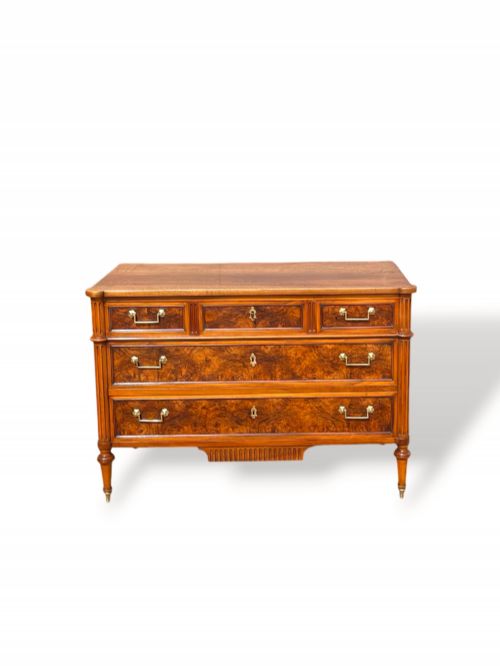

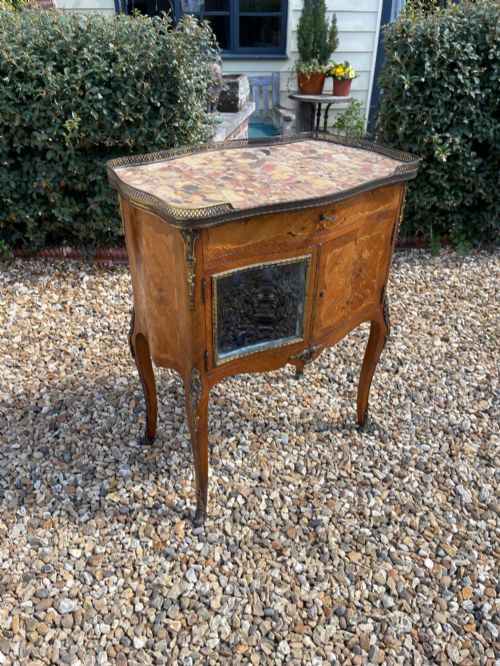
Provincial Walnut Commode
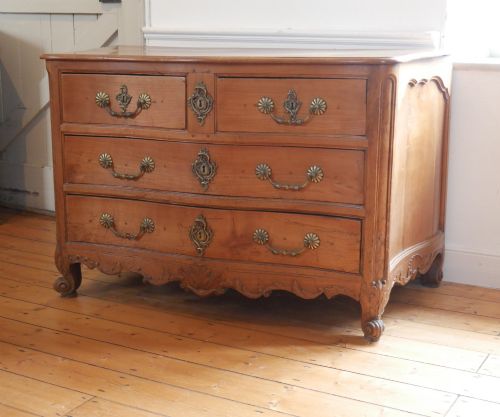
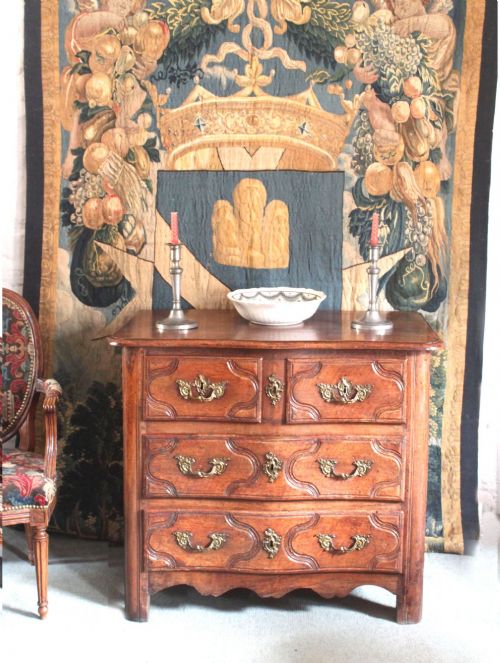
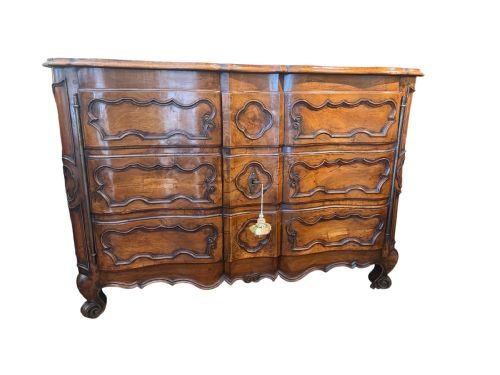
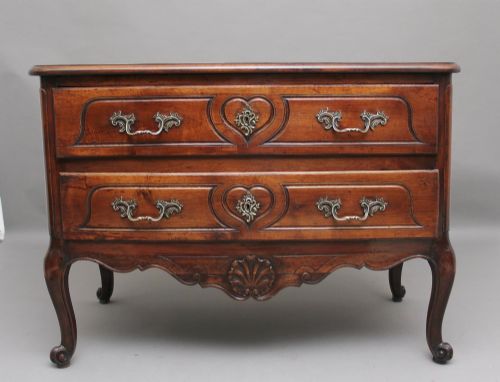
A provincial walnut commode brings substantial French regional character to a room through deep wood grain and curved drawer fronts.
Provincial Walnut Commode
A provincial walnut commode is a low storage chest designed for domestic rooms, emerging predominantly from French regional workshops across the eighteenth and nineteenth centuries. Buyers searching this phrase look for solid timber construction combined with regional stylistic touches distinct from court furniture.
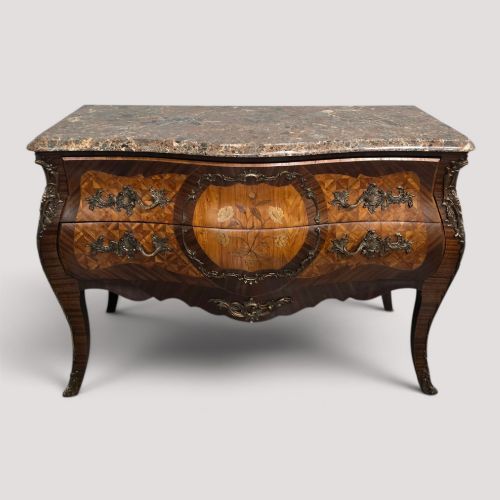
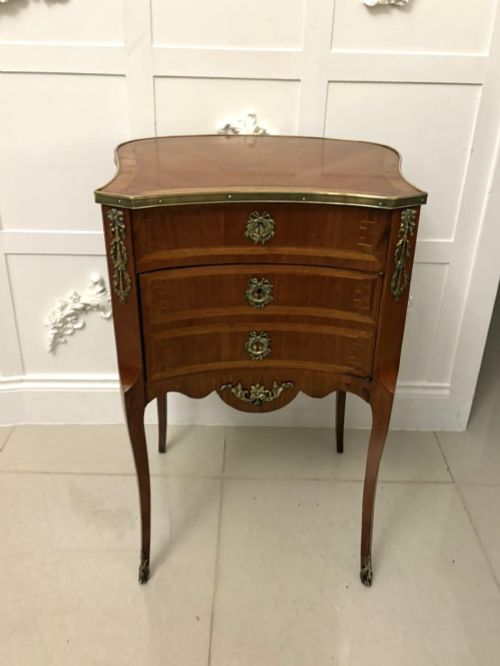
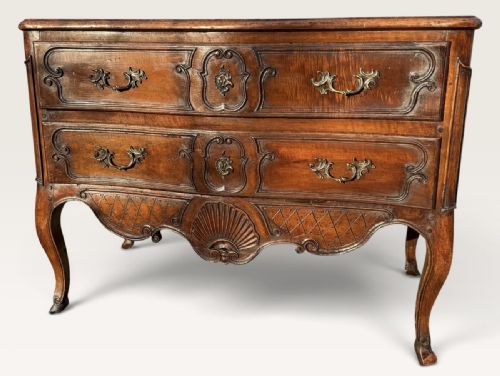
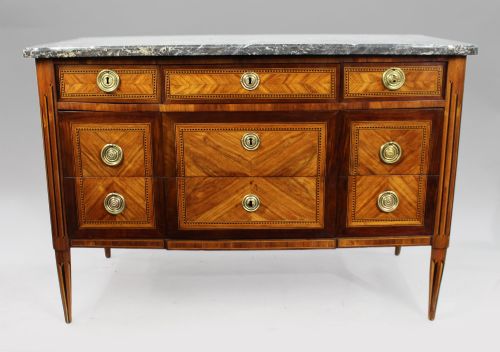
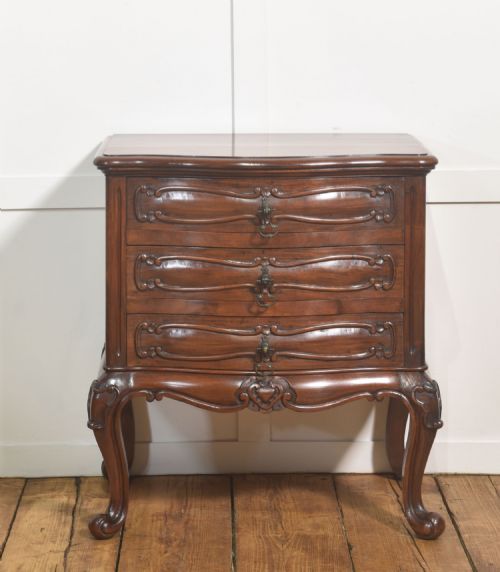
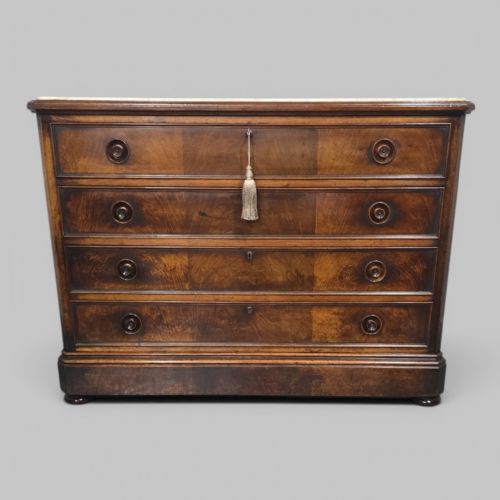
The pieces appearing on this page span from eighteenth-century examples with serpentine or bow fronts to later nineteenth-century interpretations and early twentieth-century revivals. Alongside traditional multi-drawer chests, the selection includes bedside tables, side cabinets, and commodes featuring cupboard doors or lift tops.
Regional variations often display simpler lines than Parisian counterparts, utilising local timbers and straightforward construction methods suited to provincial homes. Walnut remains the dominant wood, occasionally accompanied by burr elm or accented with marquetry and parquetry patterns.
How They Were Made
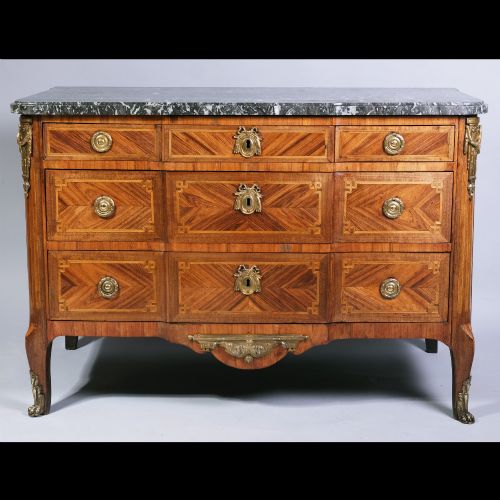
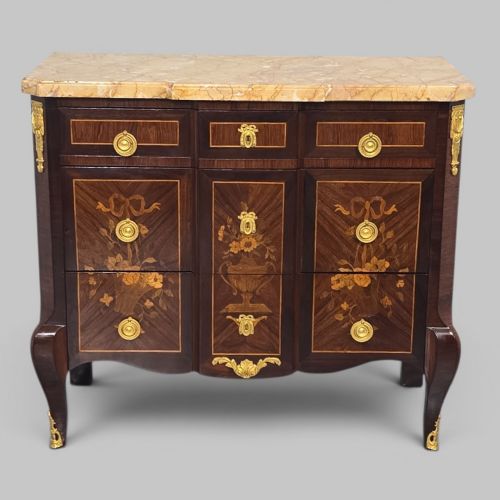
Cabinetmakers constructed these pieces using solid walnut timbers, frequently applied as veneers or geometric parquetry over secondary woods. Tops often incorporate fitted marble slabs, particularly on Louis XV and Louis XVI style examples from the eighteenth and nineteenth centuries.
Metal mounts in brass, ormolu, or gilt bronze appear on select pieces to accent drawer pulls, key escutcheons, and corner feet. Iron hardware remains common on simpler country pieces, while marquetry details integrate contrasting timbers like kingwood.
Some provincial commodes arrive with lift tops hiding secret compartments, proving country cabinetmakers enjoyed surprising their clients.
What Varies in Quality
The integrity of the timber and the depth of the natural grain determine the visual weight of the piece. Examples with well-figured walnut or intricate parquetry hold greater presence than plain surfaces.
Construction nuance shows in the handling of curved contours, such as serpentine and bombe profiles that demand precise carpentry. The integration of original marble tops and matching brass hardware further distinguishes finer regional work from standard utility pieces.
The Provincial Walnut Commode Glossary
- Commode
- A low French chest of drawers or cabinet designed for domestic use. These pieces often feature two or three main drawers and stand on short legs.
- Serpentine
- A furniture front curving inward at the centre and outward at the ends in a continuous wave line. This shape requires skilled timber shaping.
- Parquetry
- Geometric patterns formed by fitting small pieces of veneer into wooden surfaces. It differs from marquetry by using strictly geometric tile arrangements.
- Ormolu
- Gilt bronze mounts applied to furniture for decoration during the eighteenth and nineteenth centuries. The technique involves applying a gold-mercury amalgam to bronze.
- Bombe
- A swollen or bulging convex contour on the sides and front of a cabinet. This curved profile is typical of advanced Louis XV case furniture.
Provincial Walnut Commode: Frequently Asked Questions
How do I date an antique commode?
Dating relies on examining construction joints, hardware, timber types, and overall stylistic markers. Eighteenth-century pieces typically show hand-cut joinery and native regional timbers.
Later nineteenth-century and twentieth-century revivals often adopt formal Louis styles with machine-finished elements or standardised brass mounts.
Where were these commodes used?
Original owners placed these chests in domestic rooms, including bedchambers and parlours, for storing clothing and personal items. Marble-topped versions also functioned as bedside cabinets or side tables.
Today, they integrate easily into modern interiors as statement storage pieces in hallways, living rooms, or bedrooms.
Are marble tops original to these pieces?
Many eighteenth-century and nineteenth-century commodes feature fitted marble slabs designed to protect the wooden top from spills and heavy use. Regional makers frequently paired white or grey marble with walnut carcases.
Examining the edge finish and the fit against the timber helps determine if the stone belongs to the original construction period.