

Provincial Walnut Chest
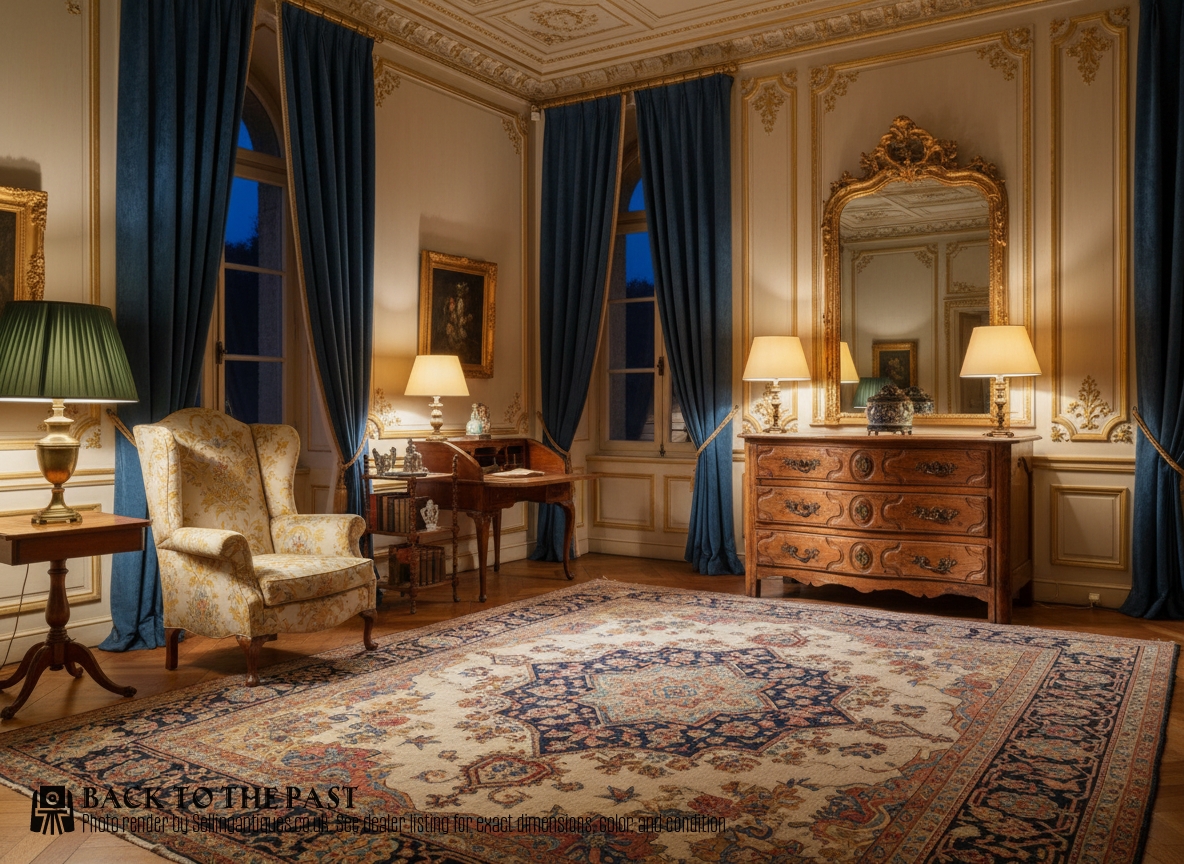
A provincial walnut chest brings warmth and character to a room, offering sturdy storage fashioned from rich, figured timber.
Provincial Walnut Chest
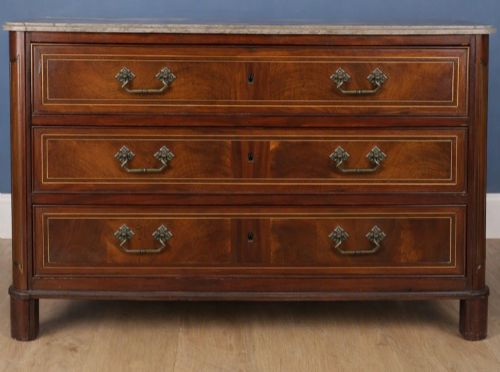
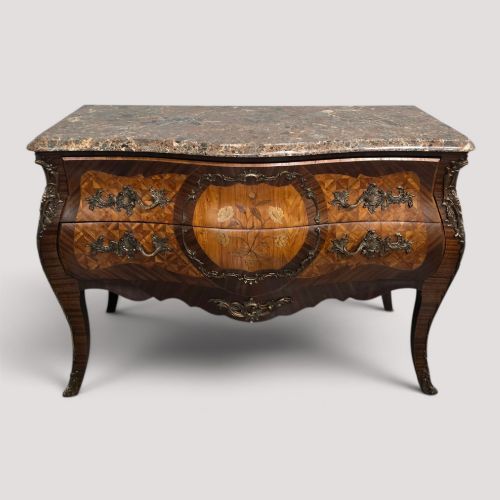
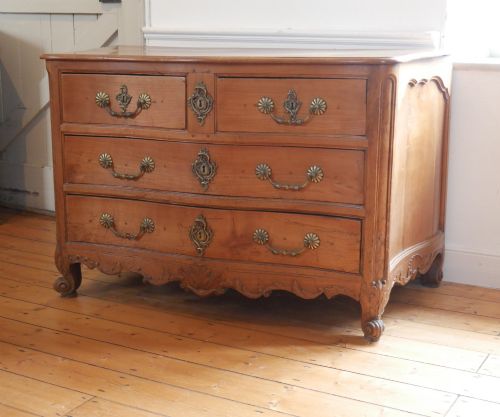
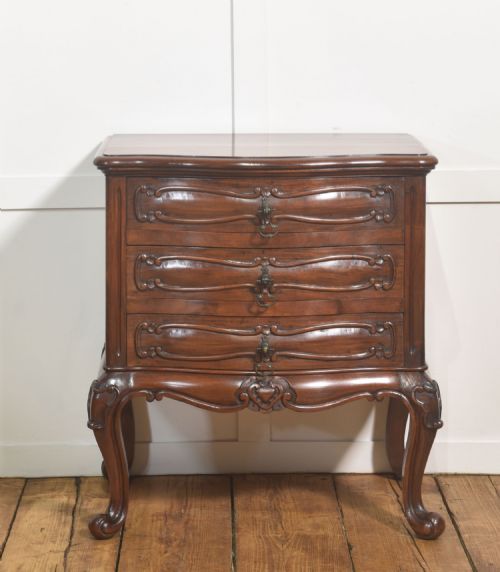
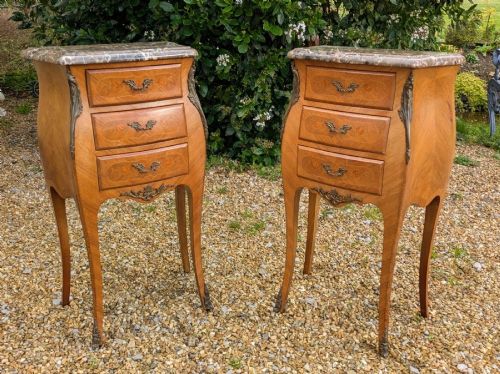
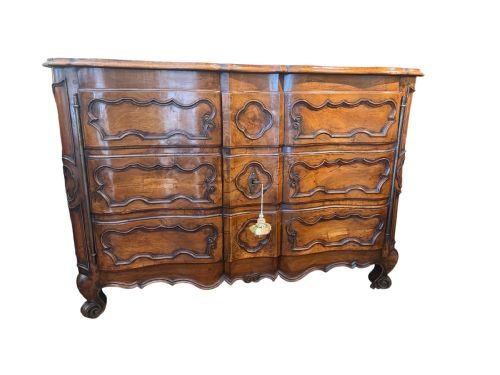
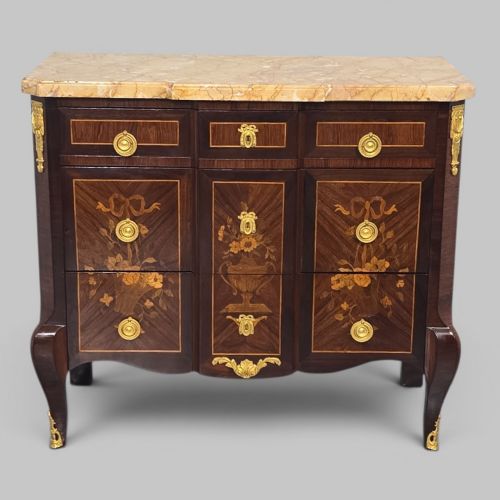
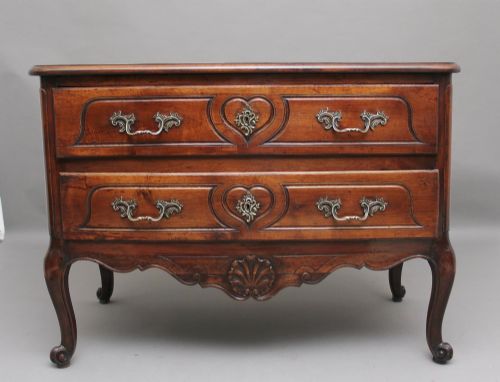
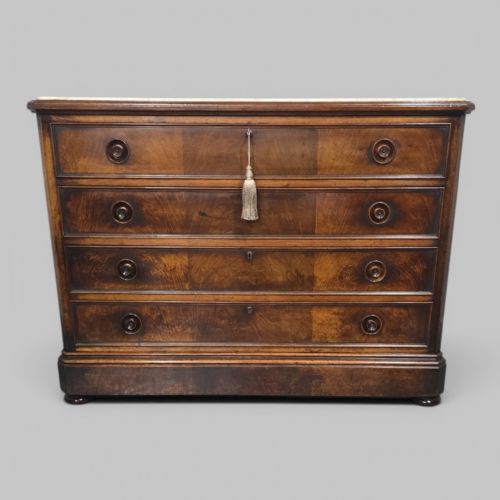
A provincial walnut chest typically takes the form of a commode, a chest of drawers, or a bedside cabinet originating from regional European workshops. These pieces balance functional storage with regional aesthetic charm, often displaying serpentine, bow front, or bombe silhouettes.
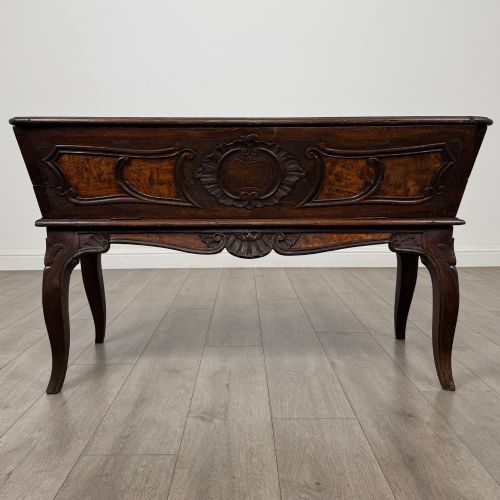
Most examples found in this selection date from the eighteenth and nineteenth centuries, alongside later twentieth-century revival pieces produced in French provincial styles. Buyers encounter various utilitarian forms, including bedside tables, dough bins, and side cabinets, constructed away from metropolitan centres.
Materials and construction methods
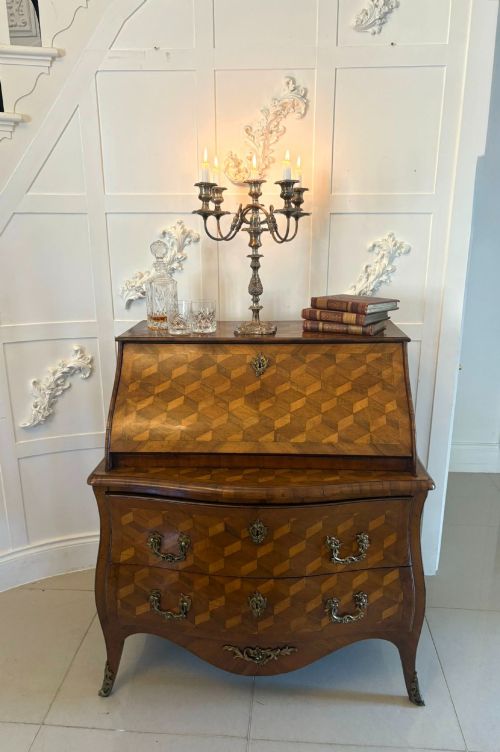
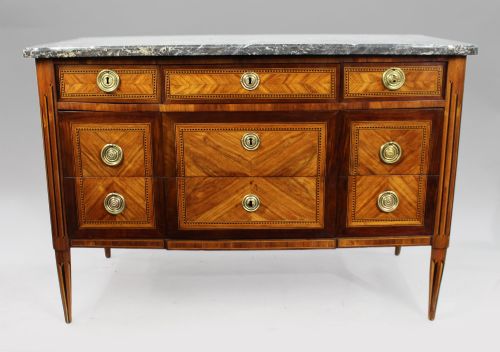
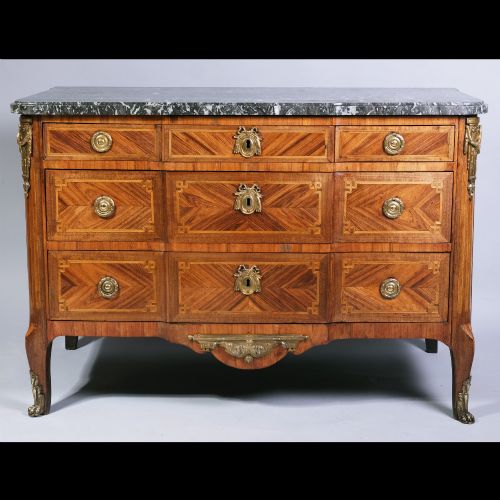
Makers utilised solid walnut and walnut veneer, occasionally incorporating parquetry, marquetry, and contrasting timbers like kingwood for decorative surface patterns. Structural integrity relied on traditional joinery methods suited to domestic workshops.
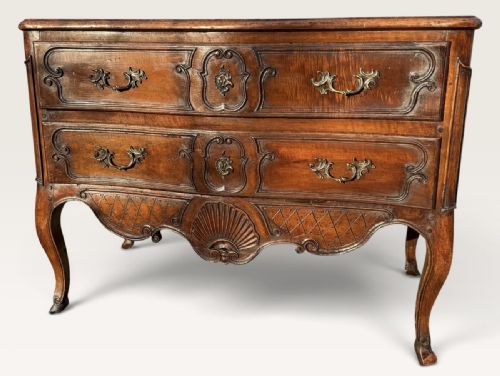
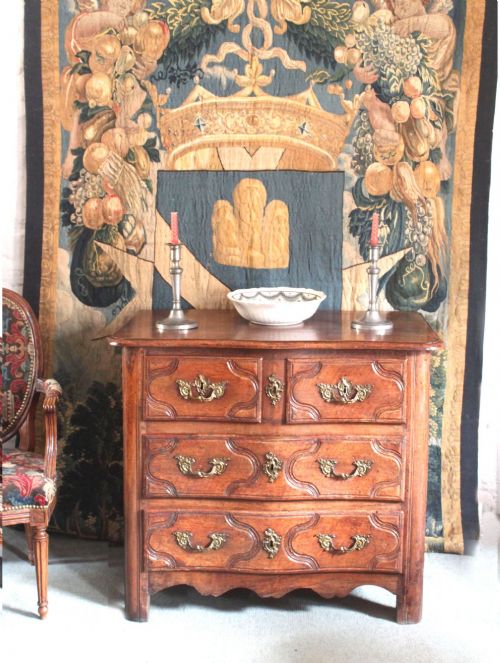
Many commodes and bedside cabinets incorporate fitted marble tops, while hardware such as brass handles and ormolu mounts provide functional closure and decorative contrast. Carved details frequently appear on skirts and frames, reflecting local stylistic preferences of the period.
Several dough bins hide practical domestic storage beneath unassuming wooden lids.
Distinctions in craftsmanship
The sophistication of the surface patterning separates standard items from exceptional examples, particularly where intricate parquetry or burr elm and walnut veneers align precisely. Hand-carved mouldings and the fluency of serpentine or bombe contours indicate greater maker proficiency.
The integration of materials such as matching marble slabs and quality brass hardware elevates an item's overall cohesion. Pieces retaining untouched original patination demonstrate superior historic survival compared to heavily restored surfaces.
The Provincial Walnut Chest Glossary
- Commode
- A low chest of drawers or cabinet, frequently fitted with a marble top.
- Bombe
- A swelling, outward-curving chest profile characteristic of continental cabinet-making.
- Parquetry
- Geometric wood-mosaic work used for decorative surface veneers.
- Serpentine
- A furniture front or edge shaped with a central concave curve flanked by convex sweeps.
- Marquetry
- Elaborate veneer patterns depicting pictorial or floral designs using various woods.
Provincial Walnut Chest: Frequently Asked Questions
What is a provincial walnut chest?
A provincial walnut chest is a regional storage piece, most commonly a commode or chest of drawers, made outside major capital cities.
These pieces use local walnut timber and often display regional decorative flourishes distinct from metropolitan furniture.
How do I date an antique walnut commode?
Dating relies on examining construction techniques, joinery, handle types, and overall silhouette styling such as Louis XV or Louis XVI.
Secondary woods used in drawer linings and the wear patterns on the timber also provide reliable chronological indicators.
Where were these pieces made?
The pieces originate primarily from regional French workshops, reflecting provincial interpretations of prevailing court styles.
Cabinet-makers in different regions adapted local materials like walnut and burr elm to satisfy domestic storage needs.
How do I care for a walnut chest?
Walnut furniture requires placement away from direct heat sources and strong sunlight to prevent timber movement and veneer drying.
Occasional application of appropriate wax preserves the historic finish and maintains the natural lustre of the wood.