





Provincial Oak Coffer
These provincial oak coffer pieces are sturdy storage chests built from solid timber to last generations, offering honest craftsmanship for the home.
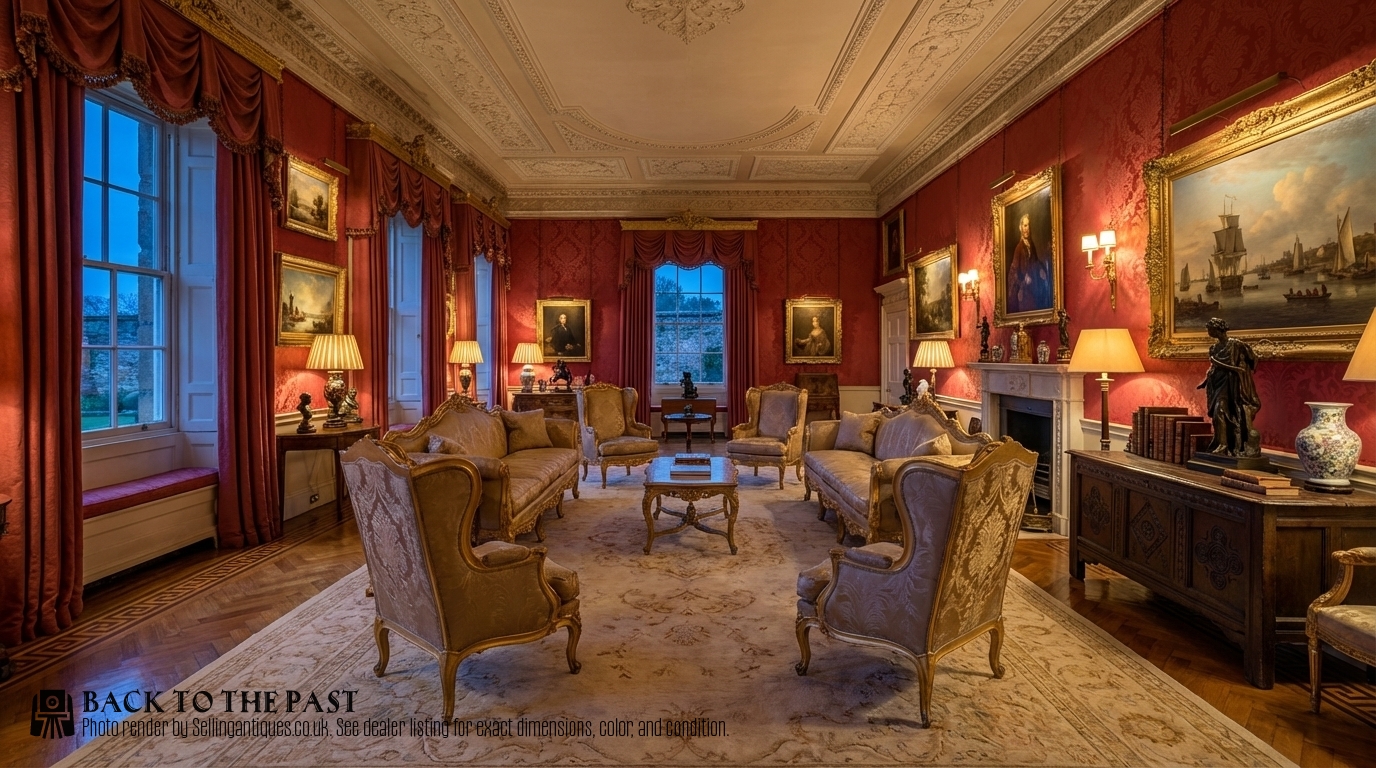
Provincial Oak Coffer
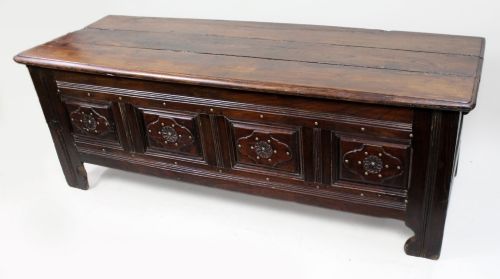
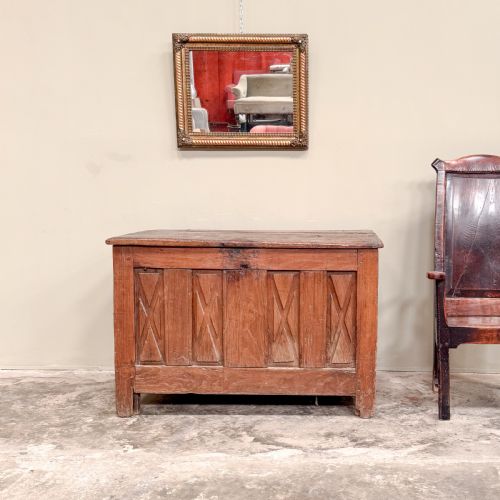
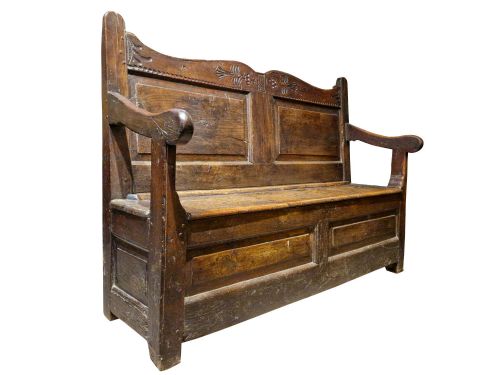
A provincial oak coffer is a robust storage chest originating from regional workshops during earlier centuries, designed for domestic use and safekeeping. The pieces recorded here span the seventeenth, eighteenth, and nineteenth centuries, taking forms such as standard storage chests, miniature boxes, settles with box seats, and panelled hall benches. French provincial examples appear frequently alongside English country and Welsh vernacular items, showing regional adaptations in their construction.
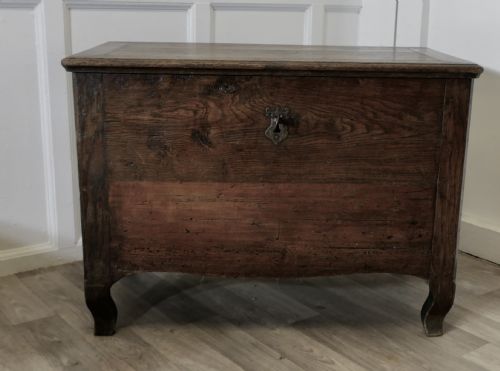
Buyers will encounter various formats including large carved coffers fitted with interior candle boxes, smaller strong boxes, and serpentine commodes with lift tops. The primary form remains the heavy timber chest, often panelled and deployed across hallways, living spaces, and bedchambers. These items reflect the practical domestic needs of past households, moving from simple utilitarian storage to decorative provincial furniture.
How They Were Made
Makers constructed these coffers primarily from solid oak, sometimes supplemented by pine, walnut, and ebonised wood for contrast and detail. Structural reinforcement relied upon hand-forged wrought iron and brass hardware, securing heavy lids and panelled joints.
Surface treatment involved traditional carving techniques applied directly to the timber, alongside occasional wood inlay. Construction methods prioritized durability, utilising heavy framing and panel assembly to accommodate the natural movement of solid oak over centuries.
Listings feature oak, pine, walnut, and ebonised wood across seventeenth, eighteenth, and nineteenth-century periods.
What Varies in Quality
Quality in a provincial oak coffer is determined by the crispness of the hand-carving and the integrity of the original timber framing. Pieces that retain their heavy brass or wrought iron hardware in an uncompromised state stand apart from those with later replacements.
Proportion and scale also dictate distinction, from miniature boxes to large, deeply panelled hall benches. The sophistication of regional joinery, whether French provincial, Jacobean, or Welsh vernacular, dictates the depth of historical character a piece holds.
The Provincial Oak Coffer Glossary
- Oak
- A durable hardwood native to temperate regions, prized for its strength and prominent grain. It served as the primary material for sturdy historical furniture.
- Coffer
- A large wooden chest traditionally used for holding valuables, linens, or documents. Its heavy lid often doubled as a surface or seat.
- Settle
- A wooden bench featuring high backs and solid arms, frequently built with a box seat beneath the squab. It provided draught protection and extra storage in early domestic interiors.
- Vernacular
- Architecture and furniture built by local artisans using traditional regional styles and locally sourced materials. These pieces reflect specific geographic traditions rather than courtly fashions.
- Serpentine
- A furniture outline characterised by a wavy, undulating edge curving inward and outward. This decorative contour appears on commodes and case pieces from later periods.
Provincial Oak Coffer: Frequently Asked Questions
What is a coffer?
A coffer is a heavy wooden chest traditionally used for secure storage of valuables, documents, or household linens. Its flat top often allowed the piece to double as a table or a bench.
These chests formed a central part of early domestic furniture before fitted cupboards and wardrobes became common in homes.
How were box-seated settles used?
Box-seated settles combined a high-backed wooden bench with a lidded storage compartment beneath the seat. They stood near hearths to block cold draughts while keeping everyday items close at hand.
The dual function made them essential furniture for communal rooms in provincial dwellings.
How do you date an oak coffer?
Dating relies on examining the construction joints, tool marks, and regional style variations across the seventeenth, eighteenth, and nineteenth centuries. Hand-split boards and early ironwork point to earlier centuries.
Later pieces often incorporate softer secondary woods or refined serpentine contours associated with the nineteenth century.