


Provincial Oak Buffet
A provincial oak buffet brings robust regional character and deep historical utility directly into a modern dining room or kitchen.
Provincial Oak Buffet
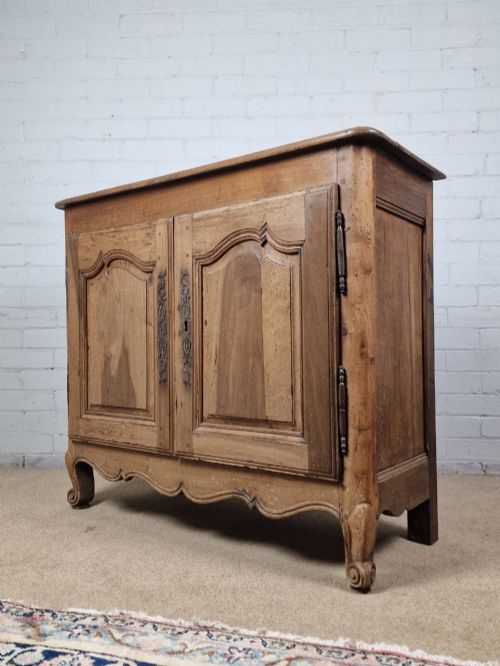
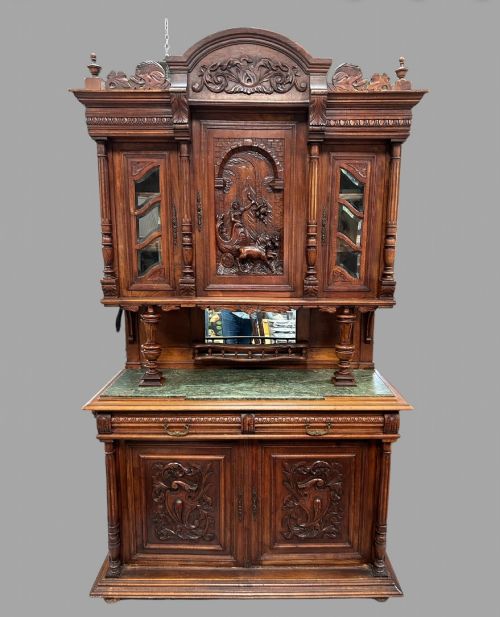
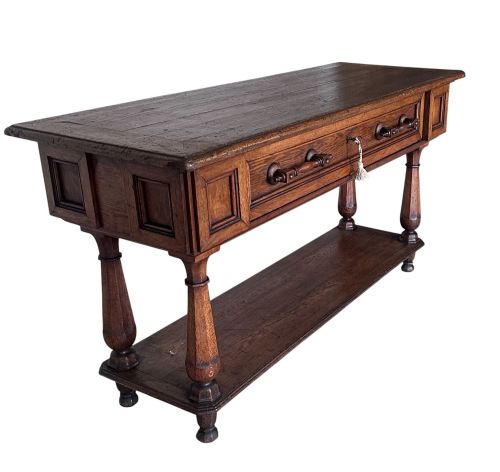
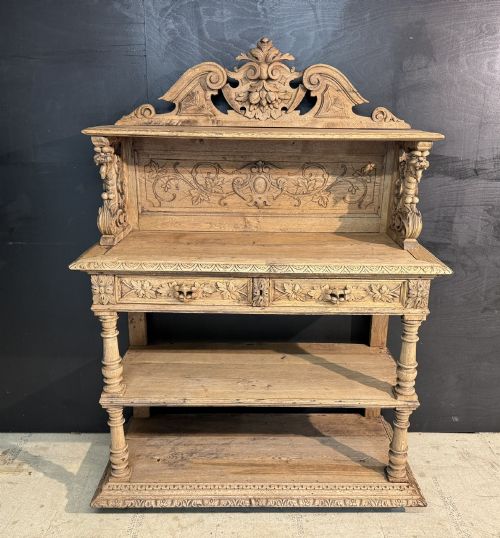
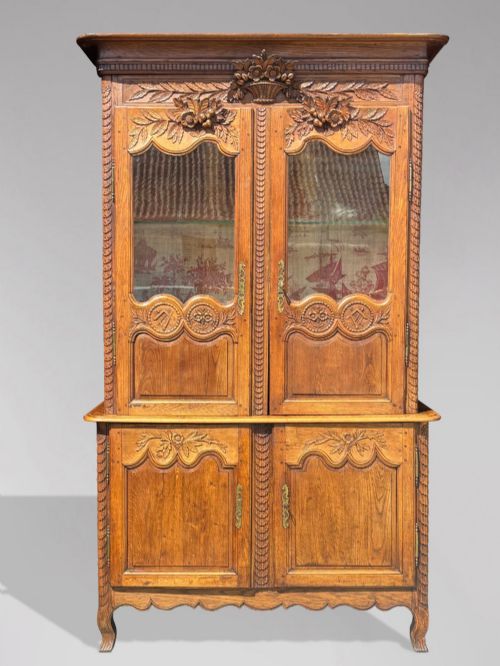
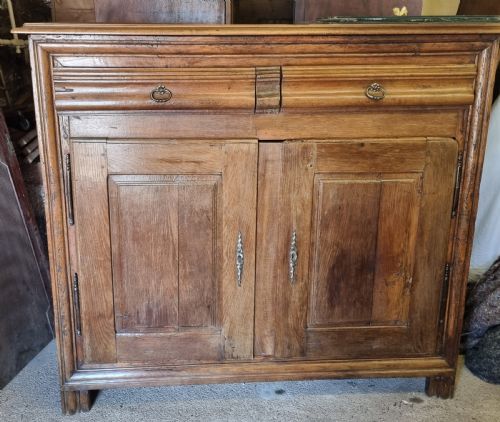
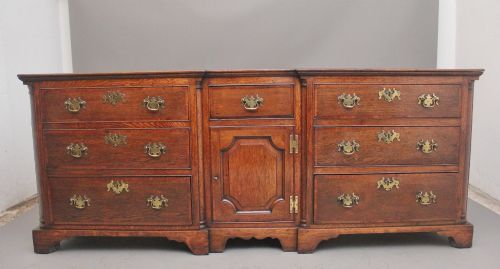
A provincial oak buffet is a heavy storage piece originating from regional workshops, frequently taking the form of low cupboards, enfilades, or two-tier buffets a deux corps. When you search for this phrase, you meet pieces primarily hailing from the eighteenth and nineteenth centuries, often showing distinct French provincial or English country stylistic influences.
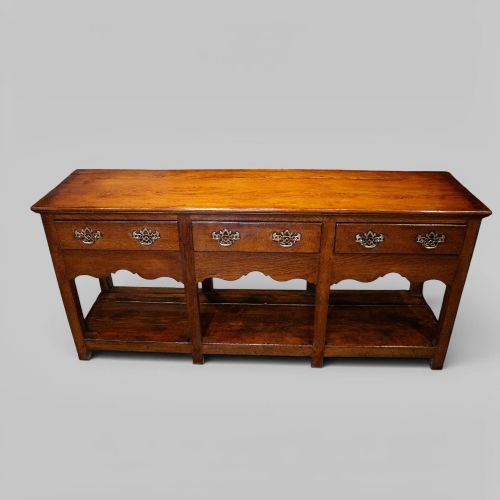
These items serve as practical dining room servers, serving tables, or larder cupboards, offering deep drawers and sturdy shelving enclosed by panelled doors. Many examples incorporate pot boards or upper cabinet sections designed originally for domestic provisions and tableware storage.
Most pieces you encounter on this page display the warm, dense grain of solid oak, sometimes accompanied by fruitwood or walnut accents. Their proportions range from low, long sideboards to tall, imposing cupboards built to anchor a rustic interior.
How they were made
Cabinet makers constructed these pieces primarily from solid oak planks, frequently joining panels with traditional mortise and tenon joints to withstand decades of heavy rural use. Secondary timbers such as fruitwood or chestnut occasionally appear in internal shelving or secondary sections.
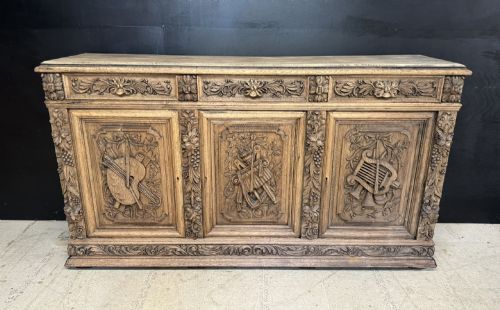
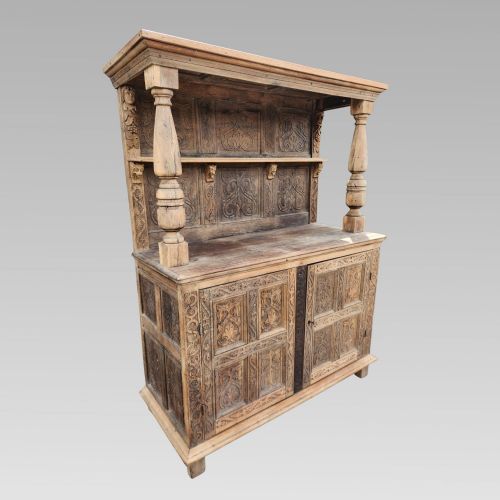
Surface ornamentation relies heavily on hand carving, creating deep relief panels depicting floral motifs, game, or geometric patterns typical of Louis XV and regional traditions. Iron or brass hardware, including hinges and escutcheons, secures the heavy doors and drawers.
Game cupboards often feature carved oak hares and pheasants to remind you what was once hung inside for dinner.
What varies in quality
The degree of hand carving and the crispness of the relief work set finer pieces apart from plain utilitarian cupboards. Regional variations also influence desirability, with certain French provincial departments and English shires commanding greater attention for their distinctive mouldings.
The integrity of the timber and the retention of original brass or iron hardware determine the overall authenticity and visual harmony of a piece. Thick oak boards that have aged with a rich, undisturbed patina represent the higher tier of survival.
The Provincial Oak Buffet Glossary
- Buffet a deux corps
- A tall two-part cupboard featuring a smaller upper cabinet resting upon a larger lower buffet base. This form provided substantial storage for household provisions in large country houses.
- Enfilade
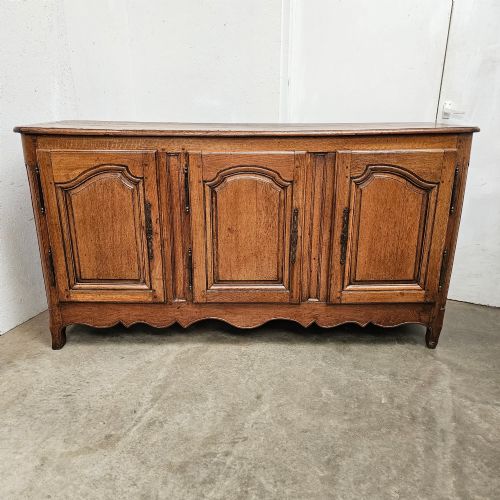
- A long sideboard or buffet fitted with a sequence of three or more doors in a continuous line. These low storage units suit modern dining spaces well.
- Pot board
- An open lower shelf built into a dresser base or buffet, historically utilised for storing heavy pots and pans. It adds structural stability to the legs.
- Parquetry
- A geometric mosaic of wood pieces used for decorative effect, occasionally found on the top surfaces of later buffets. It demonstrates a finer level of cabinet making.
- Vaiselier
- A regional term for a buffet or dresser designed to display ceramic plates and serving dishes on integrated upper shelving. The base typically houses enclosed storage cupboards.
Provincial Oak Buffet: Frequently Asked Questions
What is a provincial oak buffet used for?
These pieces serve primarily as heavy-duty storage and serving surfaces in dining rooms, kitchens, or hallways. They hold dinnerware, linens, and provisions while anchoring the room with rustic presence.
Historically, they acted as the central utility hub for country households, transitioning easily into modern settings as sideboards or cocktail cabinets.
How do I date an 18th century oak buffet?
Dating relies on examining the construction methods, such as hand-cut dovetails, pegged mortise and tenon joints, and the tool marks left by early adzes. The presence of traditional hardware and natural timber shrinkage also indicates age.
Stylistic cues like Louis XV scrolling or regional provincial carving help narrow down the decade of manufacture alongside the wear patterns on internal shelves.
Are these buffets solid oak?
Most pieces listed here utilise solid oak for their main framework, doors, and top panels, often complemented by secondary timbers like fruitwood or chestnut in less visible areas. Regional cabinet makers relied on local hardwoods for durability.
Secondary woods occasionally appear in drawer linings or backboards, which remains entirely standard for authentic period country furniture.
How do I care for antique oak furniture?
Maintain the timber by applying natural beeswax sparingly to nourish the dry wood and preserve its historic patina. Avoid placing the piece near direct heat sources or strong sunlight to prevent warping.
Dust regularly with a soft cloth and wipe spills immediately to protect the aged finish from moisture rings and permanent staining.