
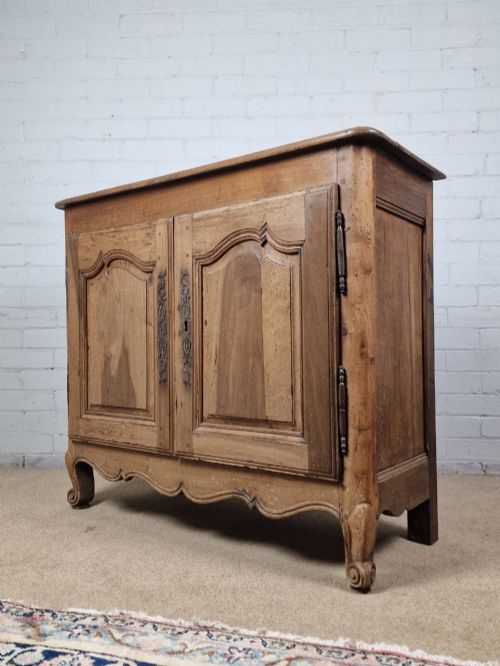
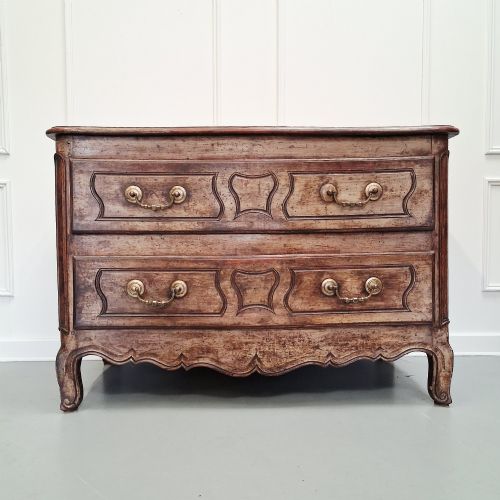
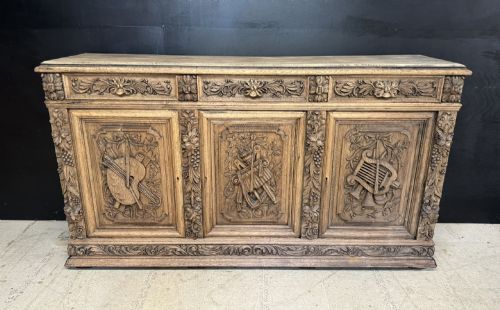
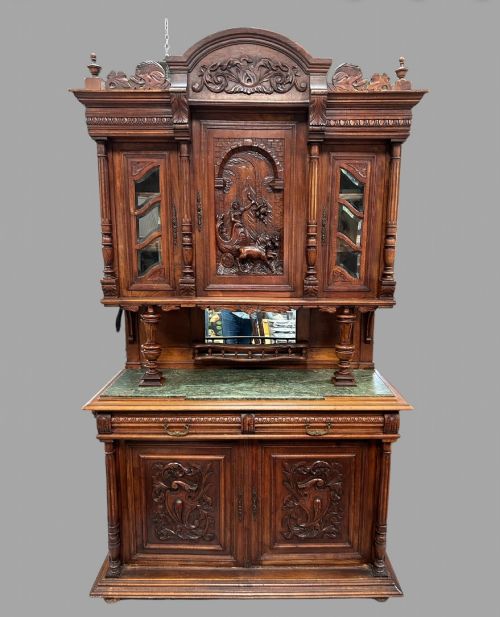
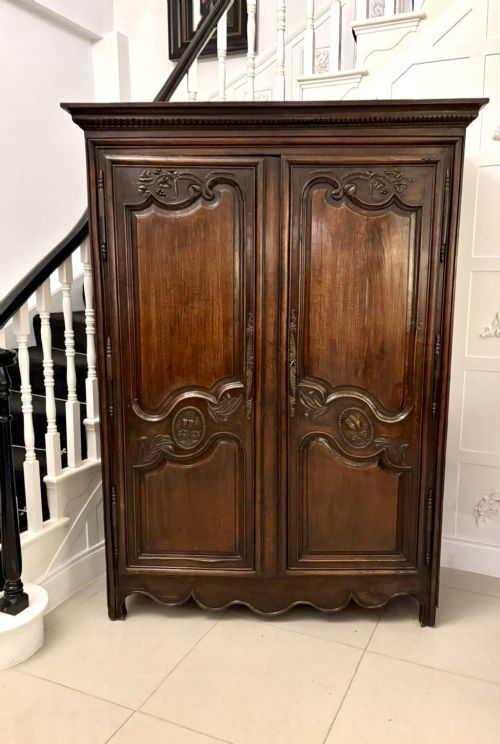
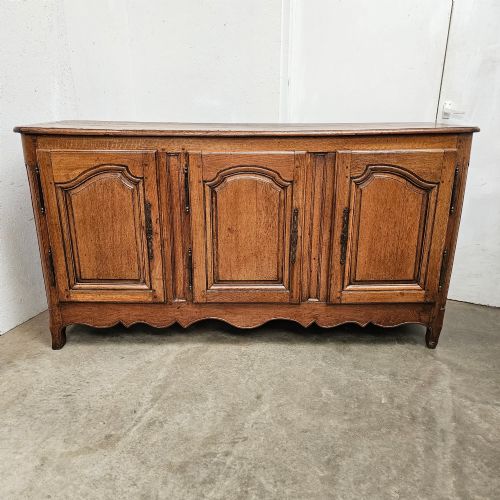
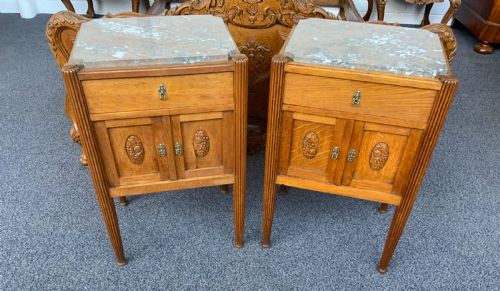
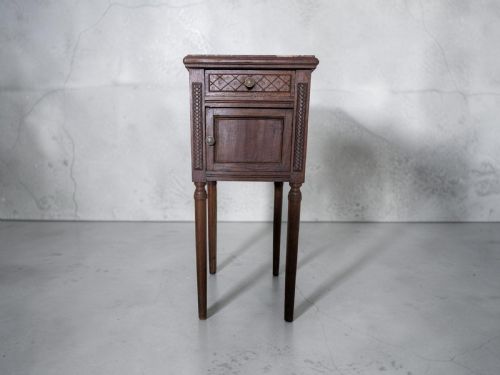
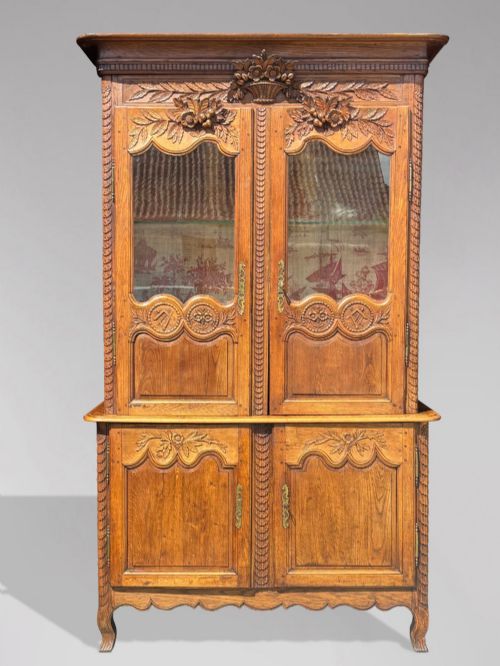



Provincial Carved Oak Cabinet
A provincial carved oak cabinet brings rustic French character and robust timber storage into a modern interior.
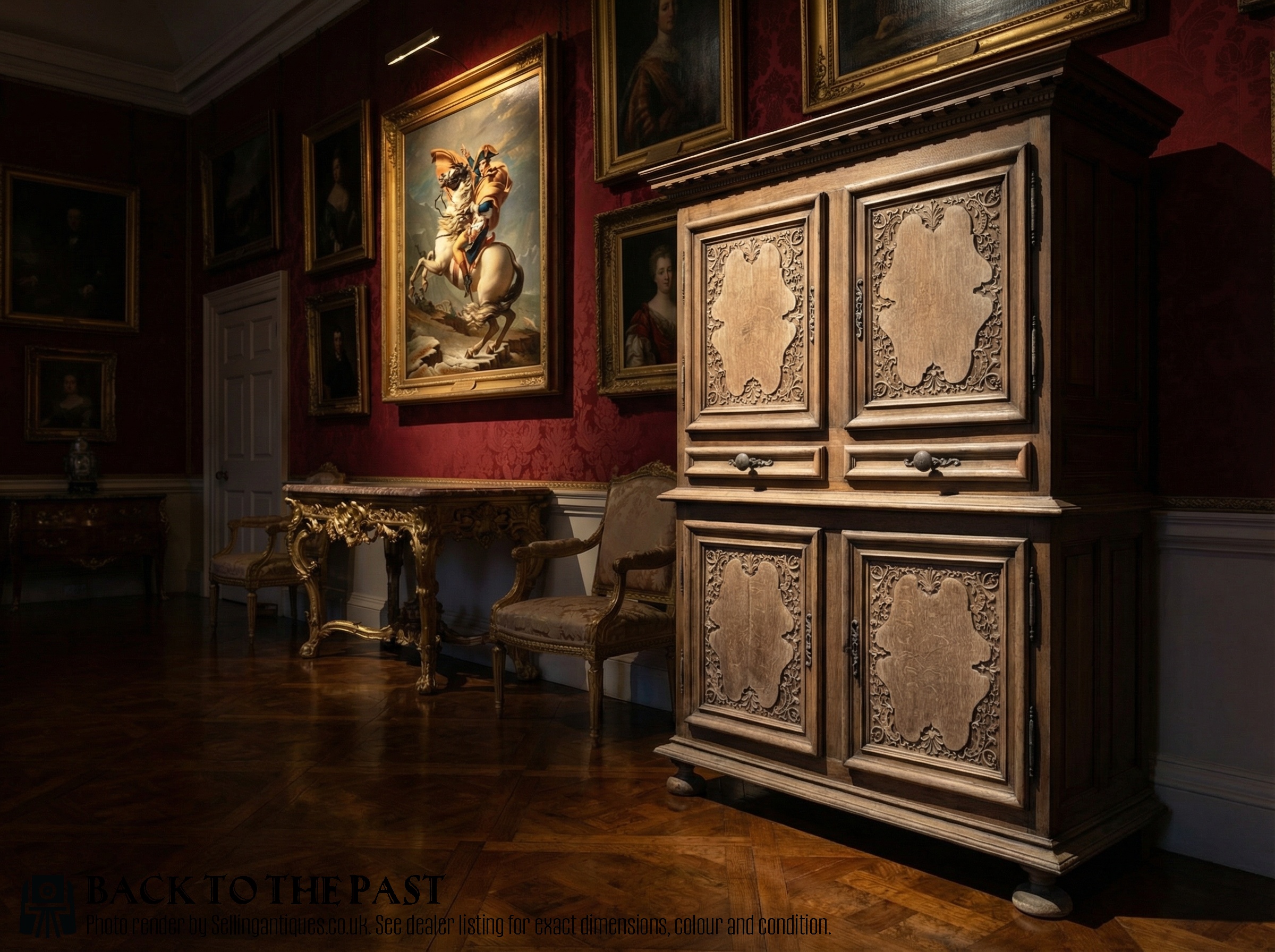
Provincial Carved Oak Cabinet
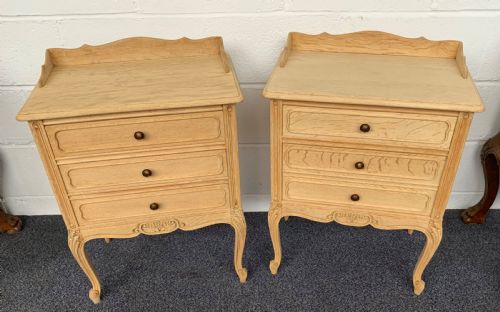
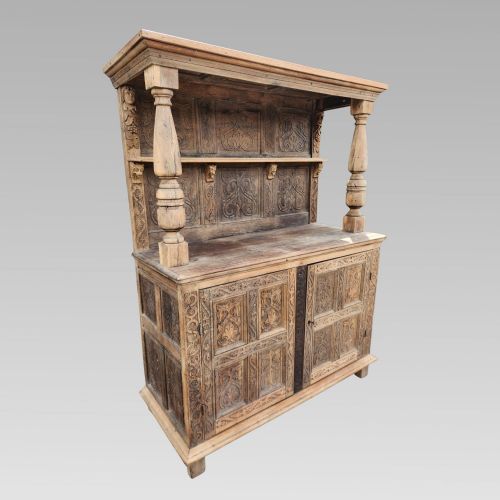
A provincial carved oak cabinet covers a broad family of storage furniture originating from French regions and country houses, spanning small bedside tables to grand armoires and buffets. When searching this phrase, buyers encounter substantial timber pieces built for domestic use, ranging from eighteenth-century commodes and larder cupboards to later art deco bedside units.
The selection here heavily reflects French provincial craftsmanship, featuring regional forms such as the buffet deux corps, enfilade, and hanging food cupboard. Many examples date from the eighteenth and nineteenth centuries, alongside twentieth-century iterations in bleached oak and paired bedside formats.
What varies in quality
Quality rests in the crispness of the hand-carving and the proportional balance of the carcass, where regional vernacular details remain sharp rather than softened by later wear or heavy restoration. The integrity of the timber, the presence of original hardware, and the harmony of the joinery define the distinction between standard utility furniture and superior cabinet-making.
Listings span from the 1750s through the art deco period of the 1930s, featuring oak, walnut, marble, and brass.
The Provincial Carved Oak Cabinet Glossary
- Buffet deux corps
- A large two-tier storage cabinet featuring an upper cupboard section resting upon a deeper lower base. This traditional form was commonly used in French provincial dining rooms for storing tableware and provisions.
- Enfilade
- A long sideboard or buffet fitted with a continuous run of doors across the front. These pieces typically provide extensive low storage for dining spaces.
- Commode
- A low chest of drawers or cabinet designed with a flat top surface. In French furniture traditions, these often stand on short cabriole or bracket feet.
- Armoire
- A tall freestanding wardrobe or linen cupboard enclosed by doors. Country versions often display deep panels and robust peg joinery.
- Parquetry
- A geometric mosaic pattern of wood pieces used for decorative effect on tabletops and cabinet surfaces. It appears frequently on twentieth-century surfaces.
Provincial Carved Oak Cabinet: Frequently Asked Questions
What rooms suit a provincial carved oak cabinet?
These storage pieces fit naturally into dining rooms, kitchens, and hallways where substantial timber presence anchors the space. Smaller bedside formats suit bedrooms requiring surface space and enclosed storage.
Larger armoires and buffets provide practical linen or crockery storage while introducing distinct historic character to contemporary or traditional interiors.
How do I distinguish eighteenth-century pieces from later styles?
Eighteenth-century examples display hand-cut peg joinery, deeper natural patination, and vernacular regional carving that reflects local workshop traditions. Twentieth-century revivals often utilise cleaner lines, lighter bleached oak finishes, or art deco geometric styling.
Examining the interior construction, backboards, and fastener types helps clarify the manufacturing period of individual cabinets.
Are bleached oak cabinets period originals?
Bleached oak finishes on these listings typically reflect twentieth-century design preferences, particularly from the interwar period and art deco eras, rather than eighteenth-century practice. Many makers stripped darker traditional finishes to achieve a lighter, matte aesthetic suited to modern rooms.
This lighter treatment remains a recognised style category within twentieth-century French provincial furniture.
How should I care for antique oak furniture?
Maintain antique oak by keeping it away from direct heat sources and sudden humidity shifts that can cause timber to split. Apply a microcrystalline wax sparingly to nourish the wood and protect the historic surface patination.
Avoid using modern silicone sprays or harsh chemical cleaners that can degrade the original finish over time.