
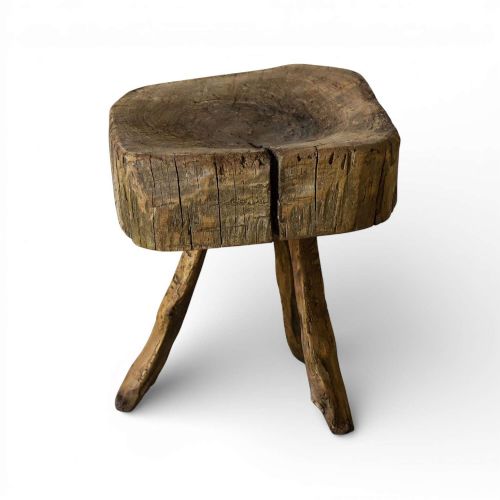
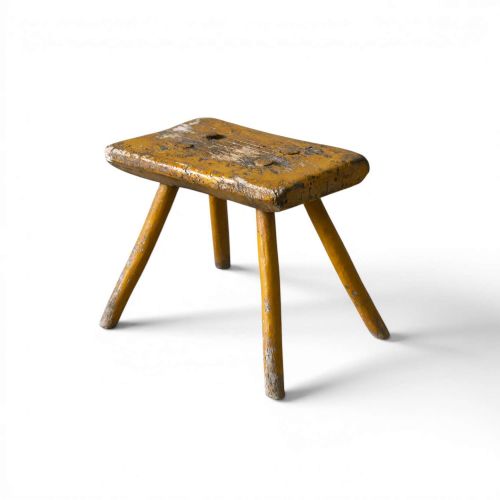
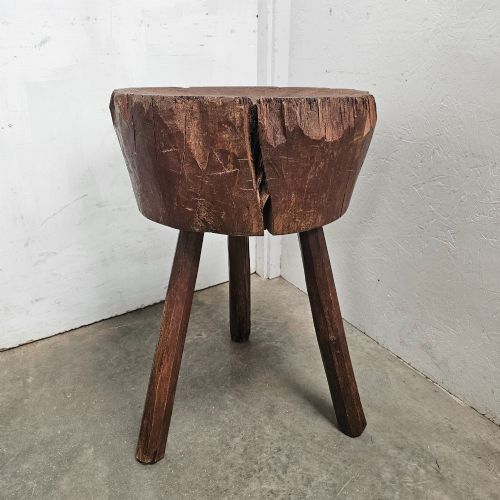
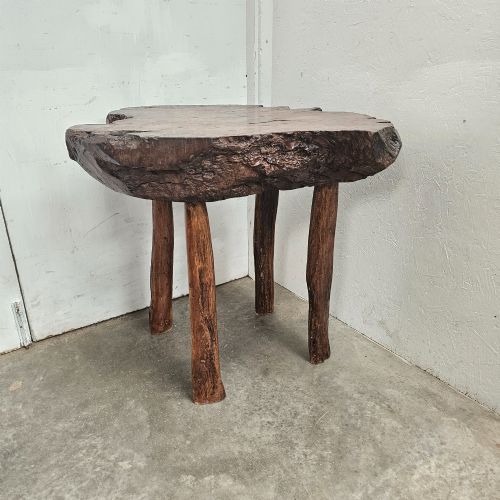


Primitive Country Side Stool
A primitive country side stool offers an honest slice of rural history, bringing unpretentious utility and tactile warmth straight into a modern home.
Primitive Country Side Stool
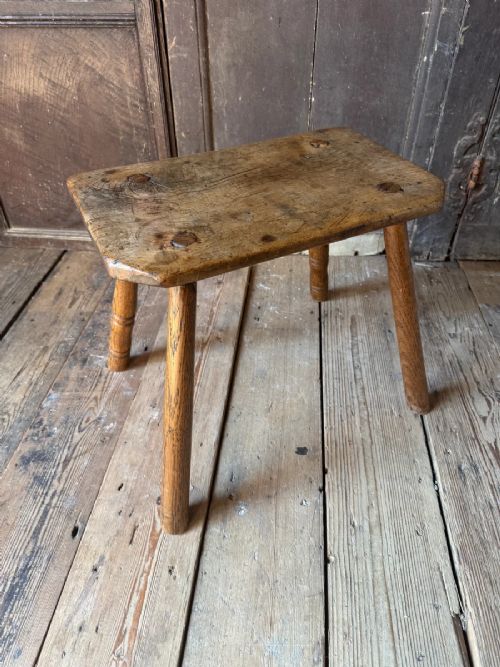
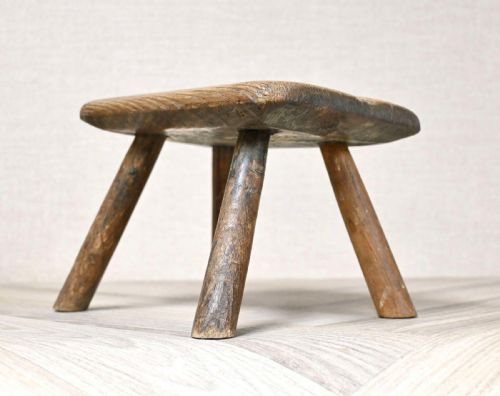
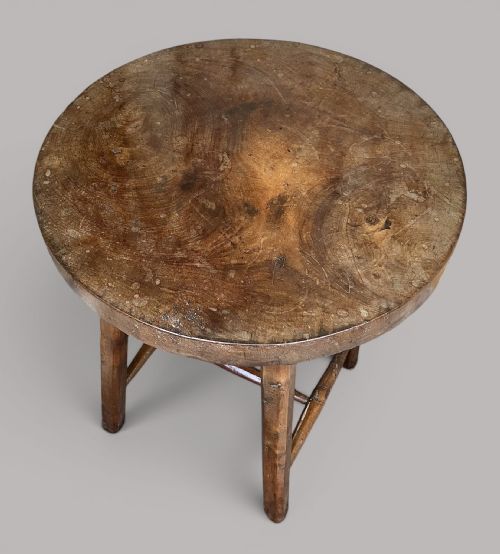
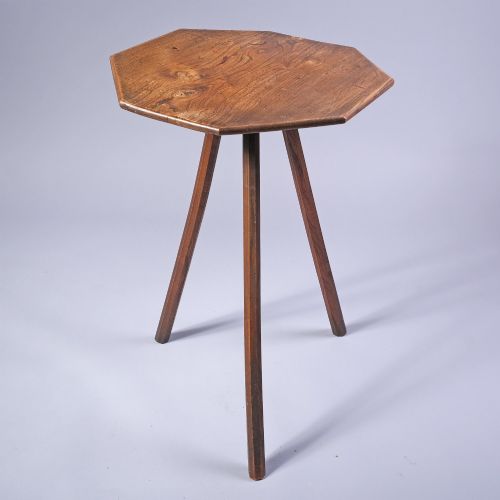
The selections span the eighteenth and nineteenth centuries, including Georgian vernacular designs alongside French country examples. Forms range from three-legged ash tables and milking stools to elm chopping blocks and square-topped oak seats.
Makers focused entirely on function, utilising whatever regional wood lay to hand. These pieces bring a stark, honest character to interiors that sleek modern furniture simply cannot replicate.
How they were made
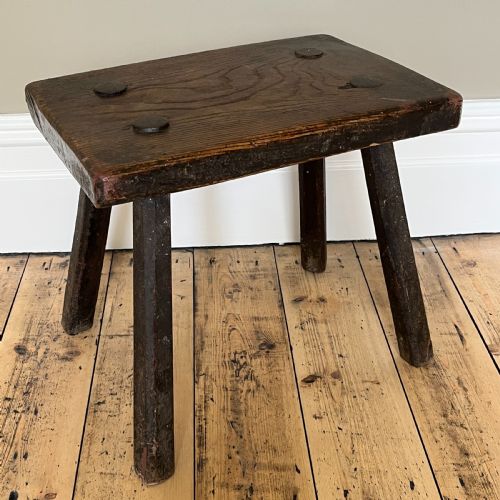
Makers relied on solid native timbers like oak, elm, ash, sycamore, and beech, selecting woods based on local availability and specific structural needs. Turning and jointing were kept simple and direct, often uniting thick slab tops with sturdy legs pegged or wedged directly into the seat.
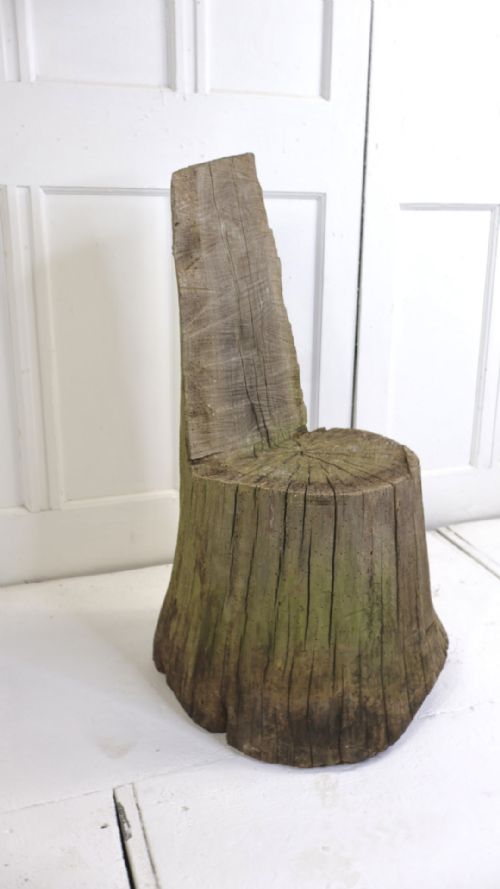
Surfaces frequently display the honest marks of hand tools, adzes, and drawknives rather than smooth factory finishes. Occasionally, pieces retain original surface treatments such as ochre paint or exhibit the gnarled natural shapes of tree trunks.
Some French milking stools still wear their original splashes of bright ochre paint.
What varies in quality
Quality in these rural items rests in the honesty of the timber and the integrity of the original construction. A piece retains greater appeal when the wood has aged naturally through generations of use without excessive restoration.
Proportion and stance distinguish a standard utility item from a truly sculptural survivor. The best examples possess a balanced weight and an unforced, organic relationship between the top and the supporting legs.
The Primitive Country Side Stool Glossary
- Vernacular
- Everyday objects made by local craftspeople for regional use rather than high-style workshop production. These items reflect the specific traditions and materials of a particular countryside.
- Chopping block
- A heavy timber block utilised for food preparation in kitchens or game larders. These blocks feature thick end-grain or cross-section surfaces built to withstand heavy cleaver work.
- Solid walnut
- Furniture constructed entirely from dense walnut timber rather than veneered softwood carcasses. This dense hardwood provides exceptional durability and a rich grain.
- Ochre paint
- An earth-pigment coating applied to wood to protect the surface and add colour. This traditional finish often survives in patinated layers on rural European seating.
Primitive Country Side Stool: Frequently Asked Questions
Are these stools comfortable to sit on?
These seats were made for short stints of practical work rather than long evening lounging. Their contoured wooden tops offer surprising ergonomic support, but they remain firm utilitarian objects.
Buyers usually place them where an occasional perch or a low surface is needed rather than an armchair replacement.
How do I clean a primitive wooden stool?
Dust the timber gently with a dry or barely damp cloth to protect the aged patina and dry surfaces. Avoid modern chemical polishes that can strip the historic finish or leave sticky residues.
Feed dry hardwoods occasionally with a traditional beeswax to maintain the natural sheen without altering the colour.
Can I use an old chopping block as a side table?
These heavy blocks make exceptional side tables or lamp stands beside low sofas. Their substantial weight provides absolute stability, while the scarred timber top adds texture to a room.
Ensure the base is fully stable before placing fragile items on top of heavy block surfaces.
How do I tell an 18th-century stool from a later one?
Early pieces often show hand-split timber, early iron or wooden peg fixings, and deep wear patterns from centuries of friction. Tool marks left by adzes and drawknives differ significantly from later machine-sawn components.
Comparing the joinery and the depth of the wood's oxidation helps reveal the age of the piece.