

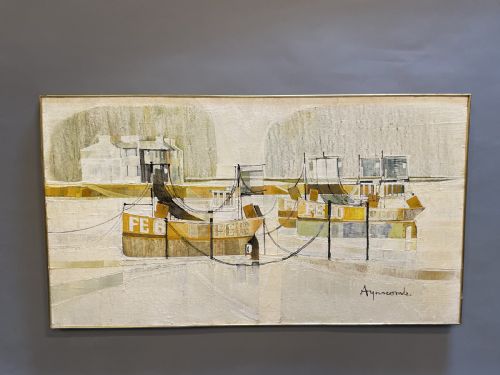


Post War Art
Post war art captures the creative energy of the mid-century decades, offering buyers expressive paintings that bridge traditional subjects and modern abstraction.
Post War Art
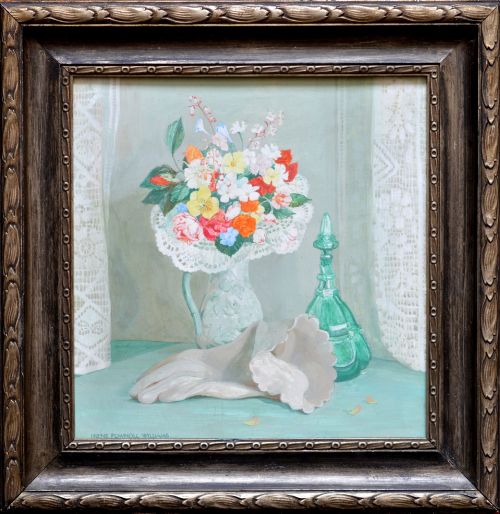
Oil paint on canvas or board dominates the offerings, supplemented by watercolours and tempera works. Buyers frequently find pieces reflecting St Ives modernism, industrial scenes, and avant-garde still life compositions from this prolific era.
Materials and execution
Artists of this period utilised oil paint applied to prepared canvas, wooden panel, or sturdy board, often working with vigorous brushstrokes that give surfaces a tangible texture. Watercolour and tempera on paper or panel appear regularly, recording swift studies and finished studio pieces alike.
Supports range from traditional woven canvas stretched over wooden frames to repurposed boards utilised during periods of material scarcity. Framing often reflects contemporary mid-century tastes, complementing the bold pigments and gestural marks of the compositions.
Listings feature oil paint, canvas, board, and paper across mid-century modern and post-war British artistic movements.
Distinctions in quality
Quality rests upon the strength of the composition and the confidence of the brushwork, separating hurried sketches from resolved, ambitious gallery works. The assurance with which an artist handles colour and form dictates the visual impact of the canvas.
Provenance and documented association with recognised schools or exhibitions elevate individual pieces significantly. Works bearing signatures of established modernists or carrying detailed exhibition histories command greater attention from collectors.
Kenneth Cozens·Denis Mitchell·James Tower·William McCance·John Osborn·John Gilroy
The Post War Art Glossary
- Tempera
- A permanent, fast-drying painting medium consisting of coloured pigment mixed with a water-soluble binder material such as egg yolk. This technique creates a matte surface prized for precise detail work.
- Constructivism
- An artistic and architectural philosophy originating in Russia that favoured art as a practice for social purposes. Works in this style often incorporate industrial motifs and geometric abstraction.
- Gouache
- An opaque water-based paint producing a flat, smooth colour finish. It allows artists to layer light tones over dark ones with distinct opacity.
- Lithograph
- A printmaking method based on the immiscibility of oil and water. Artists draw directly onto a limestone slab or metal plate to produce multiple original impressions.
- Avant-garde
- Artworks that push the boundaries of established aesthetic conventions and cultural norms. These pieces often pioneer novel forms of abstraction and unconventional subject matter.
Post War Art: Frequently Asked Questions
What defines mid-century modern painting style?
Mid-century modern painting embraces simplified forms, expressive brushwork, and a departure from strict academic realism towards abstraction and bold colour harmonies.
These works reflect the post-war optimism and industrial transformation of the 1940s through the 1960s, focusing on landscapes, figures, and still life subjects.
How do I display these paintings at home?
Post war art works exceptionally well against neutral wall colours that allow the mid-century palette and gestural brushwork to stand out clearly.
Pairing these canvases with simple wooden frames or original period mouldings preserves their authentic character in modern domestic spaces.
How do I identify a 1950s oil painting?
Look for characteristic material indicators such as canvas boards, industrial Masonite supports, and pigment mixtures typical of mid-century studio practices.
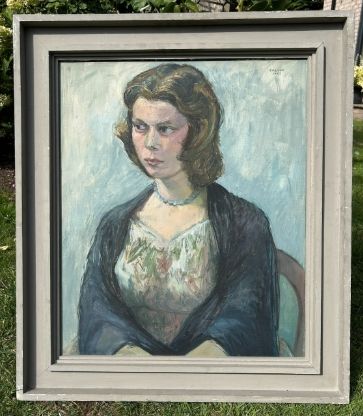
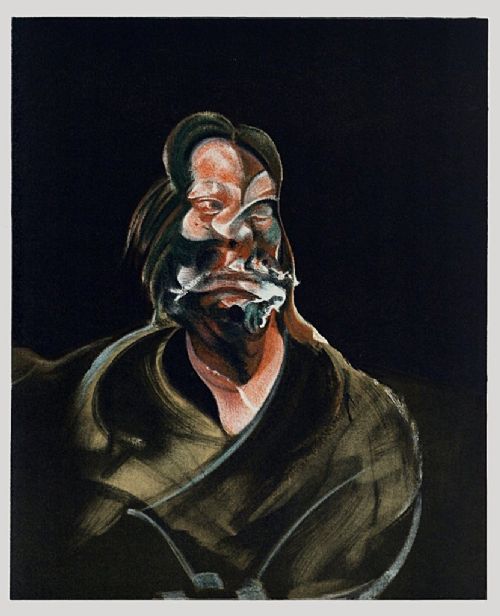
Subject matter often includes abstracted landscapes, industrial scenes, and portraits displaying the energetic mark-making typical of the decade.
What is the St Ives school?
The St Ives school refers to a prominent group of artists based in Cornwall who pioneered British abstract art after the Second World War.
Their paintings draw deep inspiration from the rugged coastal landscape, local light, and modernist sculptural forms.