



Porcelain Woman Statue
Porcelain woman statue figures are delicate sculptural works capturing female forms across diverse historical periods and international ceramic traditions.
Porcelain Woman Statue
A porcelain woman statue captures female forms in glazed or biscuit ceramics, ranging from classical allegories to market costumed figures. These sculptural objects appear in regional European and Japanese expressions, spanning Georgian, Victorian, and later twentieth century production.
The most common examples on this page are single figurines and matched pairs representing women in various attire, from baskets and scarves to traditional folk dress. Makers across Britain, continental Europe, and Japan utilised these forms for domestic display.
Forms extend from early nineteenth century Limbach and French figures to late Victorian parian ware and twentieth century Art Nouveau and Art Deco designs. Each piece reflects the sculptural tastes and ceramic capabilities of its specific period of origin.
How they were made
Production relies on moulded or slip cast porcelain, bone china, and earthenware, finished with hand painting, enamel work, or gilding. Parian and bisque porcelain provide a matte, marble like surface suited to classical drapery and detailed facial expressions.
Japanese pieces employ Satsuma techniques and specialised local clays, whilst European workshops utilise traditional kiln firing and careful overglaze enamel decoration. Gold leaf and gilt highlights often accent the borders and garments of later nineteenth and twentieth century figures.
Porcelain Woman Statue Retail Price Guide 2026
Typical asking prices for porcelain woman statue among the pieces listed under this phrase on Sellingantiques today, from the lower quarter to the upper quarter. They describe what is for sale here now, not the wider market.
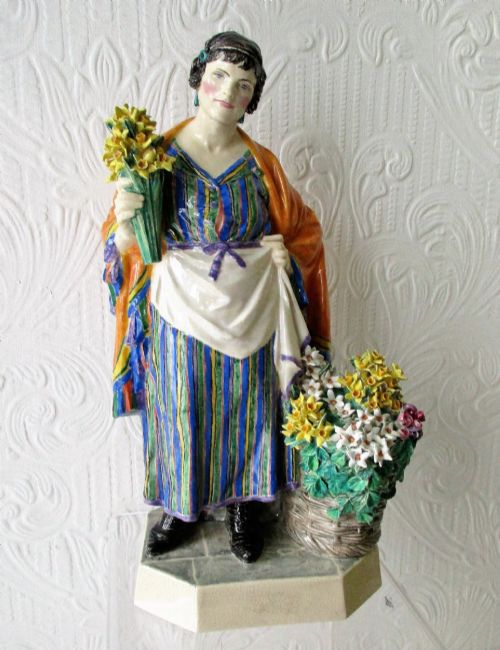
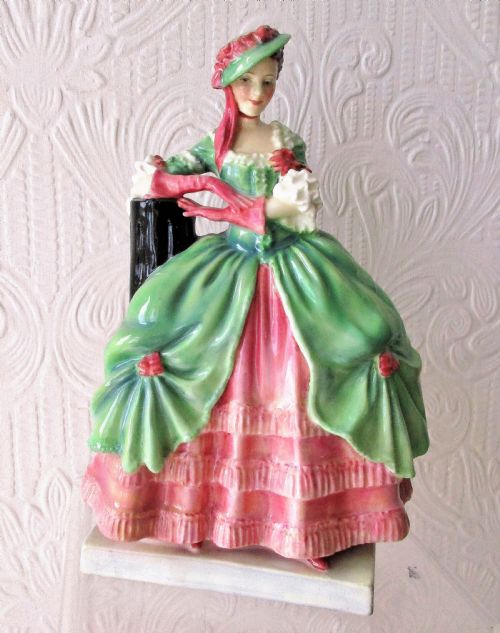
Several ladies carry baskets permanently laden with invisible goods, eternal shoppers frozen mid market.
What varies in quality
The distinction between standard commercial production and finer studio or factory work lies in the depth of modelling and the preservation of fine surface detail through repeated firings. Heavier, less defined castings lack the expressive posture found in better period examples.
Royal Doulton·Royal Worcester·Limbach·Royal Copenhagen·Ernst Wahliss·Samson·Royal Dux
The Porcelain Woman Statue Glossary
- Parian Porcelain
- A fine unglazed white bisque porcelain developed to imitate marble, frequently utilised for nineteenth century classical figures. It fires to a smooth, matte finish that highlights sculptural contours.
- Bisque Porcelain
- Unglazed ceramic body fired once before decoration, offering a porous and matte texture ideal for detailed figurative work. This surface absorbs minimal light, emphasising form over gloss.
- Okimono
- A Japanese term for a decorative object or figurine designed for display on a shelf or in a household alcove. These pieces showcase traditional carving or ceramic modelling.
- Bijin
- A traditional Japanese representation of a beautiful woman, often depicted in historic attire. In ceramics, these figures capture the refined aesthetic of their period.
Porcelain Woman Statue: Frequently Asked Questions
Where were these porcelain figures displayed?
These figures typically decorated Victorian and Edwardian drawing rooms, mantelpieces, and enclosed display cabinets. Their domestic placement reflected the refined taste and cultural interests of the household.
Later twentieth century examples often occupied modernist or eclectic tabletop settings. They served as focal points in parlours and living spaces across Europe and Japan.
How do I identify the period of a figure?
Examine the base for factory marks, impressed numbers, and stamps that correlate with manufacturer archives. Stylistic cues such as classical revival drapery or Art Nouveau curves also indicate the era of production.
Material composition further aids dating, as parian ware and specific bone china formulations align with nineteenth century manufacturing shifts. Comparing glaze characteristics and subject matter provides additional context.
Are these figures fragile?
Ceramic and porcelain materials are inherently brittle and susceptible to damage from drops or sharp impacts. Delicate elements like fingers, baskets, and scarves require careful handling during movement.
Display them on stable, level surfaces away from heavy foot traffic or vibration. Secure placement ensures long term preservation of these detailed sculptural objects.