

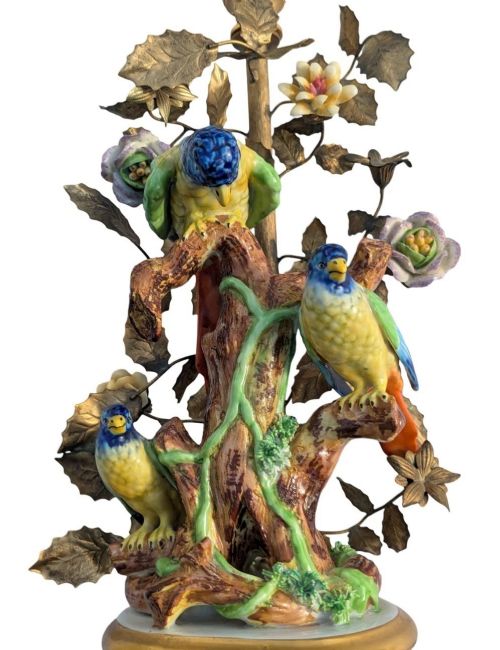


Porcelain Table Sculpture
Porcelain table sculpture brings modelled grace to a surface, combining fine ceramic form with detailed hand-painting.
Porcelain Table Sculpture
Porcelain table sculpture encompasses figurative groups, centrepieces, and lamps created from ceramic materials. These pieces range from Georgian figures to Art Deco figural groups and lighting.
The versions most frequently encountered here span the nineteenth century and the early twentieth century, alongside earlier Georgian models. Styles include Rococo revival, Art Nouveau, and Art Deco interpretations.
Forms vary from monumental centrepiece bowls and figural groups to single ceramic sculptures and functional perfume lamps. Each object brings sculptural presence and painted detail to interior spaces.
Materials and construction
Makers utilised hard-paste porcelain, soft-paste porcelain, and glazed ceramic, often enhanced with enamel colours and gold leaf. These ceramic bodies allowed for intricate modelling of figures, foliage, and architectural elements.
Techniques combined slip casting or hand-modelling with detailed underglaze and overglaze enamel painting. Foliage details like bocage were applied by hand around modelled figures before firing.
Porcelain Table Sculpture Retail Price Guide 2026
Typical asking prices for porcelain table sculpture among the pieces listed under this phrase on Sellingantiques today, from the lower quarter to the upper quarter. They describe what is for sale here now, not the wider market.
Object forms on this site include figural lamps, centrepiece bowls, and decorative animal sculptures.
Judging quality in modelled ceramics
The application of glaze and gold leaf reveals the maker's hand, where thinner layers and careful brushwork preserve the underlying ceramic texture. Better pieces demonstrate balanced proportions across complex figural groups and centrepieces.
Argilor Paris·Volkstedt Porcelain·Royal Dux·Meissen
The Porcelain Table Sculpture Glossary
- Soft-paste porcelain
- A ceramic composition fired at lower temperatures than hard-paste, producing a warmer body often found in eighteenth-century pieces. It absorbs glaze differently and shows a softer translucency.
- Bocage
- An ornamental background of modelled leaves and branches applied behind figures in porcelain groups. This foliage provides structural support and aesthetic depth.
- Enamel
- Coloured vitreous glass applied over the fired glaze and fixed in a second, lower temperature kiln. Enamels provide the bright palette seen on figures and centrepieces.
- Centrepiece
- A large decorative object designed for the middle of a dining table or sideboard. These often take the form of elaborate bowls or figural groupings.
- Glaze
- A glassy coating fused to the ceramic body during firing to seal the porous clay and impart a glossy finish. It protects the painted decoration underneath.
Porcelain Table Sculpture: Frequently Asked Questions
Where should I display a centrepiece?
These large pieces suit dining tables, sideboards, or deep entrance hall consoles where their sculptural form is visible from multiple angles.
Ensure the surface is stable and away from direct sunlight to protect enamel colours over time.
How do I distinguish Georgian from later figures?
Georgian pieces often utilise soft-paste porcelain with organic modelling and hand-applied bocage work.
Later nineteenth and twentieth-century examples display harder bodies, sharper mould lines, and distinct stylistic revivals such as Art Nouveau.
Were perfume lamps used for lighting?
French veilleuses combined a small lamp with a vessel to warm scented oils or water for domestic ambiance.
They functioned as gentle nightlights while diffusing fragrance through pierced ceramic covers.