

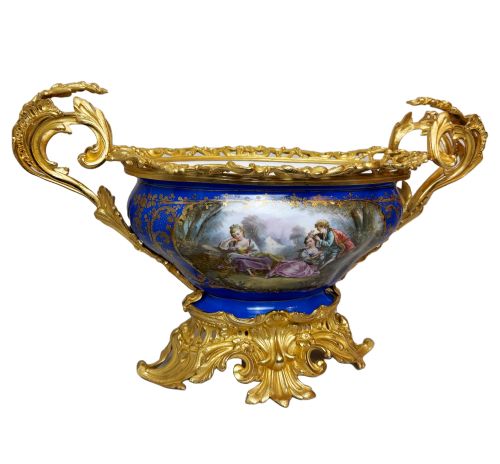
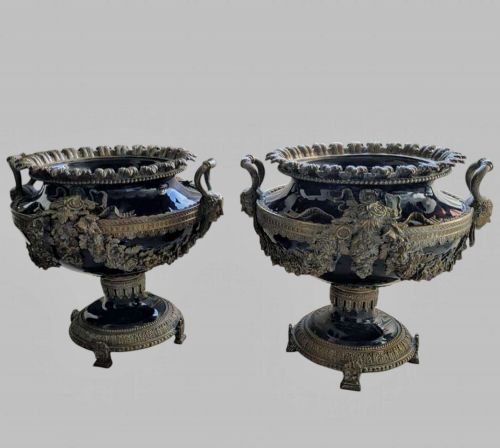
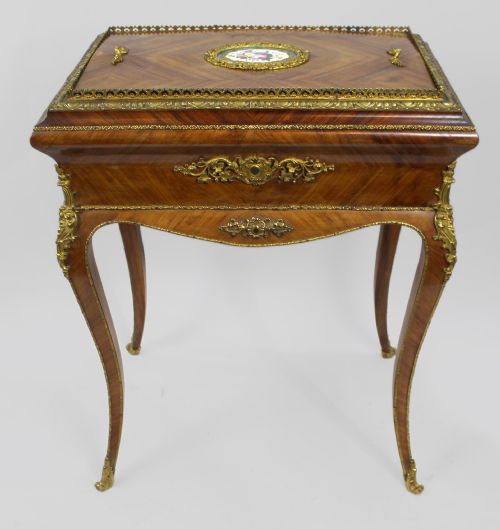
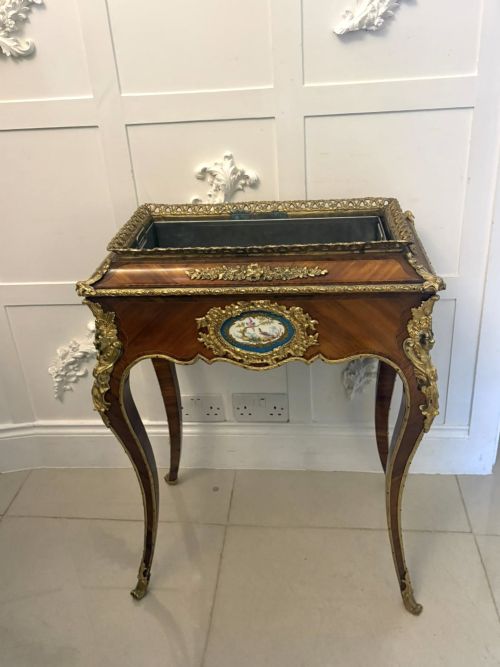


Porcelain Mounted Planter
These porcelain mounted planter vessels bring nineteenth-century French and Victorian botanical display indoors with hand-painted ceramic plaques and gleaming metal mounts.
Porcelain Mounted Planter
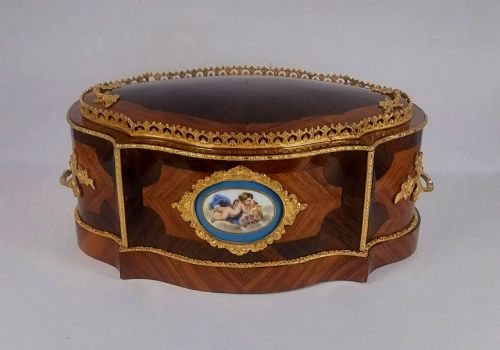
A porcelain mounted planter combines ceramic bodies with metal mounts, appearing as jardinieres, urns, plant stands, and wine coolers. These vessels hold plants or ice, functioning as decorative centerpieces in nineteenth-century interiors.
The pieces on this page span the nineteenth century, including specific dates such as 1850, 1860, and 1880, alongside Victorian productions. French origin dominates the selection, encompassing Louis XV Revival, Louis XVI Revival, Napoleon III, and Japonisme styles.
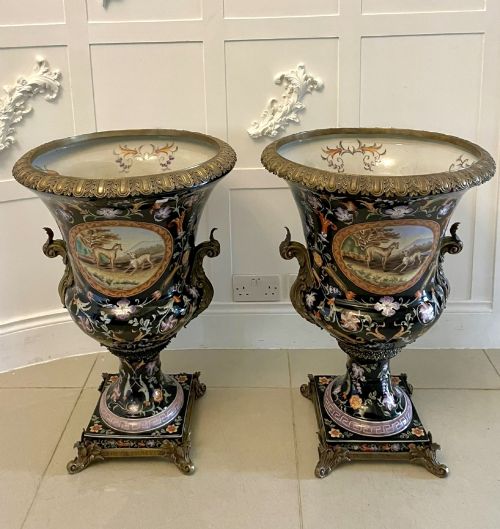
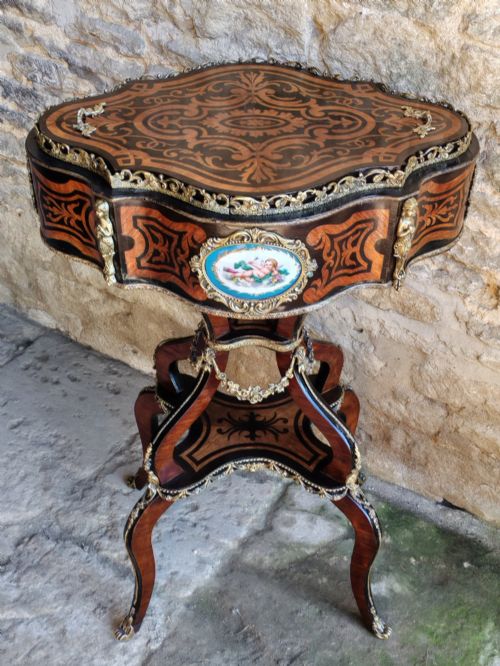
Forms range from simple blue ceramic jardinieres to inlaid kingwood stands and majolica urns with ormolu or brass fittings. Buyers will find both paired urns and substantial free-standing tables designed to hold botanical displays.
Materials and construction methods
Craftsmen built the bodies using porcelain, majolica, and ceramic, frequently hand-painting the surfaces with detailed floral or decorative motifs. Secondary wooden structures utilise kingwood, walnut, and marquetry inlay for stands and tables.
Metal mounts in ormolu, gilt bronze, brass, and zinc provide structural framing and decorative handles, borders, and feet. Liners in zinc or brass protect the wood and ceramics from moisture during use.
Porcelain Mounted Planter Retail Price Guide 2026
Typical asking prices for porcelain mounted planter among the pieces listed under this phrase on Sellingantiques today, from the lower quarter to the upper quarter. They describe what is for sale here now, not the wider market.
Listings combine nineteenth-century French and Victorian pieces utilising porcelain, ormolu, kingwood, walnut, and majolica across jardiniere and urn forms.
Distinctions in quality
Quality rests upon the crispness of the metal chasing on ormolu and gilt bronze mounts, alongside the precision of kingwood and marquetry inlays. Superior examples exhibit finely hand-painted porcelain plaques rather than transfer printing.
The integration of materials determines refinement, seen in how seamlessly porcelain plaques fit within wood and metal frameworks. Heavier gauge brass and bronze fittings indicate higher manufacture standards.
The Porcelain Mounted Planter Glossary
- Ormolu
- Gilded bronze used for decorative mounts and handles. It provides a bright gold finish on nineteenth-century pieces.
- Jardiniere
- A decorative pot or stand for holding plants or flowers. These vessels often double as wine coolers.
- Majolica
- Opaque tin-glazed earthenware decorated with colourful lead glazes. It appears on nineteenth-century urns and planters.
Porcelain Mounted Planter: Frequently Asked Questions
What is a porcelain mounted planter used for?
These vessels originally served to hold potted plants, cut flowers, or chilled wine bottles within nineteenth-century reception rooms.
Today, collectors use them as decorative centrepieces on side tables, mantels, or as free-standing plant stands.
How do I care for the metal mounts?
Gilt bronze and ormolu mounts require only gentle dusting with a soft, dry cloth to prevent accumulation. Avoid abrasive cleaners or metal polishes that strip the original gilding.
Are these planters waterproof?
Many examples include original zinc or brass liners designed to contain moisture from live plants. It remains wise to use a concealed saucer inside to protect antique ceramics and wood.
How do I identify the period?
Nineteenth-century pieces typically display revival styles such as Louis XV or Napoleon III alongside specific wood veneers like kingwood. Construction methods, including hand-cut dovetails and cast bronze mounts, help confirm the era.