




Porcelain Mantle Garniture
A porcelain mantle garniture brings decorative symmetry and fine ceramic craft to a room, offering matched sets designed to sit in harmony upon a shelf.
Porcelain Mantle Garniture
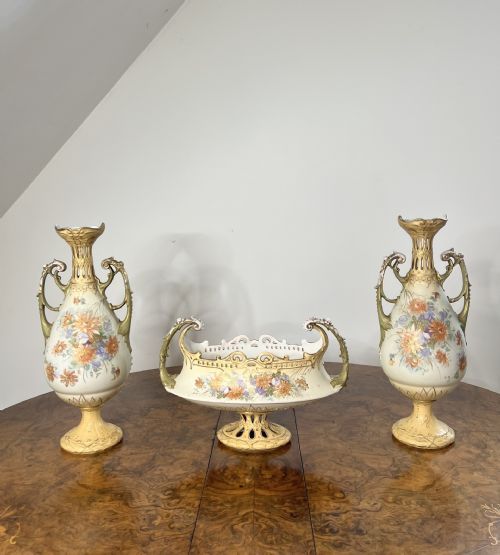
When you search for a porcelain mantle garniture, you encounter matched groupings of ornamental vessels and clock sets that date from the nineteenth century. These decorative ensembles typically comprise either three or five matching pieces designed to balance the visual weight of a fireplace mantel.
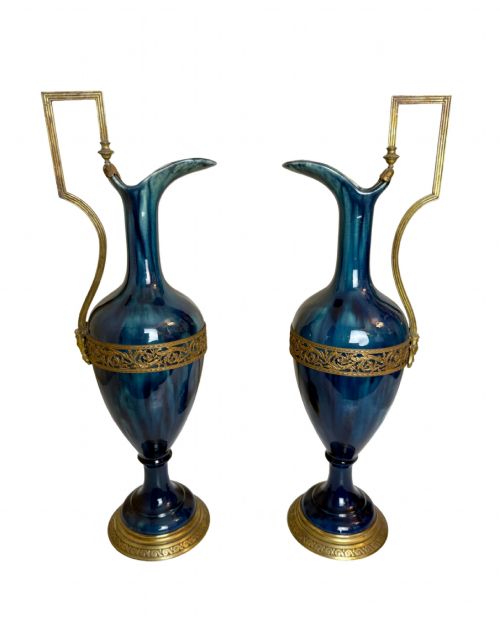
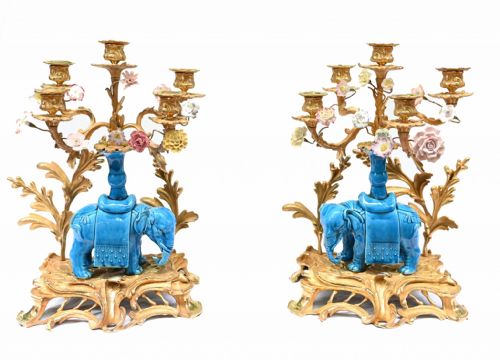
The selections span Victorian and Continental European origins, including works attributed to Royal Vienna, Meissen, and Paris workshops. Forms vary from complete clock sets featuring flanking vases to pairs of ewers, urns, and candelabras mounted in metal.
Revival aesthetics dominate the groupings, with French Rococo, Neoclassical, and Regency influences shaping the decorative language. Buyers find everything from simple painted porcelain pairs to elaborate multi-piece garnitures with gilded bronze mounts.
Materials and construction
Makers shaped these pieces from fired ceramic bodies, applying coloured enamels and hand-painted details before glazing. Gilding with gold leaf, gold paint, or general gilding highlights the rims, handles, and sculptural motifs.
Metal mounts in ormolu, brass, gilded metal, and gilt bronze provide structural support and decorative frames. These metal elements are cast and chased to complement the curves of the porcelain bodies.
Porcelain Mantle Garniture Retail Price Guide 2026
Typical asking prices for porcelain mantle garniture among the pieces listed under this phrase on Sellingantiques today, from the lower quarter to the upper quarter. They describe what is for sale here now, not the wider market.
Listings feature nineteenth-century pieces from eighteen-fifty to nineteen-hundred, combining porcelain, enamel, and gilded metal.
Judgements of quality
The finesse of the hand-painted enamel work and the crispness of the gilt bronze mounts distinguish finer examples from standard production. Artisans who executed delicate figural scenes or precise floral motifs achieved a higher level of decorative art.
Completeness dictates the integrity of a garniture, as sets surviving with all their original matching side pieces and central elements retain greater visual balance. The quality of the metal casting and the precision of the porcelain firing also mark the distinction between everyday items and exhibition-tier pieces.
Royal Vienna·Meissen·Finnigan Manchester
The Porcelain Mantle Garniture Glossary
- Garniture
- A set of ornamental objects designed to be displayed together, typically consisting of three or five pieces for a mantelpiece.
- Ormolu
- Finely ground high-carat gold applied to a bronze base, creating a rich golden finish found on nineteenth-century mounts.
- Ewer
- A large jug with a wide spout and curved handle, often included as part of a decorative garniture set.
- Cloisonne
- An ancient technique for decorating metalwork objects with coloured material held in place by thin metal strips.
Porcelain Mantle Garniture: Frequently Asked Questions
What is a porcelain mantle garniture?
A porcelain mantle garniture is a matching set of decorative ceramic objects, such as vases, urns, or clock sets, designed to be displayed together on a mantelpiece.
These sets create visual symmetry and bring ornate nineteenth-century style into an interior space through painted scenes and gilded mounts.
How were garniture sets used?
Garnitures were placed on mantels above fireplaces to anchor the room's decor and display the owner's taste. The central clock or large urn was flanked by matching smaller vases or candelabras.
They served primarily as decorative status objects rather than functional containers during the Victorian and nineteenth-century periods.
How do I date a porcelain garniture?
Dating relies on identifying the stylistic revival periods, factory marks, and mounting techniques visible in the piece. Nineteenth-century examples often display Rococo or Neoclassical revival traits combined with ormolu or gilded bronze.
Reference materials and maker signatures help narrow the decade of production between eighteen-fifty and nineteen-hundred.
Are all garniture sets complete?
Not all surviving sets retain every original side piece, as dispersion and breakage occurred over the decades. Complete sets of three or five matching items are prized for maintaining their original decorative harmony.
Checking the uniformity of the glaze, gilding, and mounts helps confirm that the pieces belong together as a matched ensemble.