

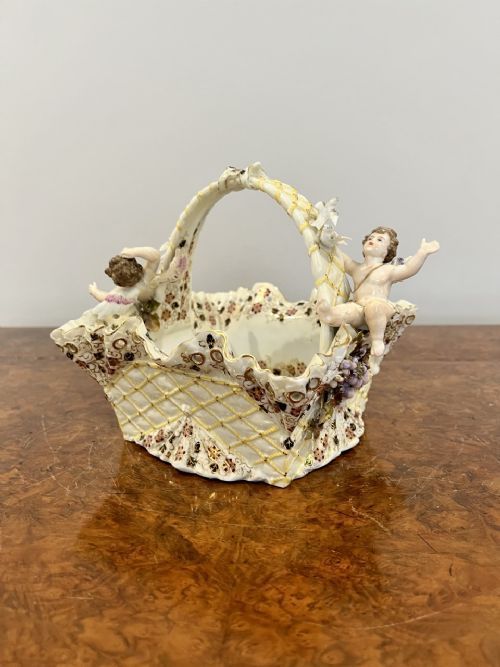


Porcelain Compote Centrepiece
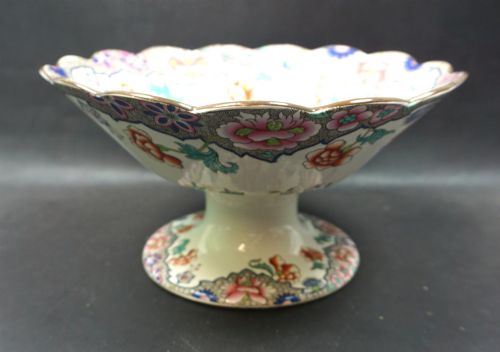
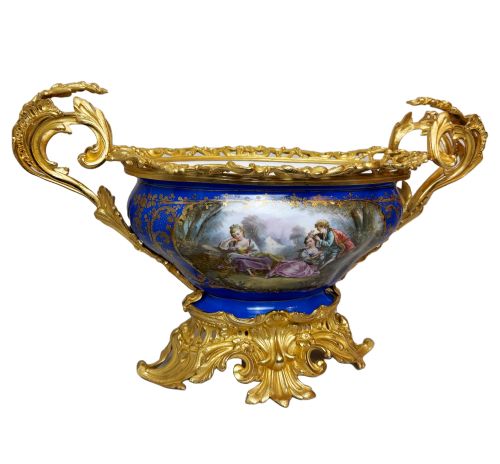
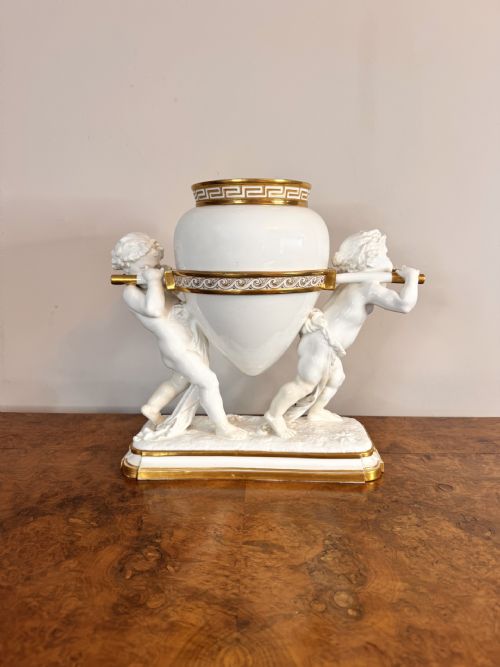
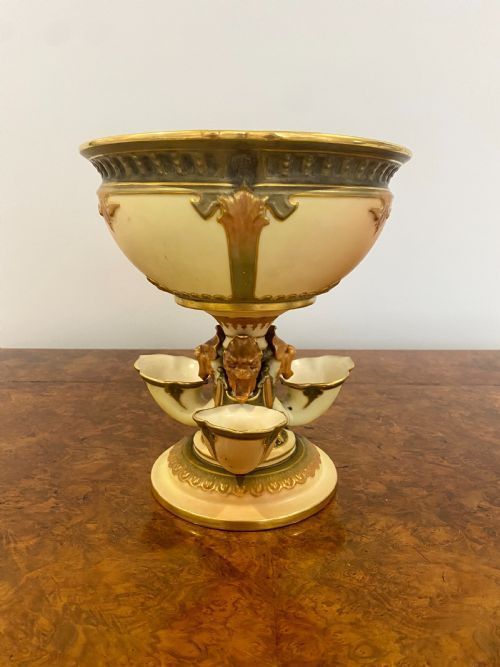
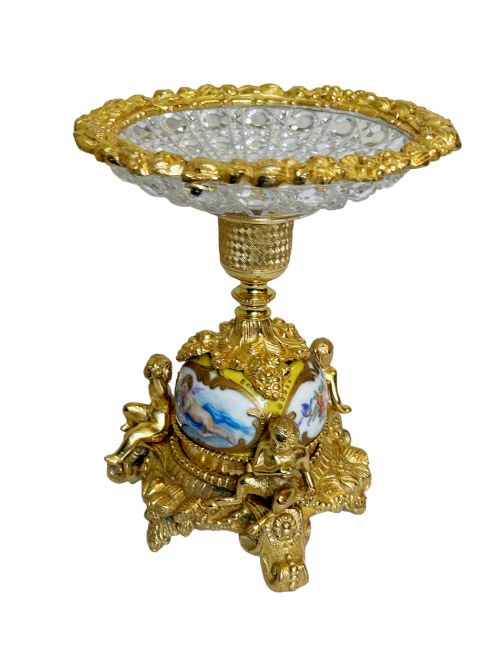
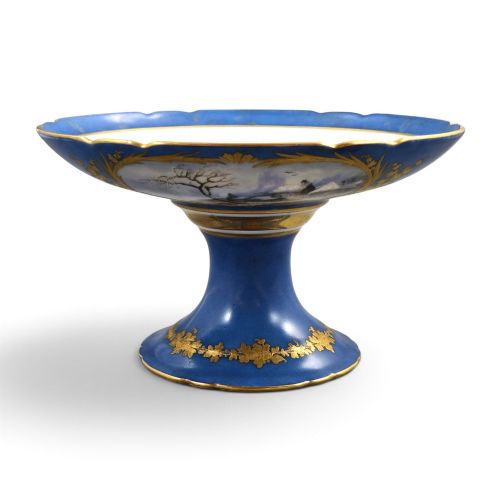
These porcelain compote centrepiece examples bring sculptural presence to a table, combining glazed ceramic bowls with gilt metal mounts and figurative models.
Porcelain Compote Centrepiece
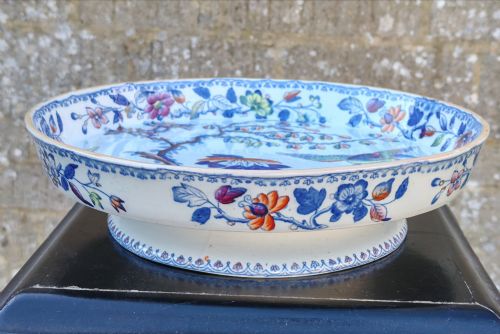
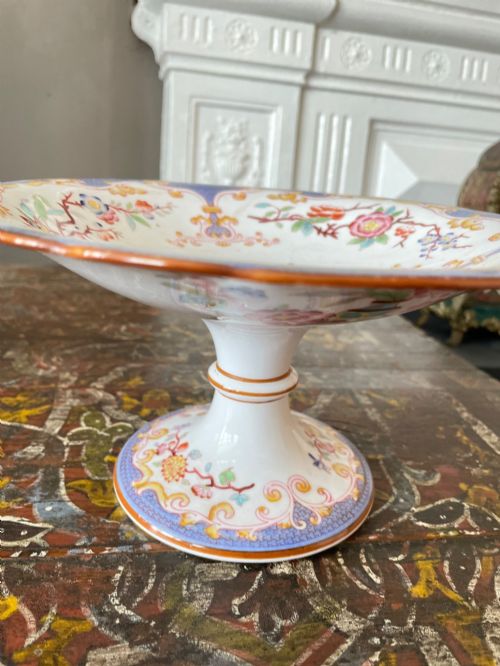
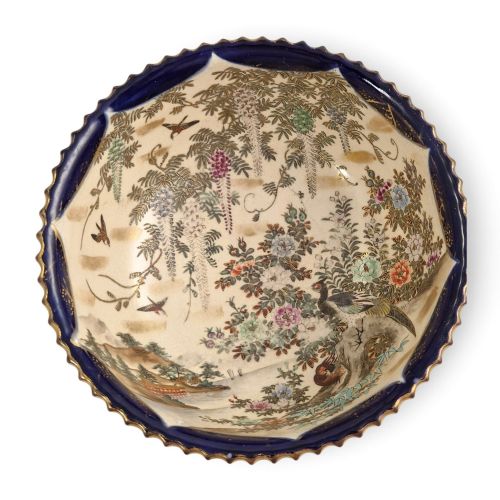
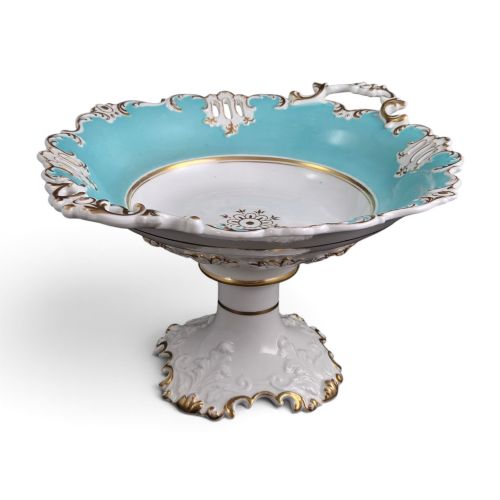
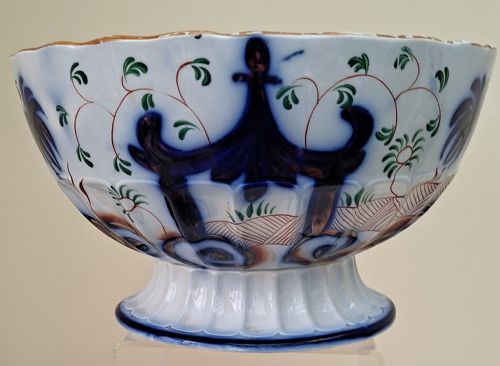
A porcelain compote centrepiece serves as a decorative focal point for a dining surface, combining raised bowls, comports, and tazzas with sculptural elements. You will frequently encounter nineteenth-century English and continental pieces featuring footed bowls, lattice baskets, and elevated pedestals.
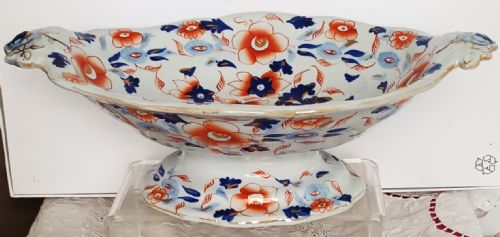
The forms span nineteenth-century Victorian and Edwardian periods, stretching from Regency ironstone to elaborate German porcelain figural groups. Makers utilised traditional shapes like footed fruit bowls and tazzas, often mounting the ceramic bodies in gilt bronze, ormolu, and brass.
Continental factories and English potteries produced these items to command attention in the middle of a table or sideboard. The surviving items range from simple blue and white patterns to elaborate floral encrustations supported by putti and cherubs.
Materials and construction methods
Potters shaped these objects using hard-paste and soft-paste ceramic bodies, ironstone, and bone china, applying hand-painted enamels, gilding, and gold leaf. Many pieces incorporate applied porcelain roses and delicate lattice work formed while the clay was wet.
Metal mounts in ormolu and gilt bronze provide structural support and decorative framing for the ceramic vessels. Artisans cast these metal components separately before securing them to the porcelain bowls with threaded bolts or pins.
Porcelain Compote Centrepiece Retail Price Guide 2026
Typical asking prices for porcelain compote centrepiece among the pieces listed under this phrase on Sellingantiques today, from the lower quarter to the upper quarter. They describe what is for sale here now, not the wider market.
Listings feature 19th Century, Victorian, Edwardian, and Regency periods alongside materials including ormolu, gold leaf, and ironstone.
Factors of quality and execution
Superior examples distinguish themselves through the crispness of the modelled figures, such as cherubs and musical putti, and the fineness of the hand-painted details. Heavy gilding and carefully applied enamel work separate ambitious factory productions from simpler domestic wares.
The integration between the ceramic body and any gilt bronze or ormolu mounts indicates the care taken in manufacture. Tighter joins, cleaner casting on metal elements, and intricate applied flower work elevate the standing of a piece.
Coalport·Sèvres·Schierholz·Minton·Mason·Royal Worcester·Samson
The Porcelain Compote Centrepiece Glossary
- Compote
- A raised bowl or dish used for serving fruit or sweets, typically supported by a central stem and foot. It forms the primary vessel type in these centrepiece assemblies.
- Tazza
- A shallow saucer-like dish mounted on a stem and foot, originating from Renaissance plate forms. You will find them executed in porcelain and ironstone.
- Ormolu
- Gilded bronze used for mounts, feet, and decorative handles on ceramic bodies. The technique involves applying a gold amalgam to bronze before heating.
- Putto
- A figure of a small chubby child, often winged, derived from classical art and frequently modelled climbing over porcelain bowls. They appear commonly in German factory productions.
- Gilt
- Covered with a thin layer of gold leaf, paint, or powder to give a metallic golden finish. It highlights rims, handles, and raised relief moulding on the ceramic.
Porcelain Compote Centrepiece: Frequently Asked Questions
How were these centrepieces used originally?
Dining traditions of the nineteenth century placed these large vessels at the middle of the table to hold fruit, flowers, or confectionery during formal meals. They acted as conversation pieces and visual anchors for the tablescape.
Beyond dining rooms, owners displayed them on sideboards, console tables, and pedestals within reception rooms to demonstrate taste and status.
How do I identify continental porcelain from English pieces?
Continental factories such as those in Germany and France frequently utilised elaborate figural modelling, applied porcelain flowers, and gilt bronze mounts. English makers often focused on robust bone china or ironstone bodies with transfer-printed or hand-painted patterns.
Examining the paste underneath the glaze and checking for factory marks provides further confirmation of origin.
What do ormolu mounts indicate on a ceramic bowl?
Ormolu mounts show that a ceramic vessel received high-status treatment, often added to elevate an imported bowl or to repair and enhance a decorative object. French and continental workshops specialised in combining cast gilt bronze with porcelain.
These metal additions provide stability to footed bowls and introduce architectural framing to organic ceramic shapes.