

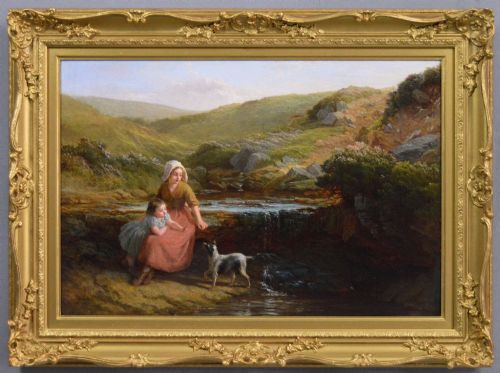
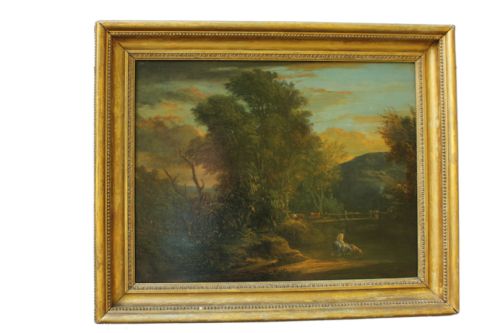


Pond Landscape Painting
A pond landscape painting captures quiet water and pastoral atmosphere, offering collectors a peaceful window into nineteenth and twentieth century rural scenes.
Pond Landscape Painting
The versions most commonly found here include traditional British pastoral oils, Edwardian pool studies, and French impressionist canvases. Artists capture specific locations such as Kew Gardens alongside idealised farm ponds and woodland pools.
Framing often complements the work, utilising period gilt wood and gesso to match the canvas era. Buyers encounter formats spanning from Victorian fine art to mid-twentieth century impressionism.
How they were made
These works utilise oil paint applied to canvas, capturing texture and light across various impressionist and traditional styles. Brushwork varies from the smooth academic application of the nineteenth century to looser, more visible marks found in later impressionist interpretations.
Frames employ traditional woodworking techniques, often combining carved wood with moulded gesso layers. Many of these frames receive gold leaf applications, providing a reflective border that enhances the depth of the oil painting.
Pond Landscape Painting Retail Price Guide 2026
Typical asking prices for pond landscape painting among the pieces listed under this phrase on Sellingantiques today, from the lower quarter to the upper quarter. They describe what is for sale here now, not the wider market.
The inventory records British Impressionism, Post-Impressionism, and Victorian Fine Art styles among these rural water scenes.
What varies in quality
The capability of the artist largely dictates the standing of a pond landscape painting, separating accomplished academic execution or confident impressionist brushwork from rigid, formulaic studio output. Skilled hands capture the transient effects of light on water and atmosphere with distinct conviction.
Preservation of the original canvas and oil paint surface influences the integrity of the piece. Works retaining their untouched pigment and period gilt wood frames hold greater aesthetic coherence than those altered by heavy restoration.
Edward Holmes RBA·Willem J Palman·Frank Percy Wild·Albert-Ernest Brockbank·Kershaw Schofield·Charles Edmund Rene His
The Pond Landscape Painting Glossary
- Oil paint
- A slow-drying paint made from pigment particles suspended in a drying oil, typically linseed. This medium allows artists to blend tones smoothly or build heavy, textured impasto surfaces.
- Gesso
- A paint mixture consisting of a binder mixed with chalk, gypsum, or pigment, used to prepare wood or canvas surfaces. In framing, it provides a smooth base for subsequent gilding.
- Gold leaf
- Gold beaten into extremely thin sheets, applied to frames or artworks as a decorative finish. It catches ambient light and brings warmth to the perimeter of the painting.
- Impressionism
- A nineteenth-century movement characterised by relatively small, thin, yet visible brush strokes and an emphasis on accurate depiction of light. Artists working in this style sought to capture transient moments in nature.
- Canvas
- A heavy woven fabric used as a surface for oil painting, typically stretched across a wooden frame. It provides a flexible yet durable support for centuries of pigment layers.
Pond Landscape Painting: Frequently Asked Questions
What periods do these paintings cover?
The available selection spans from the nineteenth century through the Edwardian era into the mid-twentieth century. This includes Victorian pastoral works and later impressionist interpretations.
Dates across the collection touch upon periods such as the eighteen-eighties, nineteen-hundreds, and nineteen-thirties, reflecting diverse artistic responses to rural scenery.
How do I care for an oil painting?
Display oil paintings away from direct sunlight and sudden temperature shifts to protect the canvas and pigment. Stable indoor environments prevent the wood stretcher and gesso frame from warping.
Dust the surface gently with a soft, dry brush without applying pressure. Avoid using liquid cleaners or attempting to clean the painted surface yourself.
How do British and French styles differ?
British works in this group often lean towards traditional pastoral landscapes and specific locations like Kew Gardens. They frequently incorporate detailed narrative elements such as figures or livestock near the water.
French impressionist examples focus more intensely on light effects upon water lilies and surface reflections. Their brushwork tends toward looser application with an emphasis on atmospheric mood.