



Polychrome Painted Wall Lights
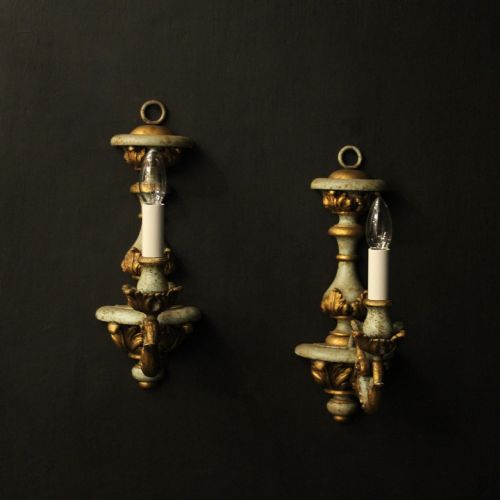
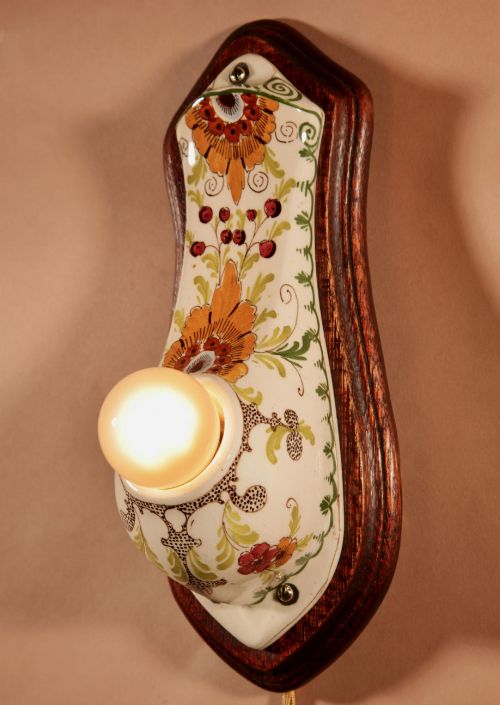
Polychrome painted wall lights bring warmth and colour to a room through hand-painted pigments and metallic leaf.
Polychrome Painted Wall Lights
When you search for polychrome painted wall lights, you find decorative fixtures designed to mount directly onto domestic walls. These pieces come primarily in pairs or sets from the nineteenth century up through the nineteen-thirties, with a strong representation of nineteen-thirty pieces.
The selections on this page span several distinct regional styles, notably French provincial and chateau designs alongside Italian baroque and neoclassical interpretations. Forms range from single arm brackets to grander twin and triple arm sconces that hold electric or candle sources.
Materials vary across the inventory, mixing carved wood, gesso, and painted metal or wrought iron. Buyers most frequently encounter wooden and toleware bodies finished with layered pigments and gilding.
How they were made
Maker workshops shaped these fixtures from carved timber, wrought iron, and sheet metal toleware before applying preparatory layers of gesso. Artisans then built up the polychrome surface using multiple coats of oil or tempera paint.
Giltwood and silvered details received delicate applications of metal leaf over bole to catch ambient light in a room. Paintwork often incorporated floral motifs or fruit subjects, hand-rendered directly onto the primed substrate.
Polychrome Painted Wall Lights Retail Price Guide 2026
Typical asking prices for polychrome painted wall lights among the pieces listed under this phrase on Sellingantiques today, from the lower quarter to the upper quarter. They describe what is for sale here now, not the wider market.
Current listings feature pieces spanning the nineteenth century, nineteen-hundreds, nineteen-tens, nineteen-twenties, and nineteen-thirties.
What varies in quality
Quality rests heavily on the dexterity of the hand-painted decoration and the depth of the underlying carving or metal shaping. Finer examples display subtle tonal graduation in the pigments and crisp articulation in floral or fruit carvings.
The integrity of the original surface finish dictates much of the visual merit. Pieces that retain their unblemished nineteenth century or early twentieth century gilding and polychromy carry a stronger presence than heavily retouched surfaces.
The Polychrome Painted Wall Lights Glossary
- Polychrome
- Decoration executed in multiple colours. This technique defines the vibrant painted surfaces seen across wooden and metal light fixtures.
- Toleware
- Painted or lacquered sheet metal items. French workshops utilised this material extensively for floral wall sconces.
- Gesso
- A plaster mixture applied to wood as a base for paint or gilding. It provides a smooth ground for intricate decorative carving.
- Sconce
- A wall-mounted light fixture designed to hold candles or electric bulbs. These objects project illumination outward into the living space.
- Giltwood
- Wood carved and covered with a thin layer of gold leaf. Italian and French makers applied this finish to highlight architectural details.
Polychrome Painted Wall Lights: Frequently Asked Questions
How do I clean polychrome wall lights?
Dust the surfaces gently with a soft, dry brush to protect the delicate painted and gilded finishes. Avoid chemical cleaners or moisture, which can lift old pigments from the wood or metal.
Take care around raised gesso details and applied metal leaf during maintenance. Professional restoration is recommended if deeper cleaning becomes necessary.
Are these lights wired for electricity?
Many vintage and antique wall lights have been adapted for modern electrical use over time. Some retain older wiring that requires inspection or replacement by a qualified electrician before installation.
Check the backplate and arms of each specific fixture to understand how the wiring passes through the structure. Consulting an electrician ensures safe mounting and operation in your home.
Can I install them in a hallway?
Wall sconces work effectively in narrow spaces like hallways by providing ambient illumination without taking up floor area. Twin and triple arm configurations cast a wider spread of light across corridor walls.
Consider the projection of the arms from the wall to ensure comfortable passage. Pairing multiple sconces creates a balanced rhythm down the length of a long passage.
How do I date an antique wall light?
Dating relies on observing construction methods, material choices, and stylistic markers such as art nouveau curves or Italian baroque motifs. Wrought iron work and carved wooden bodies carry distinct technological traits tied to their specific decades.
Comparing the pigment composition and the style of the metalwork helps narrow down the period. Most examples on this page cluster around the early twentieth century and the nineteen-thirties.