



Polychrome Glazed Earthenware
Polychrome glazed earthenware brings together centuries of painted ceramic vessels, chargers and figures decorated in bright mineral colours.
Polychrome Glazed Earthenware
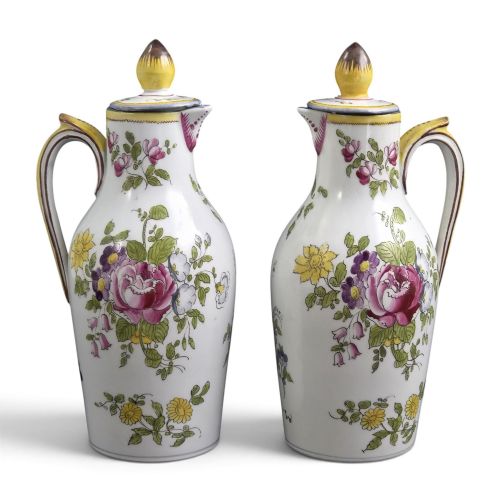
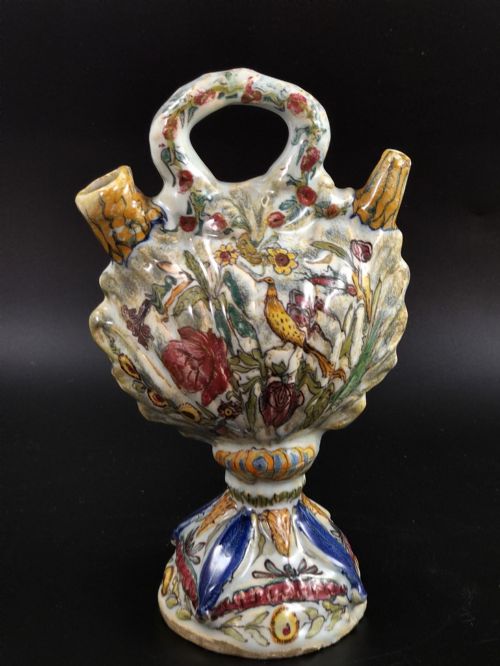
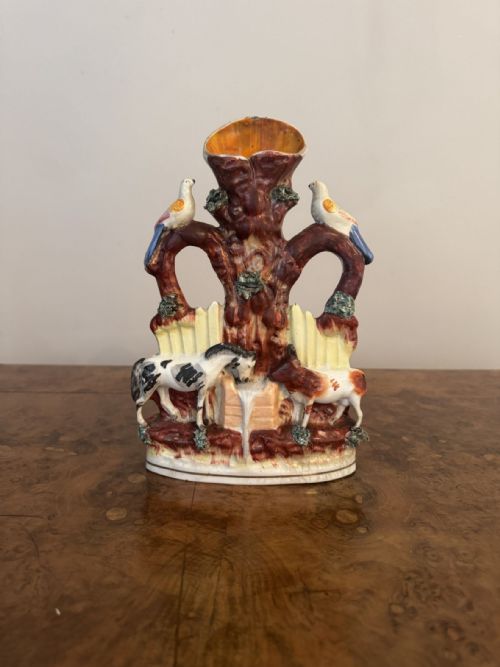
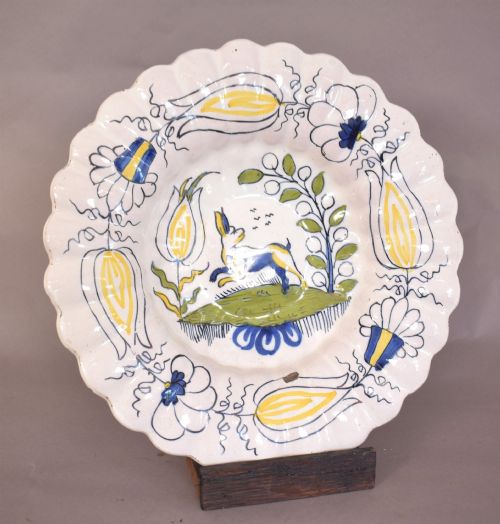
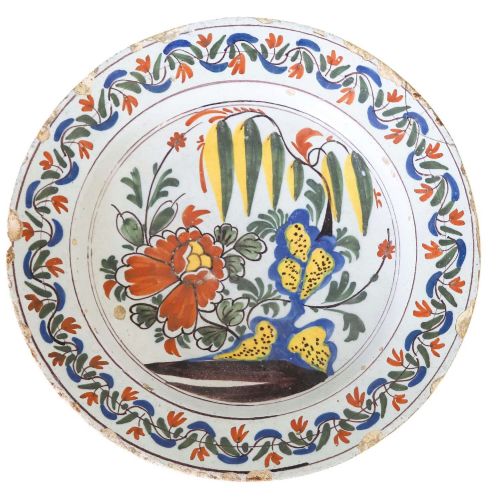
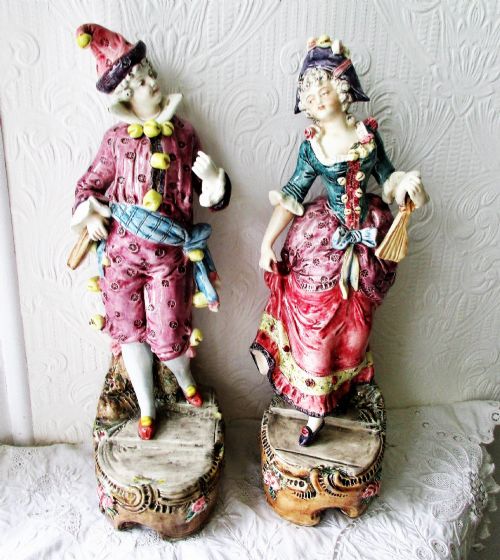
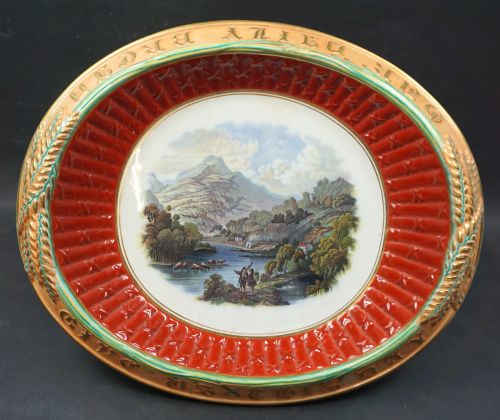
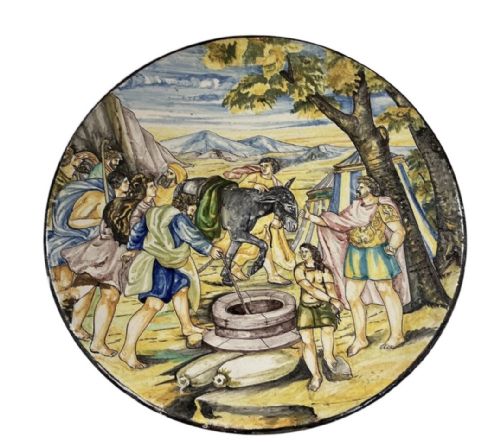
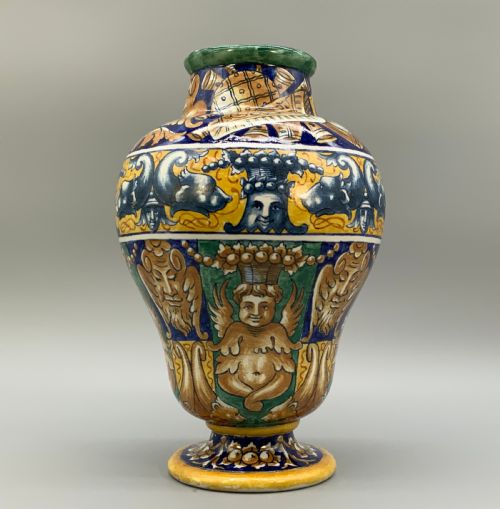
When you search for polychrome glazed earthenware, you encounter objects spanning from the seventeenth century through to the early twentieth century. The selection contains everything from Dutch Delft chargers and Italian maiolica flasks to Victorian Staffordshire figures and Japanese Satsuma vases.
The most common forms on this page are decorative plates, chargers, and vases, alongside figurative works and studio pottery. These pieces originate from English, French, Italian, Spanish, Dutch, and Japanese workshops across multiple eras.
Materials and technique
These items rely on a fired clay body coated with a tin or standard glaze that serves as a canvas for hand-painted mineral pigments and enamels. Artisans applied colours directly onto the raw or fired glaze before subjecting the piece to a high kiln temperature to fuse the decoration permanently.
Certain examples incorporate additional ornamentation such as gold leaf or gilt details applied over the primary glaze layer. The combination of earthenware bodies with opaque white or coloured tin glazes created the smooth surface necessary for intricate polychrome brushwork.
Polychrome Glazed Earthenware Retail Price Guide 2026
Typical asking prices for polychrome glazed earthenware among the pieces listed under this phrase on Sellingantiques today, from the lower quarter to the upper quarter. They describe what is for sale here now, not the wider market.
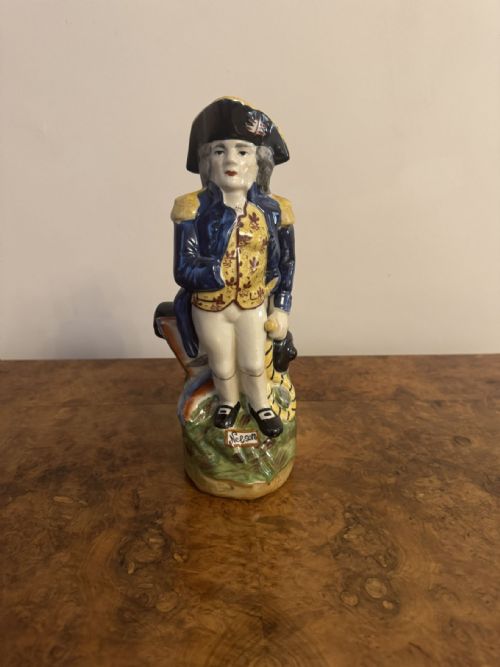
Napoleon and the Empress of France sit proudly alongside Lord Nelson in this ceramic cabinet.
Artistic execution
The standard of a piece rests upon the precision of the hand-painted brushwork and the clarity of the polychrome palette. Superior examples display confident, fluid lines and harmonious colour placement executed by skilled painters rather than mechanical transfer methods.
The crispness of the moulded form beneath the glaze also dictates quality, with sharper relief work and well-balanced proportions separating finer workshop output from simpler utilitarian items.
Charles Vyse·Mann & Co
The Polychrome Glazed Earthenware Glossary
- Majolica
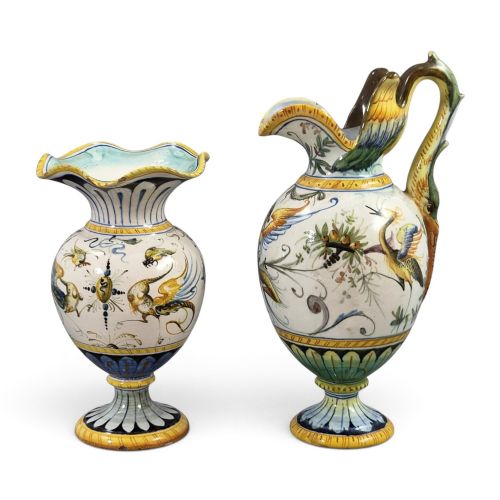
- Tin-glazed earthenware originating from Italy, noted for rich polychrome painting and Renaissance revival styles. It often takes the form of chargers, ewers, and ornamental vessels.
- Delftware
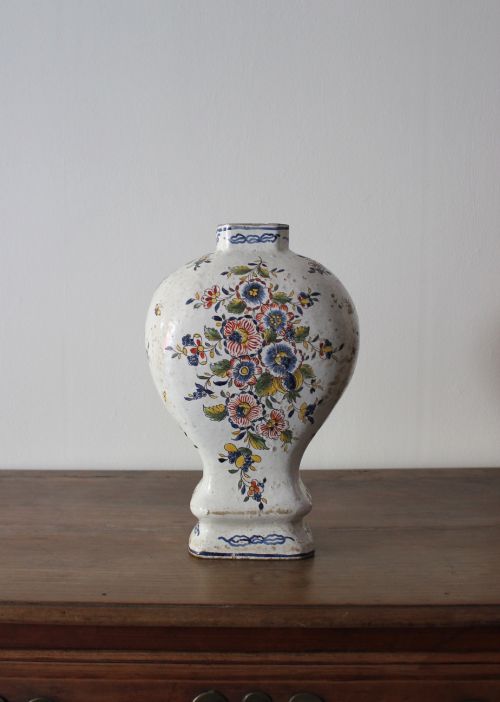
- Tin-glazed earthenware produced in the Netherlands and England, commonly featuring polychrome floral or figurative motifs on a white background. Plates, vases, and small boxes represent typical forms.
- Faience
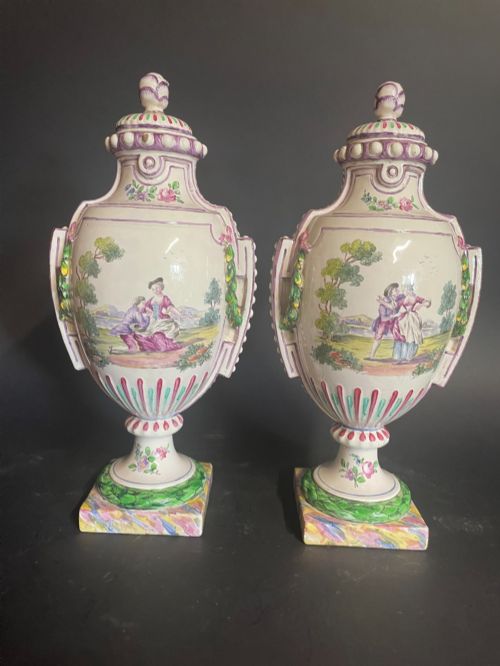
- European tin-glazed earthenware, particularly associated with French and Italian workshops. Production spans centuries of decorative plates, jars, and figurative groups.
- Pratt Ware
- English earthenware produced during the eighteenth and nineteenth centuries, characterised by underglaze polychrome colours in blues, yellows, oranges, and browns. It frequently appears on mugs, platters, and plaques.
- Satsuma
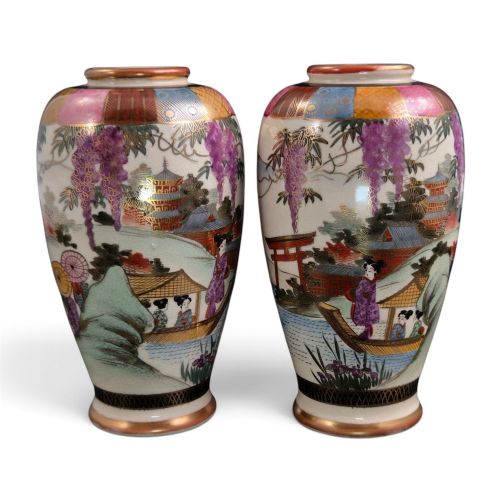
- Japanese earthenware with a fine crackle glaze, heavily decorated with polychrome enamels and gilt. Kyoto workshops produced these vases, bowls, and ginger jars during the Meiji period.
Polychrome Glazed Earthenware: Frequently Asked Questions
What is polychrome glazed earthenware?
It is a broad category of ceramic objects fired from clay, coated in a glaze, and painted with multiple colours. The group encompasses items like Delft chargers, majolica flasks, and studio pottery figures.
The technique spans various global traditions, uniting English, European, and Asian wares through their colourful, painted surfaces.
How do I clean these antique ceramics?
Dust these pieces gently with a dry, soft brush to protect the delicate glaze and painted enamel surfaces. Avoid harsh chemical cleaners and immersion in water, especially if the piece has gilt or overglaze decoration.
Display them away from direct sunlight and areas prone to sudden temperature changes to preserve the glaze integrity.
How do I distinguish Majolica from Delftware?
Majolica typically refers to Italian-style tin-glazed earthenware with dense, vibrant polychrome Renaissance motifs. Delftware usually originates from Dutch or English centres, often balancing blue and white designs with limited secondary colours.
Examining the foot ring, clay body colour, and painting style helps clarify the specific regional origin.
Are these pieces painted by hand?
The majority of the antique items listed feature hand-painted floral, landscape, or figurative decoration applied directly onto the glaze. Artisans used fine brushes to execute the intricate details seen on chargers, vases, and figures.
Brushstroke variation and subtle pigment pooling under magnification confirm the manual application.