

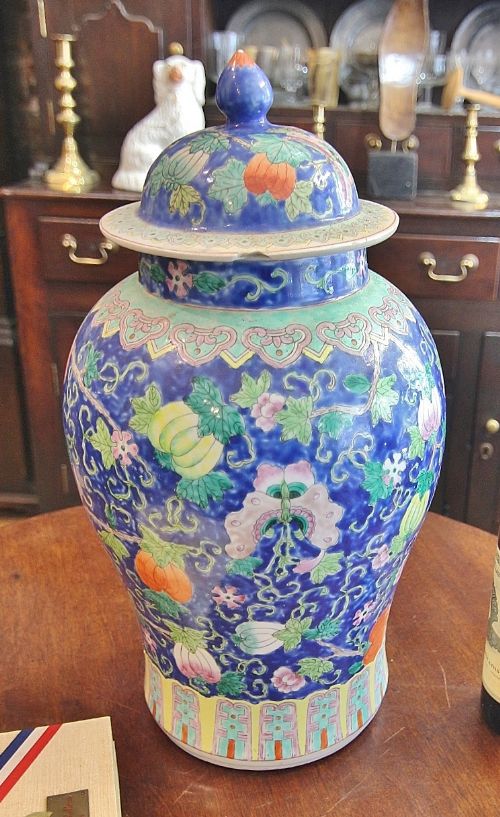


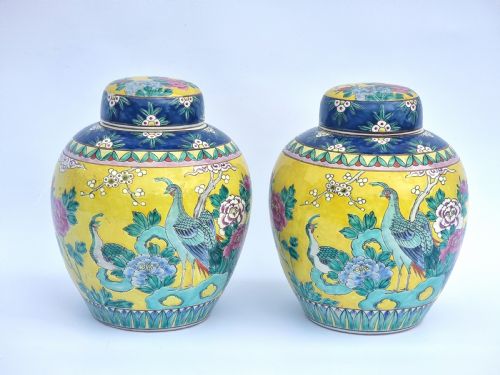


Polychrome Chinese Porcelain Jar
A polychrome chinese porcelain jar brings brilliant enamelled palettes and centuries of kiln tradition straight into the room.
Polychrome Chinese Porcelain Jar
A polychrome chinese porcelain jar unites sturdy ceramic bodies with layered enamel decoration, taking forms such as ginger jars, baluster vessels and lidded urns. These pieces originate across diverse eras, from mid-seventeenth century transitional periods through nineteenth century Qing dynasties up to twentieth century production.
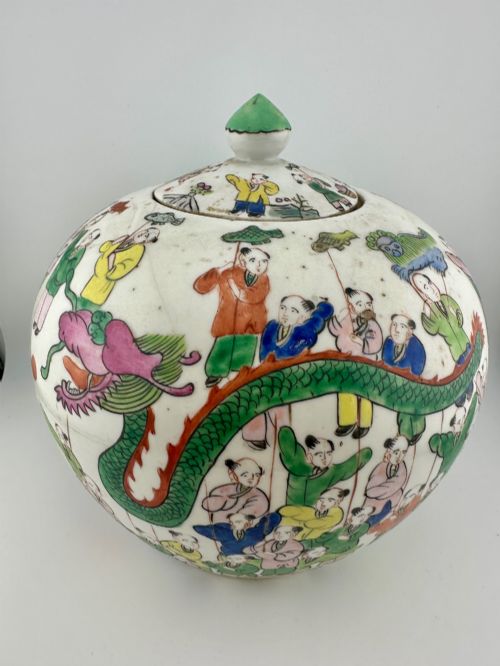
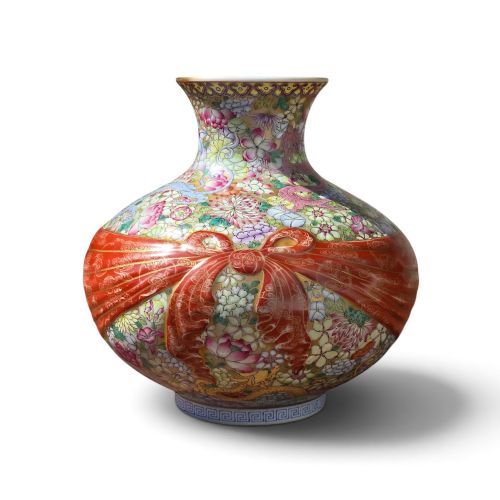
The version most commonly encountered on this page is the nineteenth century ginger jar or baluster vase, frequently painted in bright famille rose palettes or Canton Rose Medallion styles. Buyers also find matched pairs, lidded containers mounted as table lamps, and larger monumental floor vessels.
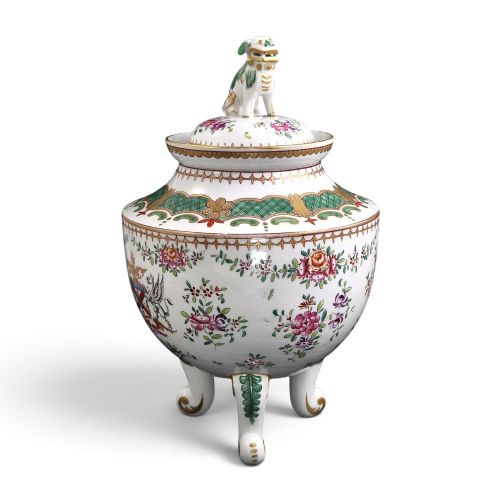
Work spans regional Asian output, Chinese export manufacturing, and European interpretations such as nineteenth century Samson Paris creations. Occasional groupings even pair porcelain vessels with supporting padouk tables or wooden stands.
How they were made
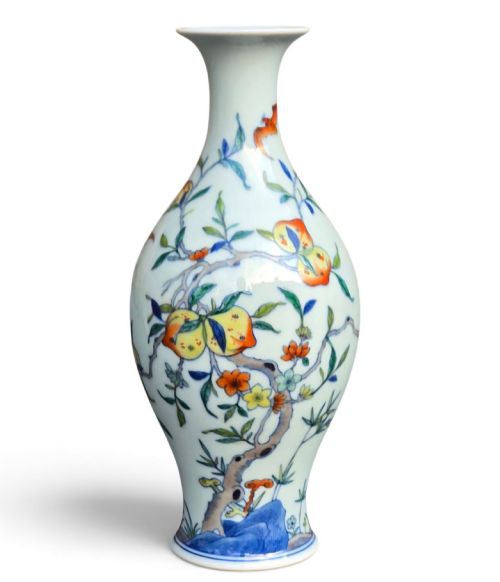
Potters shaped high-fired porcelain bodies before applying intricate overglaze enamels, gold leaf accents and vibrant mineral pigments by hand. Certain examples combine painted underglaze blue with contrasting green, yellow and iron-red enamel layers.
Manufacturing methods range from traditional Qing dynasty throwing and hand-painting techniques to later twentieth century production processes. Master artisans built complex floral, avian and figurative compositions directly onto the glazed ceramic surface.
Listings feature porcelain forms spanning the seventeenth to the twentieth centuries, incorporating wood, brass, and enamel.
What varies in quality
Quality rests upon the precision of the hand-painted brushwork, the depth and vibrancy of the enamel palette, and the crispness of the porcelain form. Superior pieces display intricate multi-hued detailing, neatly rendered motifs, and well-preserved overglaze pigments.
The integrity of the body and cover, alongside the subtlety of gilding and iron-red accents, marks the distinction between standard export wares and finer court-style or marked pieces.
The Polychrome Chinese Porcelain Jar Glossary
- Famille rose
- A major palette of opaque enamel colours introduced in the Qing dynasty, dominated by pink or rose-coloured shades derived from colloidal gold. It allowed for delicate tonal gradations in floral and figurative designs.
- Wucai
- A ceramic decorating technique meaning five colours, typically combining underglaze blue with contrasting overglaze enamels such as iron red, green and yellow. This style appears on seventeenth century transitional pieces.
- Ginger jar
- A wide-shouldered, high-bellied storage vessel originally designed for spices or porcelain preservation, commonly topped with a fitted ceramic cover. On this page, many examples are paired or adapted into lamps.
- Canton
- A term designating porcelain decorated in the southern Chinese port city, known for vibrant Rose Mandarin and Rose Medallion patterns featuring panels of figures, birds and flowers.
- Transitional period
- The era between the Ming and Qing dynasties in the seventeenth century, noted for stylistic freedom and experimental painting techniques on porcelain.
Polychrome Chinese Porcelain Jar: Frequently Asked Questions
How were ginger jars originally used?
These lidded vessels served primarily to store and transport spices, salt, and oils across domestic and export markets. Over time, their pleasing proportions transformed them into decorative display items.
Today, they function equally well as striking focal points on side tables, mantelpieces, or converted into wired table lamps.
How do I identify a Qing dynasty piece?
Identification relies on examining the characteristic potting style, the composition of the overglaze enamels, and any reign marks present on the base. Nineteenth-century examples often exhibit dense Canton or famille rose motifs.
Comparing the hand-painted brushwork against known period standards helps confirm the era of manufacture.
Are lidded jars always found with original covers?
Many surviving jars retain their original matching ceramic lids, though some historical examples have travelled down the centuries separated from them. Matched covers are carefully assessed for compatibility with the jar's neck and shoulder.
Pairs and complete sets with original fitted lids remain particularly sought after by collectors.
How should I care for antique porcelain?
Maintenance requires gentle dusting with a soft, dry cloth to protect fragile overglaze enamels and delicate gold leaf highlights. Avoiding harsh chemical cleaners preserves the integrity of the antique glaze.
Positioning pieces away from direct sunlight and heavy foot traffic keeps the ceramic and any mounted wooden elements safe.