


Polished Copper Jug
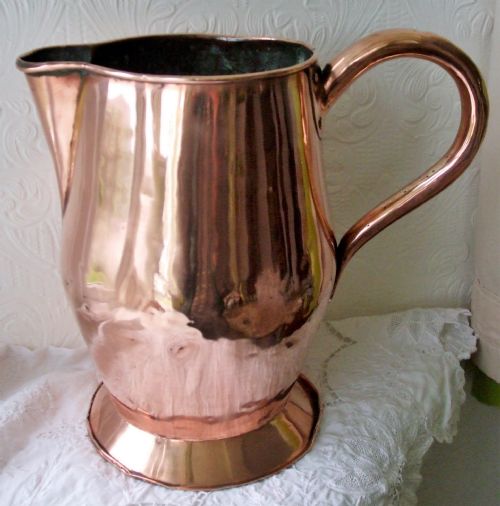
A polished copper jug brings warmth and weight to a room, offering both practical service and bright metallic reflection from past centuries.
Polished Copper Jug
A polished copper jug represents functional metalwork from the Georgian and Victorian eras, designed originally for measuring or carrying liquids. These vessels range from domestic items like milk churns and watering cans to substantial tavern measures and large ale jugs.
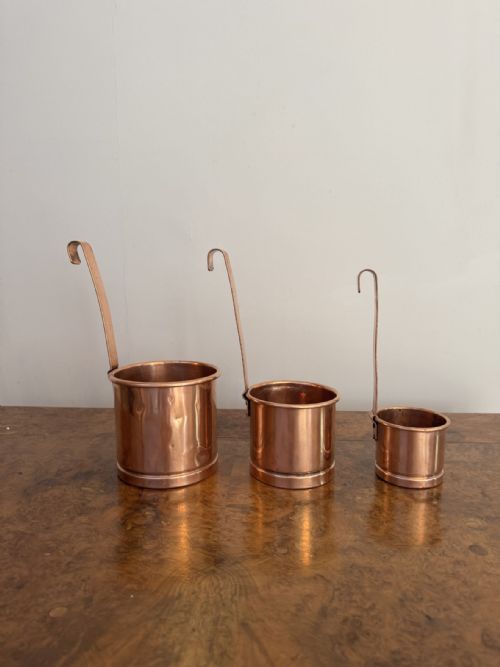
Most examples found here date through the nineteenth century, including Georgian and Victorian periods. Buyers commonly encounter graduated sets of measures, tall beer jugs, and decorative vessels featuring brass handles or lead solder construction.
How they were made
Craftsmen built these vessels primarily from sheet copper, often incorporating brass for handles, rims, and spouts to provide structural strength. Tin linings protected the contents of drinking vessels, while lead solder secured the seams and joints.
Makers shaped the metal by hand through hammering and spinning, leaving subtle surface tool marks that distinguish these older pieces from modern reproductions. Rivets fastened heavy handles securely to the bodies of larger tavern measures and utility cans.
Benefit club jugs once served ale to members during annual feasts, holding enough liquid to keep entire village committees cheerful.
What varies in quality
Quality depends upon the crispness of the form and the integrity of the original construction rather than surface shine alone. Heavy gauge metal retains its shape better over generations, whereas thin walls tend to crease and dent easily under normal use.
The aesthetic appeal often rests on balanced proportions and the careful integration of brass mounts against the warm copper body. Graduated sets show superior craftsmanship when each vessel matches precisely in profile and handle design.
Loftus of Oxford Street London
The Polished Copper Jug Glossary
- Tavern measure
- A standardised vessel used in public houses for serving ale or spirits. These jugs often display capacity stamps or verification marks.
- Milk churn
- A large container designed for transporting milk from farms. Examples can feature mixed metals like brass and copper in their construction.
- Haystack measure
- A tall, tapered jug resembling the shape of a traditional hayrick. This specific profile is characteristic of nineteenth-century measuring vessels.
- Lead solder
- An alloy used by metalworkers to join seams and attach bases. Its presence indicates traditional assembly methods of the period.
Polished Copper Jug: Frequently Asked Questions
How do I clean a polished copper jug?
Maintenance requires gentle cleaning with specialised metal cream to preserve the reflective finish without wearing away the underlying copper surface.
Avoid abrasive scourers that scratch the metal and ruin the historic patina developed over the centuries.
Were these jugs used for everyday cooking?
Many examples served utilitarian roles in Georgian and Victorian households, dairies, and public houses for measuring and carrying liquids.
Some larger vessels functioned as tavern measures, while others found use as garden watering cans or farm equipment.
How can I tell Georgian pieces from Victorian ones?
Georgian pieces often display heavier proportions and simpler lines associated with early tavern service and large capacity storage.
Victorian items frequently appear as graduated sets of measures or incorporate more decorative brass elements and standardised capacity marks.
Are these copper jugs safe for holding drinks?
Original vessels intended for consumption featured internal tin linings to prevent direct contact between the liquid and the copper. Over time, these linings can wear thin, meaning older pieces are best used for display rather than beverage service.