
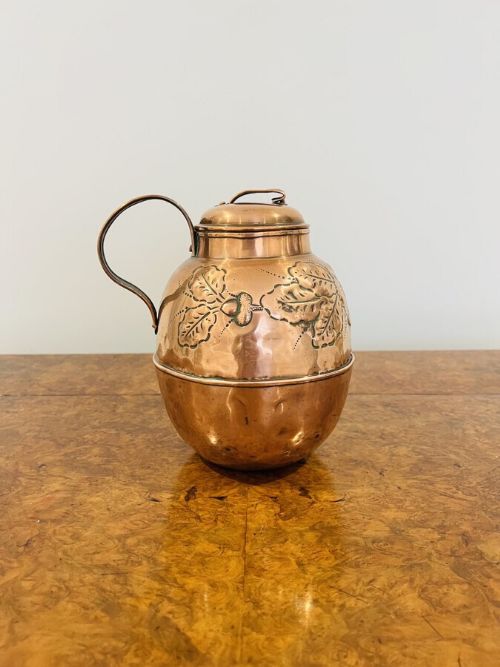


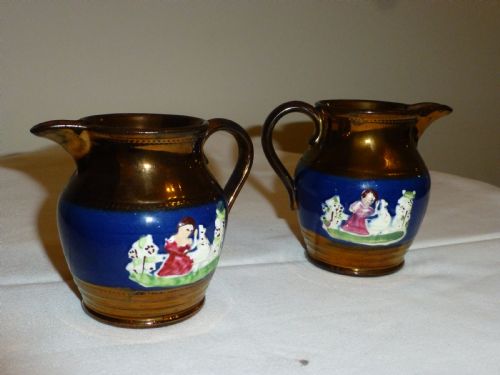


Copper Milk Jug
A copper milk jug is a durable kitchen essential that brings warmth and character to a country interior.
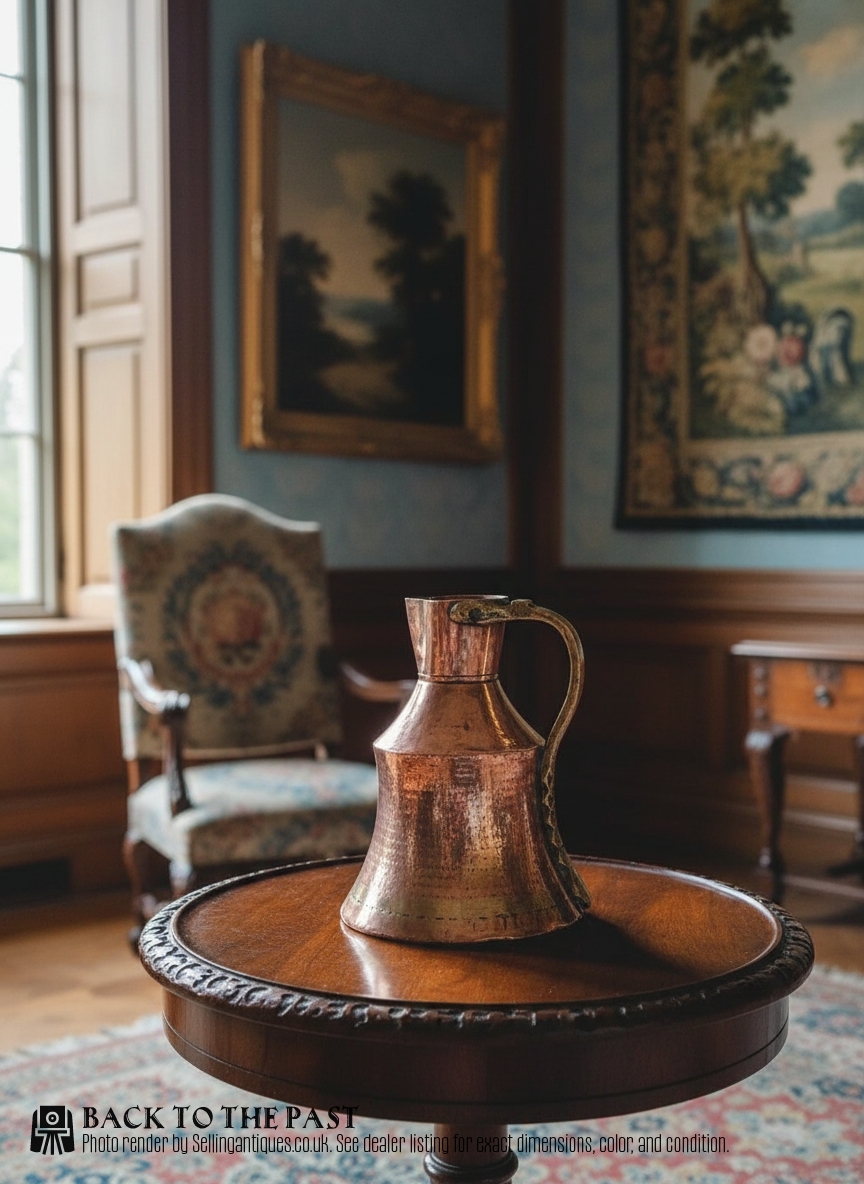
Copper Milk Jug
When you search for a copper milk jug, you encounter a practical vessel designed for daily dairy use across the nineteenth and early twentieth centuries. These pieces encompass sturdy Jersey cans from the Channel Islands alongside decorative jugs from the Arts and Crafts period.
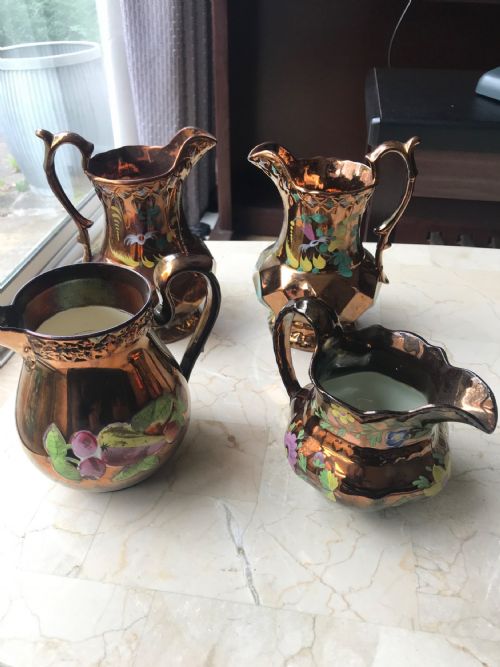
You are most likely to meet Victorian and Arts and Crafts examples on this page, often showing the warm metallic tones of beaten copper combined with brass fittings. The selection also includes ceramic pieces featuring copper lustre glazes rather than solid metal.
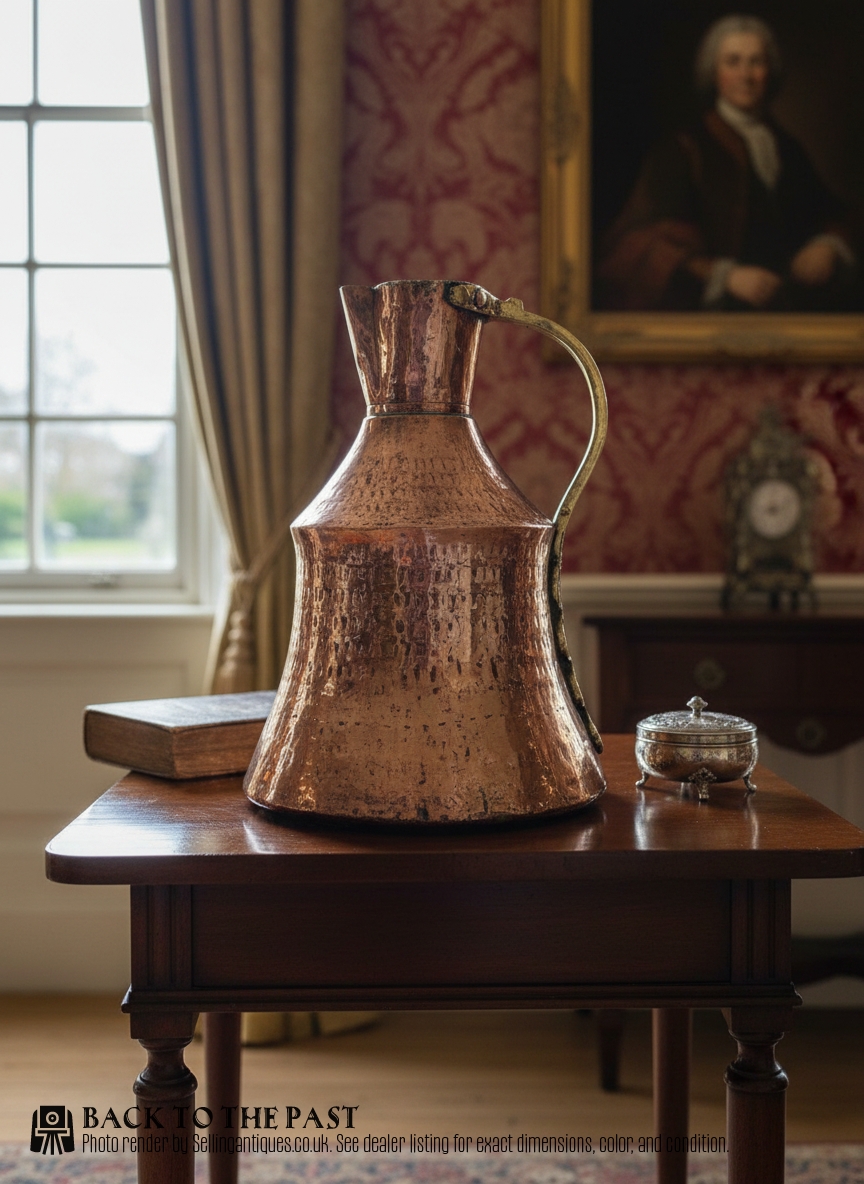
How they were made
Metal vessels are formed from sheet copper, shaped and joined with soldered seams or riveted handles, frequently incorporating contrasting brass elements for spouts and bands. Potters apply metallic copper lustre glazes to earthenware and ironstone bodies, firing them to achieve a reflective surface.
Surface finishing ranges from plain polished metal to hand-decorated botanical and fruit motifs painted over ceramic glazes. Early metal pieces often show the hand-hammered marks of the coppersmith rather than modern machine stamping.
Some nineteenth-century dairy workers hauled milk in heavy copper cans that weighed more than the cow's patience on a frosty morning.
What varies in quality
Quality rests in the weight of the metal and the crispness of the hand-formed seams, where heavier gauge copper indicates a piece intended for serious dairy work rather than display. On ceramic versions, the depth and evenness of the copper lustre glaze distinguish a superior finish from a flat application.
Proportion and decorative restraint dictate the appeal of an Arts and Crafts or Victorian piece. Clean lines and secure, well-balanced handles show the maker's competence far more than excessive surface ornamentation.
Livesley Powell and Co·Martin's Guernsey
The Copper Milk Jug Glossary
- Copper Lustre
- A ceramic glaze containing copper that produces a metallic, highly reflective sheen when fired in a kiln. Potters used this technique extensively on nineteenth-century earthenware.
- Jersey Can
- A tall, cylindrical metal container with a side handle, traditionally used in the Channel Islands for storing and measuring milk. These pieces often bear touchmarks or capacity stamps.
- Gaudy Welsh
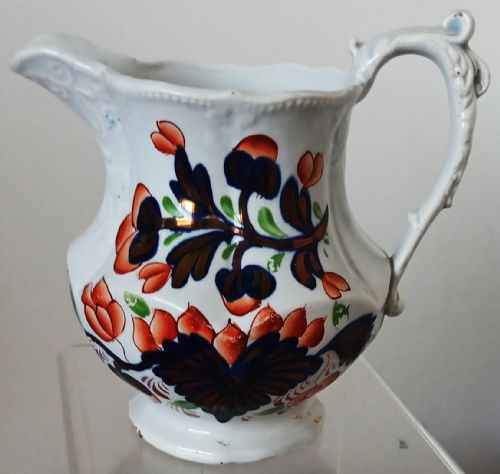
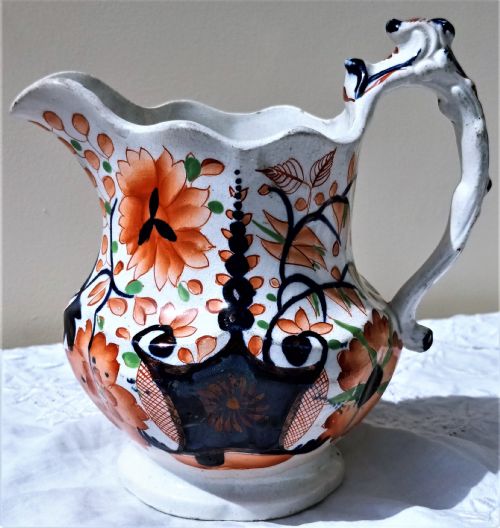
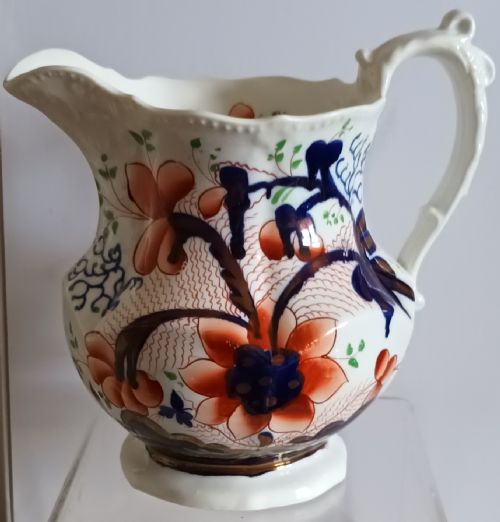
- A type of nineteenth-century Staffordshire pottery decorated with vibrant cobalt blue, copper lustre, and iron-red geometric or floral patterns. The style was popular in Welsh mining communities.
- Ironstone China
- A heavy, durable type of earthenware patented in the nineteenth century to imitate Chinese porcelain. Makers utilised it for robust domestic jugs and pitchers.
- Arts and Crafts
- A design movement valuing hand craftsmanship and simple forms over mass production. Metalwork from this period often displays visible hammer marks and plain brass details.
Copper Milk Jug: Frequently Asked Questions
How were copper milk jugs used?
These vessels served for carrying, storing, and pouring milk in domestic kitchens and dairies. Larger examples functioned as churns or transport cans, while smaller versions came to the table for breakfast service.
Metal jugs retained cool temperatures for dairy storage, whereas ceramic counterparts with copper lustre served decorative and pouring roles during Victorian meals.
How do I clean a copper milk jug?
Traditional copper requires gentle cleaning with specialised metal polish to maintain its shine or remove tarnish. Avoid harsh abrasives that can scratch the soft metal surface and ruin the finish.
Ceramic jugs with copper lustre need only warm soapy water and a soft cloth, as metal polish will damage the glaze beneath.
Are these jugs safe for food use?
Many antique metal jugs feature old solder or unlined interiors that may contain lead or other metals unsuitable for modern consumption. It is generally wiser to display them as decorative items rather than for daily food service.
Ceramic variations are typically sealed with glaze, but older pottery can develop hairline cracks that harbour bacteria over time.
How do I date a copper milk jug?
Dating relies on examining construction methods, such as hand-beaten seams, riveted handles, and the presence of nineteenth-century touchmarks or maker stamps. Arts and Crafts pieces usually display distinct styling from the early twentieth century.
Ceramic versions are dated by their glaze type, backstamps, and characteristic nineteenth-century decorative patterns like Gaudy Welsh or copper lustre.