




Pocket Match Safe Container
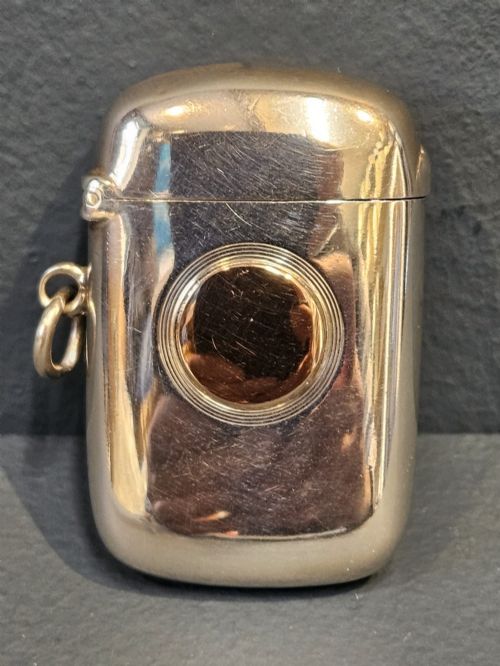
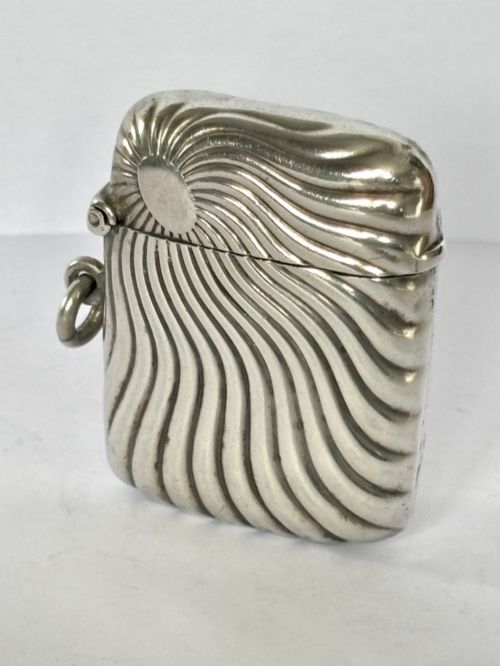
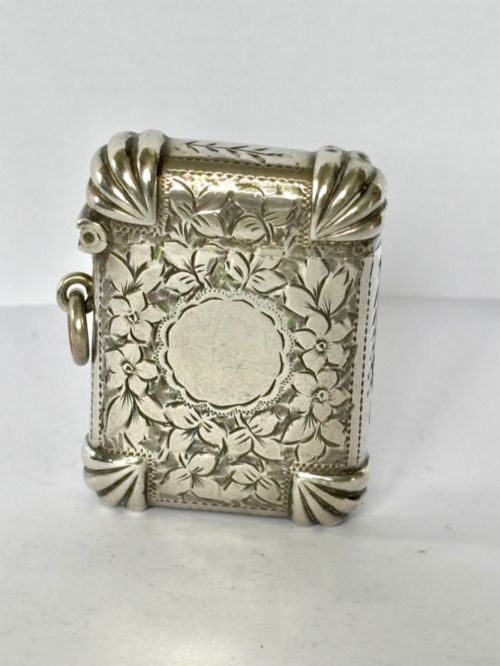
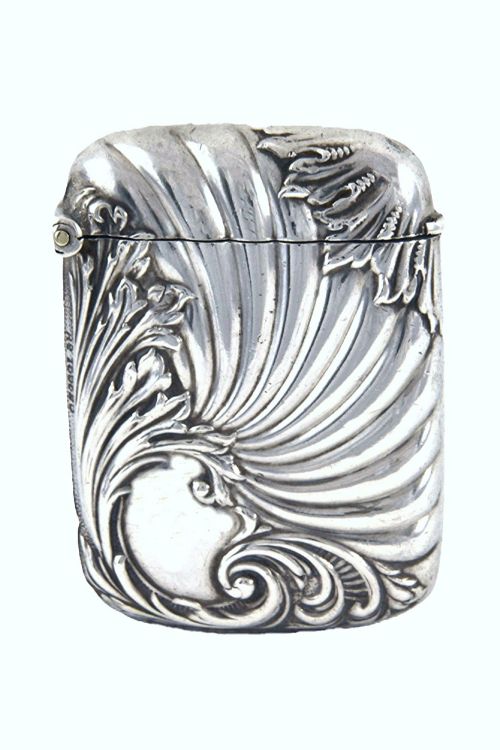
These pocket match safe container pieces are compact Victorian and Edwardian silver vesta cases designed to keep matches dry and ready for use.
Pocket Match Safe Container
When you search for a pocket match safe container, you encounter small personal match holders known historically as vesta cases. These pieces date principally from the Victorian and Edwardian periods, reflecting an era when carrying safety matches was an everyday necessity.
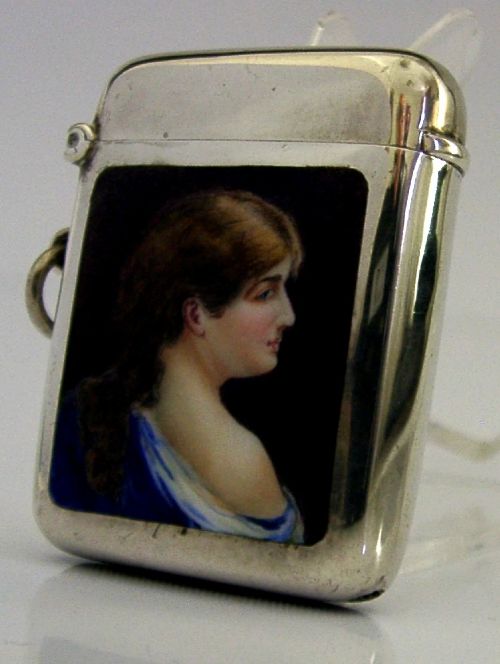
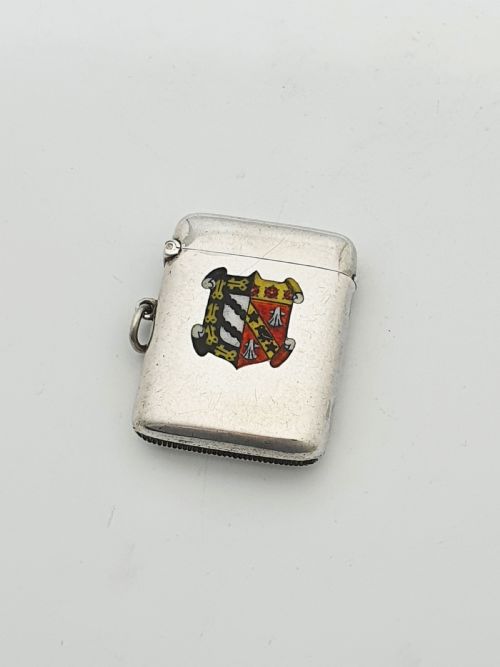
The selection on this page centres on sterling silver examples, ranging from plain functional forms to elaborate novelty shapes and enamelled designs. You meet standard rectangular formats alongside whimsical animal and figural subjects such as cats, elephants and sentry boxes.
Most examples originate from the workshops of British silversmiths, bearing hallmarks that record the year of manufacture and assay office town. Standard pocket formats dominate the inventory, accompanied by specialist variations featuring applied crests or hand-painted enamel decoration.
How they were made
Silversmiths constructed these containers from sterling silver sheet, shaping the body and hinged lid to close tightly against moisture. Integral strike lines were often incorporated into the base to ignite vestas upon extraction.
Specialist techniques include vitreous enamel applied to the exterior surface, sometimes with hand-painted details or crests fired onto the silver. Novelty forms required specialised casting and assembly to create recognizable animal or figurative silhouettes while retaining internal space for matches.
Pocket Match Safe Container Retail Price Guide 2026
Typical asking prices for pocket match safe container among the pieces listed under this phrase on Sellingantiques today, from the lower quarter to the upper quarter. They describe what is for sale here now, not the wider market.
Match safe makers produced miniature sentry boxes and elephants, proving that Victorians enjoyed keeping their pocket fire sources inside amusing disguises.
What varies in quality
Quality in a pocket match safe container rests on the crispness of the original chasing, engraving or casting detail. Plain silver cases rely entirely on the purity of their proportions and the strength of the hinge.
Enamelled and novelty versions derive distinction from the preservation of the vitreous surface and the realism of the figural form. Maker attribution also influences standing, with documented silversmiths commanding particular interest among collectors.
EV PLEDGE & SON·ROBERT CHANDLER·Sampson Mordan
The Pocket Match Safe Container Glossary
- Vesta Case
- A small pocket container designed to hold matches, fitted with a hinged lid and a striking surface. These items became essential accessories following the invention of friction matches in the nineteenth century.
- Sterling Silver
- A silver alloy containing 92.5 percent pure silver by mass, with the remainder consisting of other metals. This standard grade appears across the majority of British match safe containers.
- Vitreous Enamel
- A material made by fusing powdered glass to a substrate by firing, used to decorate the exterior of silver match safes. This technique creates a glossy, coloured surface that resists wear.
- Hallmark
- An official mark stamped onto precious metals to indicate purity, maker and year of manufacture. British silver examples typically display standard assay office symbols and date letters.
- Novelty Vesta
- A match safe cast or shaped into a pictorial form such as an animal or inanimate object. These decorative variations were produced alongside standard rectangular containers.
Pocket Match Safe Container: Frequently Asked Questions
What is a vesta case?
A vesta case is a small, portable container designed to hold vestas, which were an early type of friction match. They were carried in pockets or attached to watch chains to keep matches dry.
The hinged lid protected the contents from moisture, while a textured striking strip on the bottom allowed the match to be lit upon removal.
How do I know the date?
British silver match safes carry hallmarks that include a date letter indicating the exact year of assay. Additional duty marks and maker's initials help narrow down the period of manufacture.
Style also provides guidance, as Victorian and Edwardian examples display distinct decorative preferences ranging from ornate engraving to plain polished surfaces.
What were novelty match safes?
Novelty match safes are containers shaped to resemble animals, figures or everyday objects rather than standard rectangular boxes. Makers produced forms like cats, elephants and sentry boxes to appeal to contemporary tastes.
These pieces required skilled casting and hand-finishing to achieve recognizable anatomical or architectural details while maintaining a functional interior cavity.
How were they carried?
Owners typically carried these containers in waistcoat pockets or suspended from watch chains using an integrated suspension loop. The compact dimensions allowed them to fit comfortably alongside other personal accessories.
The secure snap closure ensured the lid remained shut during movement, preventing matches from spilling out into the pocket.