

Plinth Base Mahogany Chest
A plinth base mahogany chest grounds a room with heavy timber and clean lines, offering deep storage built to last.
Plinth Base Mahogany Chest
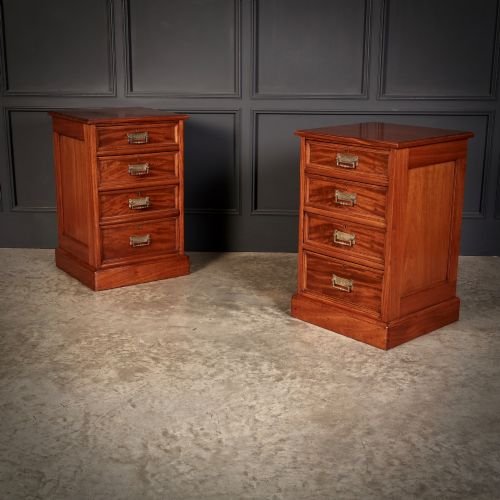
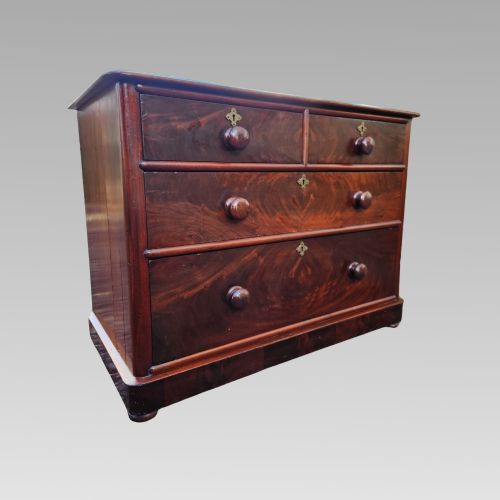
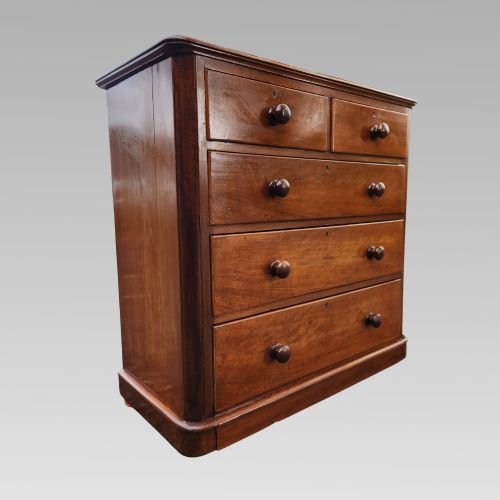
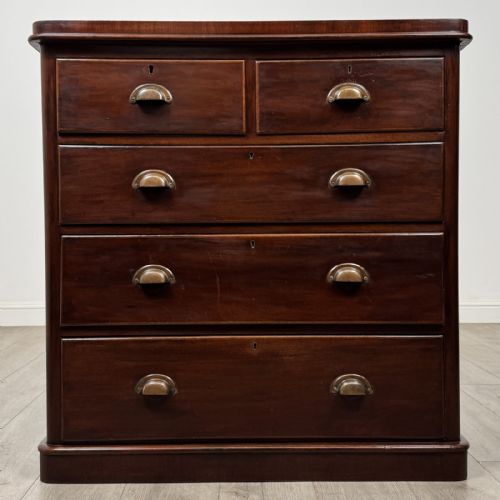
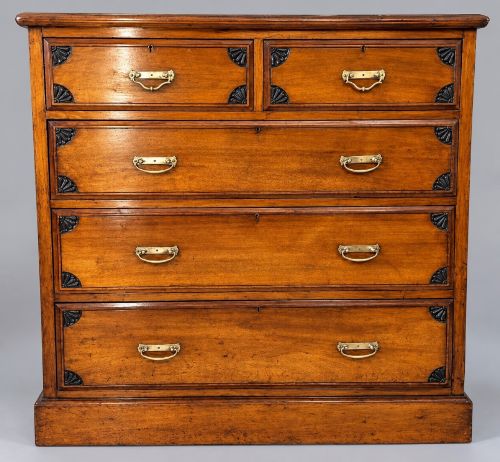
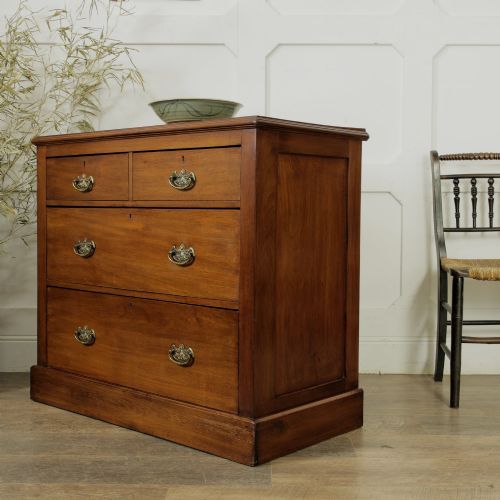
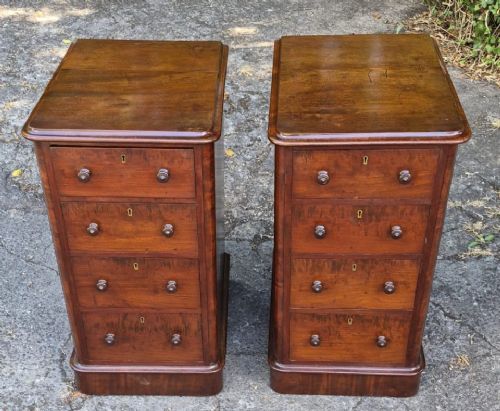
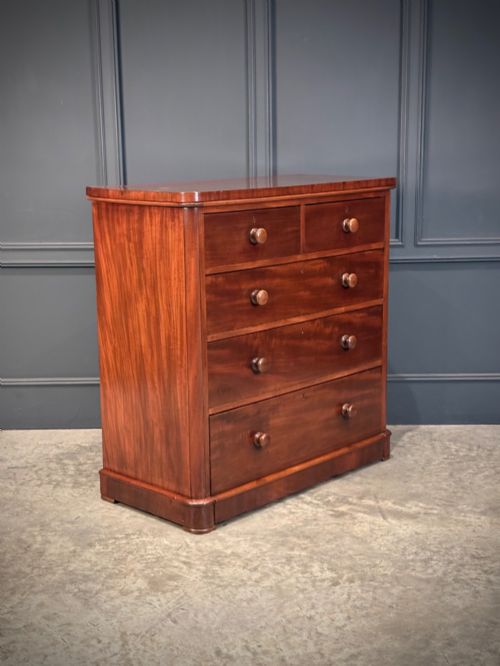
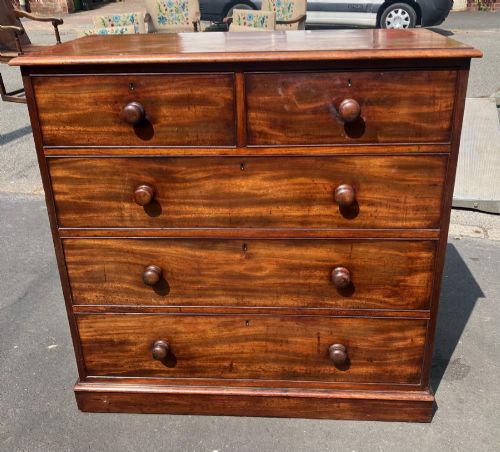
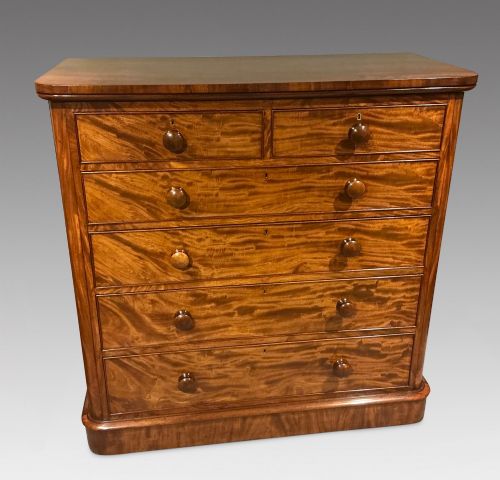
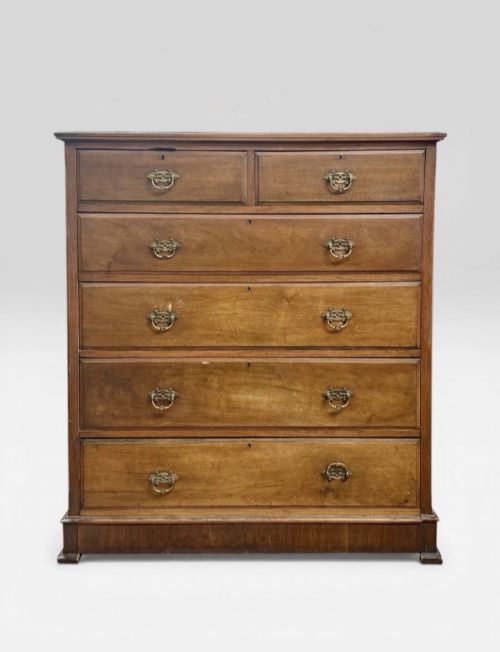
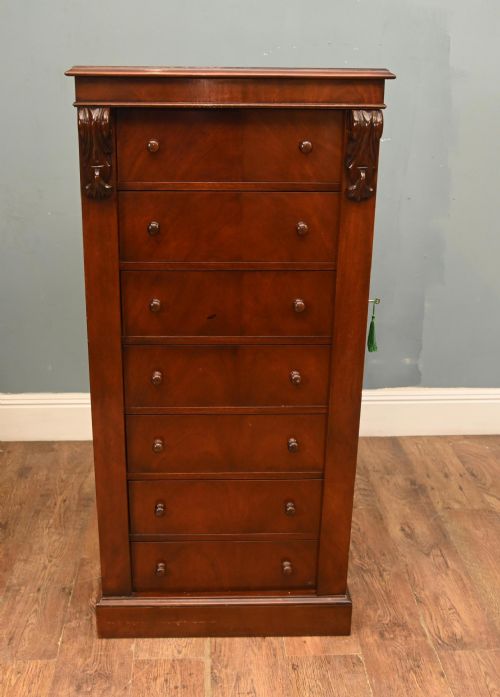
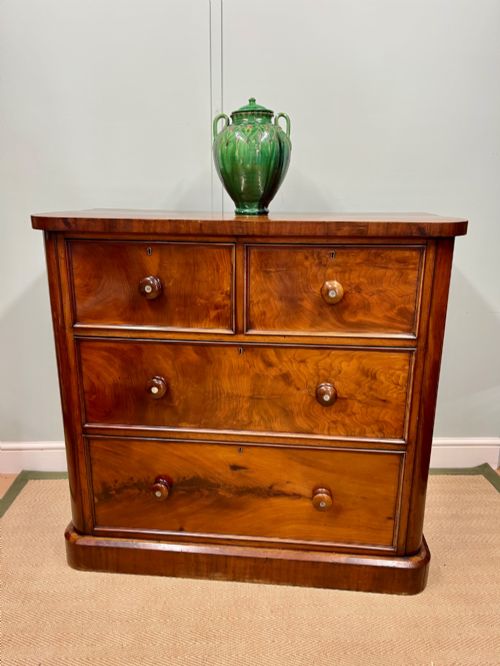
A plinth base mahogany chest is a substantial storage piece grounded directly on a flat wooden platform rather than raised on traditional bracket feet or legs. These items span periods from the eighteenth century through the Edwardian era, taking the form of standard chests of drawers, Wellington chests, and bedside cabinets.
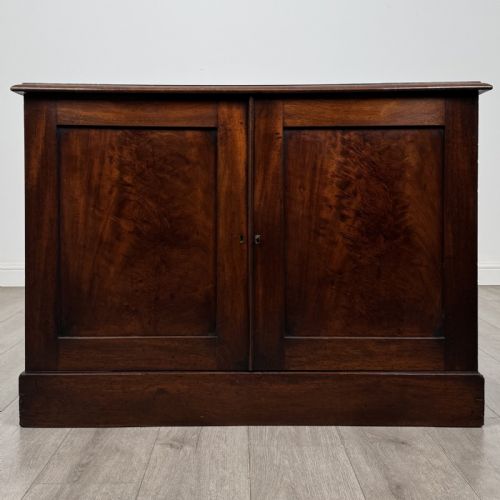
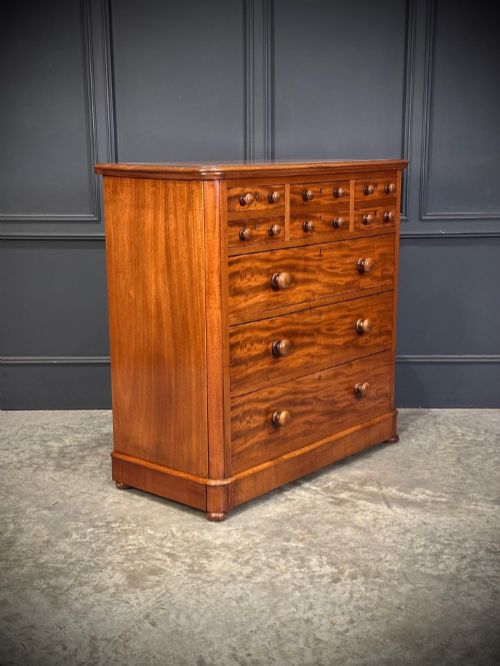
You will most frequently meet Victorian examples on this page, often featuring flame mahogany veneer over solid secondary timbers like pine or oak. Alongside conventional chests, the selection includes side cabinets, wine chests, and shoe box cabinets sharing the characteristic solid base.
The heavy timber construction gives these units a distinct architectural presence that distinguishes them from lighter furniture of later eras. Whether configured as a tall Wellington chest or a wide chest of drawers, the plinth design provides a stable, unbroken line from floor to top.
Materials and construction
Makers built these pieces primarily using solid mahogany and flame mahogany veneer, supported by internal secondary woods such as pine, oak, and chestnut. Drawer interiors frequently utilise cedar linings, while brass handles, escutcheons, and boxwood stringing provide contrasting detail.
The carcasses rely on robust joinery designed to support heavy timber drawers over decades of daily use. Plinth bases are constructed as sturdy wooden box frames that distribute the weight evenly across the floor.
Plinth Base Mahogany Chest Retail Price Guide 2026
Typical asking prices for plinth base mahogany chest among the pieces listed under this phrase on Sellingantiques today, from the lower quarter to the upper quarter. They describe what is for sale here now, not the wider market.
Listings feature mahogany, oak, pine, boxwood, chestnut, and brass across nineteenth century periods.
Assessing quality and finish
Quality reveals itself in the choice of timber, particularly where figured flame mahogany veneer is matched across the drawer fronts for visual symmetry. Finer examples display precise boxwood inlay and careful attention to secondary woods inside the drawers.
The execution of the plinth base and the integration of architectural details like carved corbels or brass hardware separate standard utility pieces from workshop creations of higher ambition.
Mawer and Stephenson
The Plinth Base Mahogany Chest Glossary
- Plinth base
- A heavy flat wooden platform at the bottom of a piece of furniture replacing conventional legs. This architectural feature grounds the chest firmly against the floor.
- Flame mahogany veneer
- A thin slice of wood cut from where a branch meets the trunk, showing a dramatic flickering grain pattern. Cabinet makers applied this to primary drawer fronts for visual impact.
- Wellington chest
- A tall, narrow chest of drawers secured by a hinged vertical locking side bar. This specific form often stands upon a sturdy plinth base.
- Secondary wood
- Timber used in the hidden structural parts of a piece, such as drawer linings and carcase backs. Common examples include pine, oak, and cedar.
- Stringing
- Thin inlaid lines of contrasting wood, such as boxwood, used to edge drawer fronts and top panels. It creates a subtle border framing the primary timber.
Plinth Base Mahogany Chest: Frequently Asked Questions
How do I date a plinth base mahogany chest?
Dating relies on examining construction methods, timber choices, and hardware styles across the piece. Victorian and nineteenth century examples often feature machine sawn internal elements alongside hand dovetailed drawer boxes.
Secondary woods like oak or pine and the presence of brass knobs or wooden pulls help narrow the decade. Plinth bases remained popular through the William IV, Victorian, and Edwardian periods.
Where should I place a plinth base chest?
These solid timber chests suit bedrooms, hallways, or living spaces where substantial storage is required. Their flat bases mean they sit flush against the floor without collecting dust underneath.
Keep them away from direct heat sources and strong sunlight to protect the mahogany polish and flame veneer.
How do I care for mahogany veneer?
Maintain mahogany furniture by dusting regularly with a soft, dry cloth and applying natural beeswax polish occasionally to nourish the timber. Avoid silicone sprays which can damage the historic finish.
Protect the top surface from moisture and heat by using coasters or mats.