
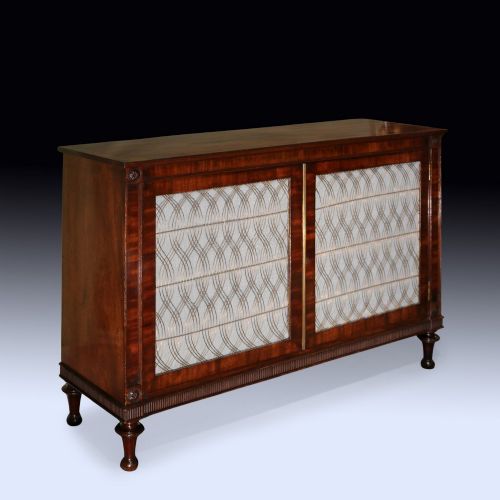


Pleated Silk Brass Cabinet
These pleated silk brass cabinet pieces combine refined cabinetry with metallic detailing, offering a sophisticated storage solution for period interiors.
Pleated Silk Brass Cabinet
When exploring a pleated silk brass cabinet, you are looking at nineteenth-century case furniture built during the Regency, George IV, William IV, and Victorian periods. These pieces take the form of side cabinets, chiffoniers, and sideboards designed to display and store possessions with elegance.
The most common examples on this page are rosewood and mahogany chiffoniers or side cabinets dating from the nineteenth century. They frequently incorporate brass inlay and fabric panels behind glazed or gridded doors.
Origins span English cabinet-making workshops of the nineteenth century, reflecting the tastes of the Regency and Grand Regency styles. Each piece demonstrates the domestic storage requirements of its era through fitted shelving and enclosed lower compartments.
Materials and construction
Cabinet makers utilised dense hardwoods such as rosewood, mahogany, and walnut as the primary structural carcase for these items. These timbers were often selected for their rich grain patterns and polished to a smooth finish.
Behind every brass grille lies a carefully pleated panel of silk, whispering of nineteenth-century secrets kept safe from curious eyes.
Assessing craftsmanship
The distinction between standard and superior examples lies in the precision of the brass inlay and the selection of timber veneers. Finer pieces display crisp metalwork set flush into the wood alongside carefully matched grain figures.
Another indicator of quality is the integration of auxiliary materials like marble tops and original fabric behind the brass grilles. Superior execution involves harmonious proportions and cohesive detailing across the entire carcase.
The Pleated Silk Brass Cabinet Glossary
- Chiffonier
- A low sideboard or cabinet featuring shelves and enclosed lower cupboards, popular during the nineteenth century. It provides compact display and storage space.
- Ormolu
- Gilded bronze or brass mounts applied to furniture for decorative effect. This technique adds metallic contrast to the timber surfaces.
- Palisander
- A heavy, dark timber akin to rosewood, often utilised for striking veneer work on Regency furniture. Its distinct grain enhances the visual depth of the cabinet.
- Grille
- A latticework panel made of brass wire fitted into furniture doors to allow visibility while protecting the contents. Silk backing is frequently added behind this mesh.
Pleated Silk Brass Cabinet: Frequently Asked Questions
What rooms suit a pleated silk brass cabinet?
These cabinets suit reception rooms and hallways where refined storage and display surfaces are required. Their compact nineteenth-century proportions allow them to sit comfortably against walls without dominating the space.
The enclosed lower cupboards and upper shelving provide practical utility for books, ceramics, or linens while maintaining a decorative presence in a traditional interior.
How do I care for the silk and brass?
Maintenance involves gentle dusting with a soft dry cloth to protect both the delicate fabric panels and the metalwork. Avoid liquid cleaners that might stain the silk or discolour the surrounding wood.
Keep the timber away from direct heat sources and strong sunlight to preserve the finish of the rosewood or mahogany carcase over time.
How do I distinguish Regency from Victorian pieces?
Regency and George IV pieces typically display restrained classical proportions, delicate brass inlay, and exotic timbers like rosewood. They reflect an aesthetic influenced by archaeological discoveries and ancient Roman or Greek motifs.
Victorian items often present heavier proportions and darker walnut timbers with less emphasis on intricate brass stringing. Examining the secondary woods and construction methods helps clarify the specific nineteenth-century decade of manufacture.
Were these cabinets used for dining rooms?
Chiffoniers and side cabinets served multiple domestic functions across the nineteenth century, including storing tableware and serving dishes in dining spaces. Their upper surfaces also acted as serving or display areas during meals.
In parlours and drawing rooms, the same furniture forms held books and decorative objects, adapting easily to the changing social habits of the household.