



Platinum Ruby Target Ring
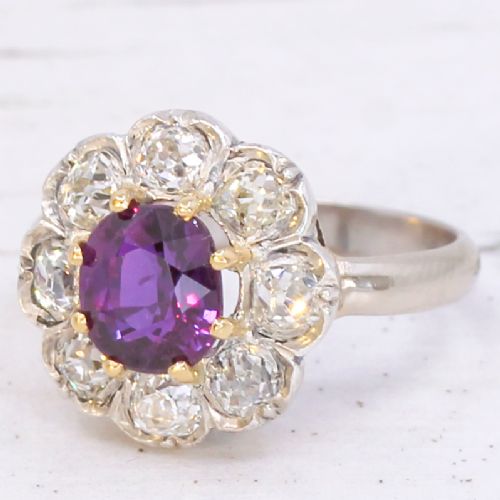
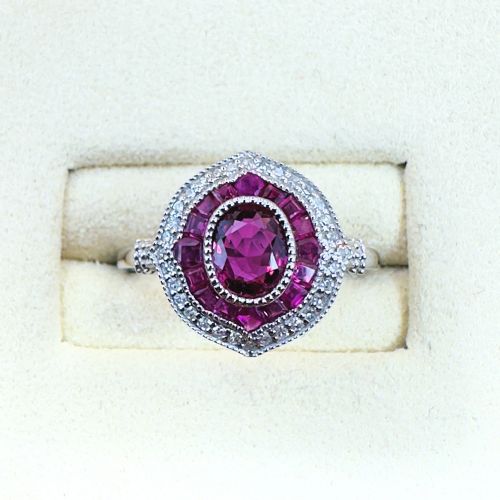
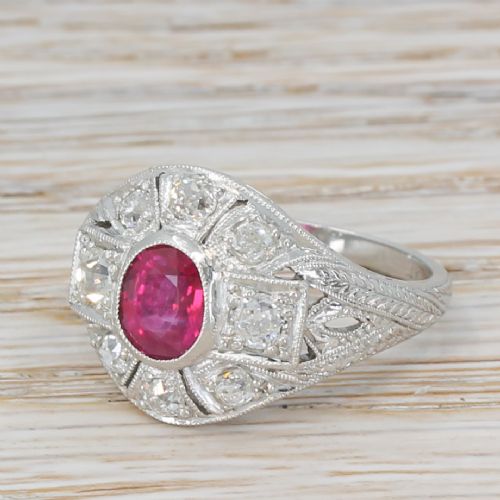
A platinum ruby target ring focuses attention on a central red stone framed by concentric circles of diamonds, creating a striking geometric punch on the hand.
Platinum Ruby Target Ring
A platinum ruby target ring draws the eye through a precise concentric layout, most frequently seen here in the geometric forms of the Art Deco style. These cluster rings bring together deep red rubies and sparkling diamonds in balanced circular or square arrangements.
The pieces on this page span the Edwardian era through the nineteen-fifties, with the nineteen-twenties and nineteen-thirties forming the core of the selection. Platinum provides the crisp white framework that defines these vintage cluster designs.
Mogok Burmese rubies appear alongside natural stones, paired with old cut, rose cut, or European diamonds. Each ring functions as a self-contained optical pattern that sits flat and wide upon the finger.
How they were made
Makers utilised platinum to build strong, slender settings that hold intricate stone arrangements without heavy metal bulk. This durable white metal allowed jewellers to secure tight rows of diamonds around a central ruby with minimal visible prongs.
Stones were hand-cut in traditional shapes, including oval cuts and old cuts, to fit the concentric tiers of the target motif. Gold, specifically eighteen-carat gold, occasionally supports the platinum top or forms the band in crossover designs.
Platinum Ruby Target Ring Retail Price Guide 2026
Typical asking prices for platinum ruby target ring among the pieces listed under this phrase on Sellingantiques today, from the lower quarter to the upper quarter. They describe what is for sale here now, not the wider market.
Listings feature platinum predominantly as the mounting metal, paired with both eighteen-carat gold and silver across Edwardian and Art Deco periods.
What varies in quality
Quality rests in the intensity and origin of the ruby, particularly stones originating from Mogok in Burma, which command attention through their rich saturation. The clarity and cut of the surrounding diamonds further elevate a piece, especially when old cut stones match the period aesthetic.
The precision of the geometric tiers and the fineness of the platinum work dictate the overall refinement of the ring. Superior examples maintain balanced proportions where each concentric ring of diamonds frames the central ruby without crowding.
The Platinum Ruby Target Ring Glossary
- Target ring
- A cluster ring featuring a central stone encircled by one or more concentric rings of contrasting smaller stones. This concentric arrangement creates a bullseye visual effect on the hand.
- Old cut
- An early diamond facet style with a small table, high crown, and large culet, designed to catch candlelight. These stones display a softer, chunkier sparkle than modern brilliant cuts.
- Rose cut
- A vintage diamond cut characterised by a flat base and a dome covered in triangular facets. It resembles an unopened rosebud and offers a gentle, translucent glow.
- Cluster ring
- A ring design where multiple smaller stones group closely around a prominent centre stone. This layout maximises visual impact and light return.
- Mogok
- A renowned ruby-mining region in Burma famous for producing stones of exceptional colour and quality. Rubies from this source often display a vibrant red fluorescence.
Platinum Ruby Target Ring: Frequently Asked Questions
What is a target ring?
A target ring is a specific style of cluster jewellery where a central gemstone sits surrounded by concentric rings of smaller stones, usually diamonds. The layout resembles a target or bullseye, giving the design its distinct geometric identity.
Most examples found in this category date from the Art Deco period, when symmetrical and concentric patterns dominated jewellery design. The concentric circles draw the eye directly to the contrasting colour of the central ruby.
How do I care for platinum settings?
Platinum is a remarkably durable and dense metal that resists wear well, making it ideal for securing small cluster stones over decades of daily use. It develops a soft patina over time rather than wearing away.
Clean your ring gently using warm water, mild soap, and a soft brush to remove everyday oils from beneath the stones. Avoid harsh chemicals and store the piece separately to prevent the diamonds from scratching softer metals or other gems.
Are Burmese rubies natural?
Burmese rubies originate from the Mogok region in Myanmar and are natural gemstones formed within the earth over millions of years. They are particularly prized for their rich red hue and natural internal characteristics.
When examining pieces from the nineteen-twenties and thirties, natural unheated stones represent the traditional material used by period jewellers. Certification documents often accompany these specific high-grade Burmese rubies to confirm their geographic origin.
How can I tell Art Deco from Edwardian rings?
Edwardian rings typically showcase delicate platinum lacing, millegrain beadwork, and softer garland motifs reminiscent of lace and embroidery. The aesthetic feels airy, feminine, and rooted in nineteenth-century luxury.
Art Deco pieces shift toward bold symmetry, rigid geometric lines, and strong colour contrasts like the red and white pairing in a ruby target ring. The design transitions from organic floral curves to streamlined architectural shapes.