

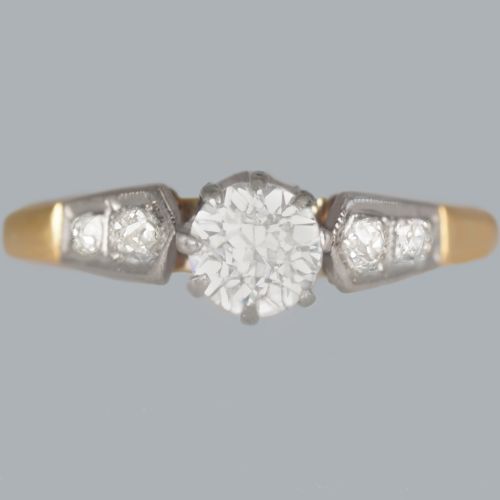


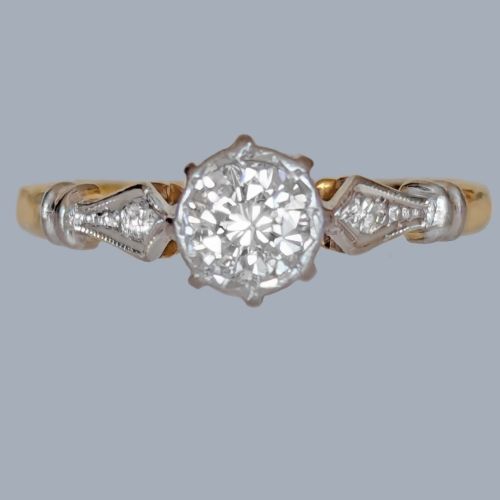


Platinum Band Solitaire
A platinum band solitaire pairs a single centre stone with a durable white metal band, offering a timeless choice for an engagement ring.
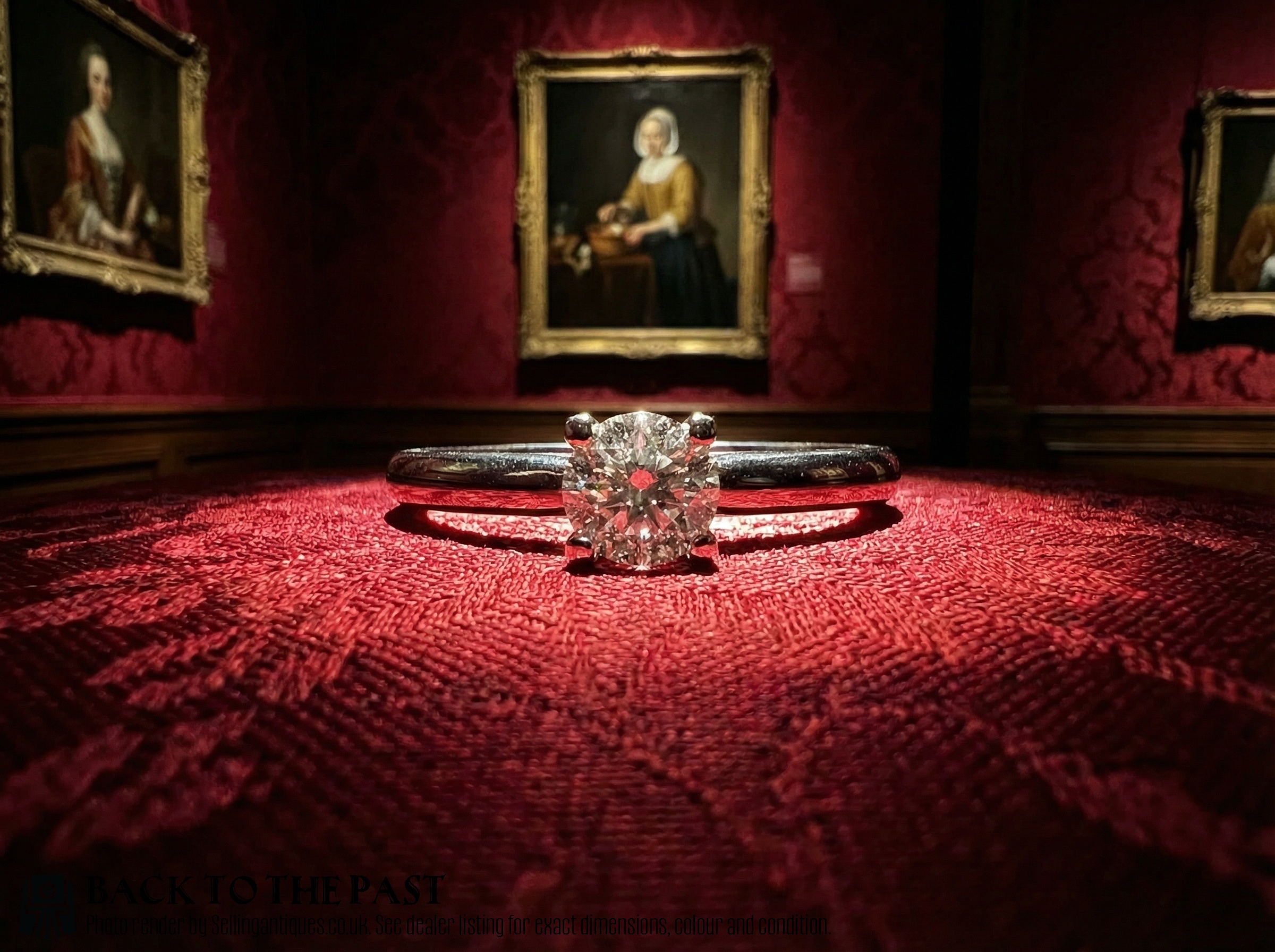
Platinum Band Solitaire
A platinum band solitaire focuses attention on a single primary gem set securely within a precious white metal mounting. These rings span periods from the late Victorian era through Edwardian, Art Deco, and mid-century modern design movements.
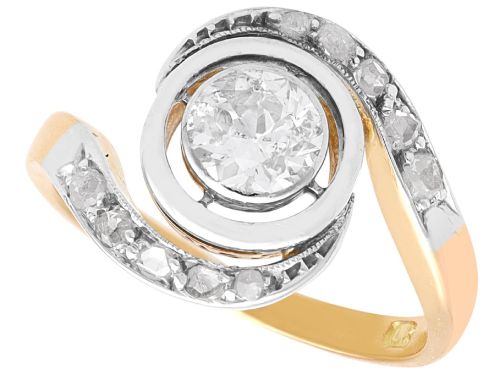
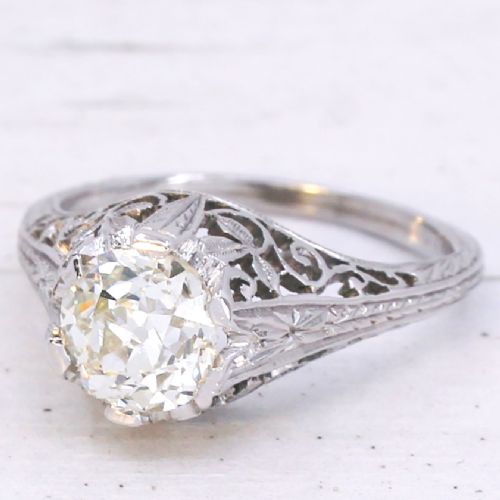
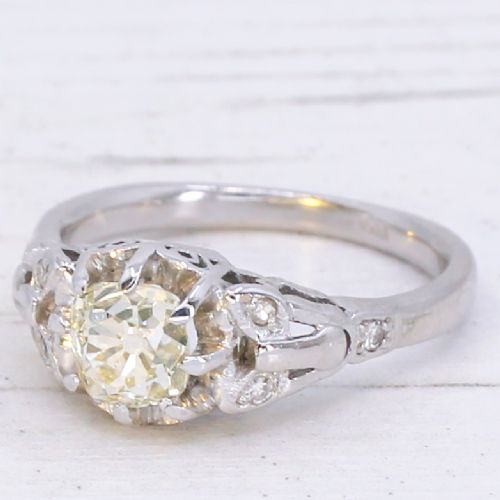
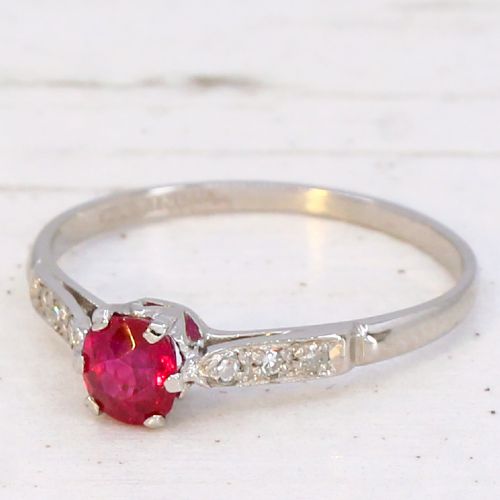
The most common examples on this page pair a brilliant or old-cut diamond with a solid platinum band, often accompanied by gold accents from the 1920s and 1930s. Alternative centre gems such as pearls, rubies and sapphires also appear alongside the traditional diamond options.
Engagement rings and dress rings dominate the selection, showing distinct stylistic shifts from geometric Art Deco mountings to flowing mid-century curves.
Materials and Techniques
The metalwork relies primarily on platinum, prized for its strength and ability to hold delicate claw settings without adding excessive bulk to the band. Many pieces combine this white metal with yellow or white gold, particularly in earlier Edwardian and Art Deco mountings where dual-metal construction was standard practice.
Gemstones are shaped by hand using period-specific techniques such as old European cuts, transitional cuts, and old mine cuts that produce softer light reflection than modern brilliant cuts. Pearl and ruby stones are secured in bezel or prong settings designed to protect their edges during daily wear.
Platinum Band Solitaire Retail Price Guide 2026
Typical asking prices for platinum band solitaire among the pieces listed under this phrase on Sellingantiques today, from the lower quarter to the upper quarter. They describe what is for sale here now, not the wider market.
Some Edwardian rings hide tiny secret diamond shoulders that flash unexpectedly when viewed from the side.
Judging Quality
Quality rests upon the purity and optical performance of the centre stone, alongside the precision of the setting work. Stones with higher colour and clarity grades and older hand-cut facets distinguish the top tier of pieces.
The integrity of the platinum band and the preservation of original claw settings also dictate value. Rings that retain their crisp geometric lines from the Art Deco period or delicate milgrain detailing show superior craftsmanship.
The Platinum Band Solitaire Glossary
- Solitaire
- A ring featuring a single mounting holding one primary gemstone. This setting style maximises the visibility of the central stone.
- Milgrain
- A decorative border of tiny raised metal beads along the edges of a setting. This technique is frequently seen in Edwardian and Art Deco jewellery.
- Transition Cut
- A diamond cut used roughly between 1930 and 1950 representing the bridge between old cut stones and modern brilliant cuts. It combines deeper proportions with a smaller table.
Platinum Band Solitaire: Frequently Asked Questions
What is a platinum band solitaire?
A platinum band solitaire is a ring featuring a single prominent gemstone mounted on a durable platinum band. The design directs visual focus entirely to the central stone.
These pieces range from early twentieth-century Edwardian examples to mid-century modern designs, incorporating diamonds, pearls, or coloured gems.
How do I care for a platinum ring?
Platinum is a robust metal that resists wear well, making it suitable for daily engagement ring use. Regular cleaning with warm soapy water and a soft brush maintains the finish.
Periodic checks by a jeweler ensure the claws holding the central stone remain secure.
How do I identify Art Deco style?
Art Deco rings feature geometric symmetry, sharp angles, and stylized motifs popular during the 1920s and 1930s. They often combine platinum settings with yellow or white gold components.
The metalwork frequently includes fine milgrain decoration and stepped shoulders framing the main diamond.
Are all solitaire rings diamonds?
While diamonds remain the most common choice for a solitaire, antique examples also feature natural pearls, sapphires, or rubies. Each stone type brings different optical properties to the single-stone setting.
Alternative gems offer distinct historical periods and colour profiles within the same mounting style.