





Plated Salt Cellars
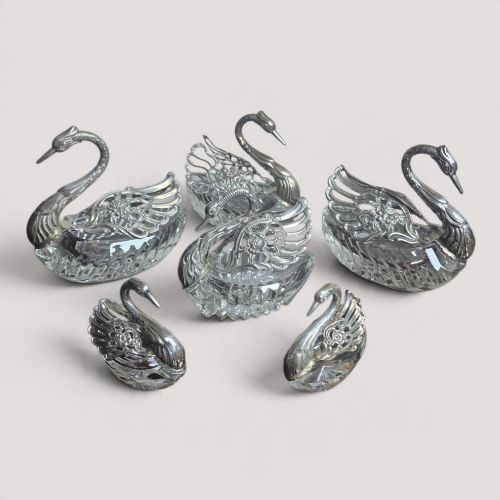
These plated salt cellars bring domestic silver plate and novelty forms to the dining table across Victorian, Edwardian and later periods.
Plated Salt Cellars
Plated salt cellars encompass open salt dishes, condiment stands, and cruet sets manufactured primarily in silver plate alongside cut glass and coloured glass inserts. Buyers exploring plated salt cellars will encounter forms ranging from simple open salts to elaborate novelty table pieces.
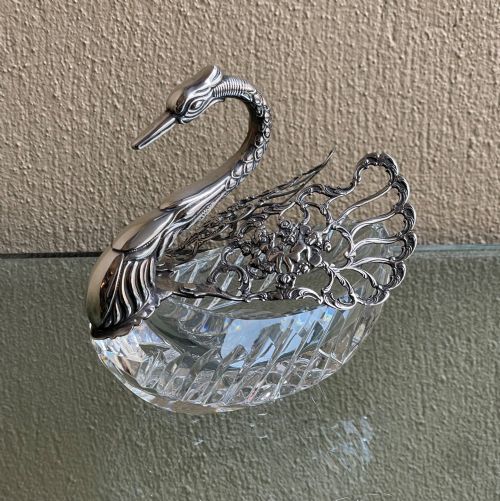
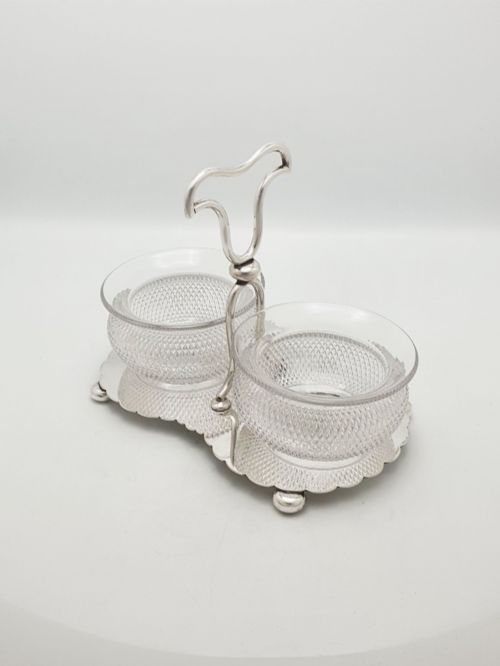
The selections span the nineteenth century through the Edwardian era into the mid-twentieth century, capturing periods such as the Victorian and Art Deco eras. Common configurations include twin glass bowls, multi-bottle cruet frames, and figural designs.
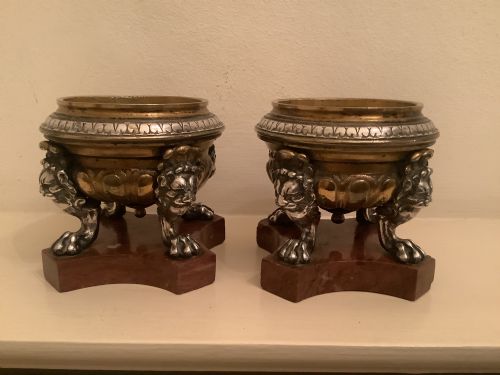
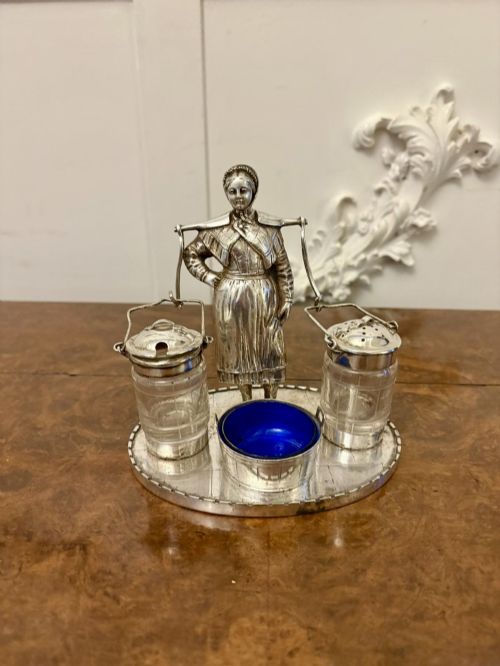
Makers utilised various materials including bronze, marble, and cobalt glass alongside silver plate to create functional tableware and decorative dishes. These objects served dining rooms by holding salt and other condiments during formal and family meals.
How they were made
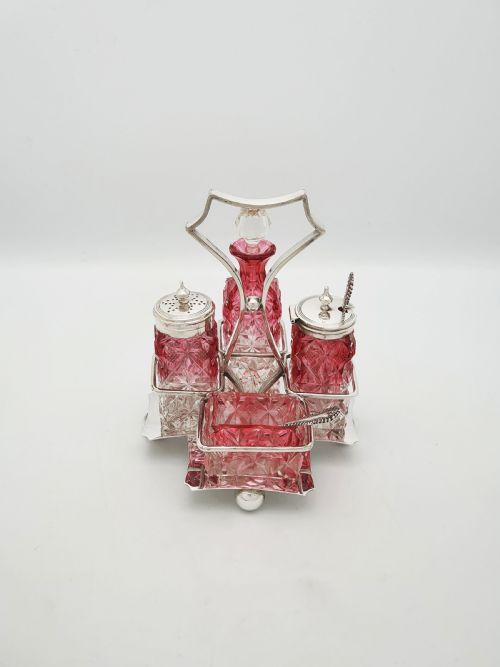
The manufacture of these pieces relies on silver plating techniques applied to base metals, forming durable frames and figural subjects. Artisans combined plated metalwork with cut glass, cranberry flashed glass, and cobalt glass inserts to produce contrasting textures and colours.
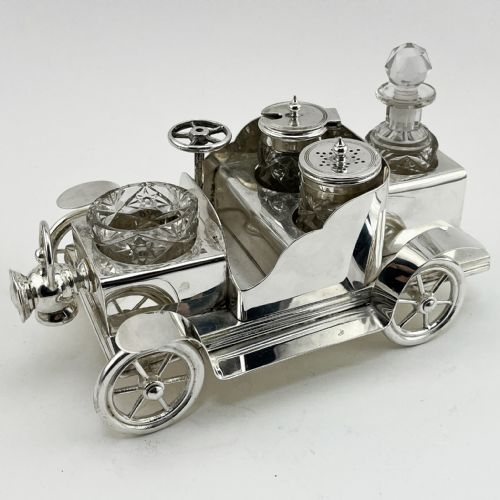
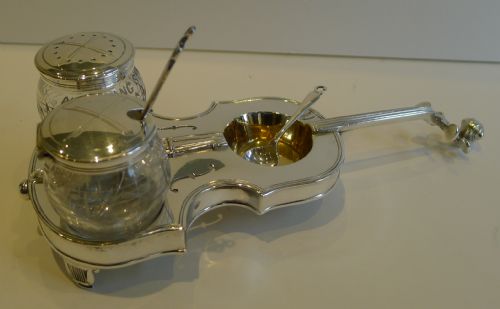
Specialised casting methods created intricate novelty shapes, including animals, vehicles, and musical instruments, which required precise assembly of moving parts or fitted glass containers. Hand-finishing techniques such as chasing and silvering enhanced the decorative details on tazzas and condiment stands.
Plated Salt Cellars Retail Price Guide 2026
Typical asking prices for plated salt cellars among the pieces listed under this phrase on Sellingantiques today, from the lower quarter to the upper quarter. They describe what is for sale here now, not the wider market.
Listings demonstrate materials including silver plate, cut glass, bronze, marble, and cobalt glass across various nineteenth and twentieth-century periods.
What varies in quality
Quality in these items depends upon the crispness of the casting in figural and novelty pieces, where finer details demonstrate superior craftsmanship. The integration between the silver plated frame and the fitted glass component also distinguishes better examples.
The survival of original glass inserts, whether cut glass or coloured glass, affects the integrity of the set. Heavier gauge plating and well-preserved silver surfaces indicate higher manufacturing standards across different periods.
The Plated Salt Cellars Glossary
- Silver Plate
- A thin layer of silver bonded to a base metal substrate to provide the appearance and lustre of solid silver. This technique allowed makers to produce elaborate tableware at a lower cost.
- Cruet Set
- A matched collection of bottles, jars, or open cellars held within a centralised stand for table condiments. These sets frequently appeared on dining tables from the Victorian period onwards.
- Cranberry Glass
- A rich red glass produced by adding gold chloride to the molten batch during manufacture. It was often cut and flashed onto clear glass for decorative condiment containers.
- Tazza
- A shallow bowl or dish raised on a slender stem and foot, used for serving food or as a centrepiece. Examples appear in bronze and silvered finishes.
- Open Salt
- A small open dish designed to hold loose salt, typically used before the invention of the spring-loaded salt shaker. Diners used a small spoon or fingers to take salt from the dish.
Plated Salt Cellars: Frequently Asked Questions
What is a plated salt cellar?
A plated salt cellar is an open dish or container made from silver plate designed to hold table salt for diners. These pieces often accompany cruet sets and condiment stands.
They appear in various styles ranging from simple open salt designs to elaborate Victorian novelty animals and figures.
How were cruet sets used?
Cruet sets held multiple condiment bottles and salt cellars together in a single portable frame for the dining table. Servants or diners passed the stand to distribute condiments during meals.
Many sets featured dedicated spaces for mustard, vinegar, oil, and salt cellars.
How do I date a piece?
Dating relies on stylistic clues, registration marks, and manufacturing materials associated with Victorian, Edwardian, and later periods. Novelty designs often reflect the technological and cultural interests of their specific decade.
Examining the type of glass insert and plating method provides further chronological context.
Are glass inserts original?
Original glass inserts fit precisely into the plated framework and match the period materials such as cut glass or cranberry flashed glass. Replacement bowls often show minor discrepancies in size or glass coloration.
Checking the interior wear patterns helps determine if the glass belongs to the original stand.