




Plaster Wall Plaque
These plaster wall plaque pieces bring classical relief work and religious portraiture into domestic spaces, offering tactile depth through cast forms.
Plaster Wall Plaque
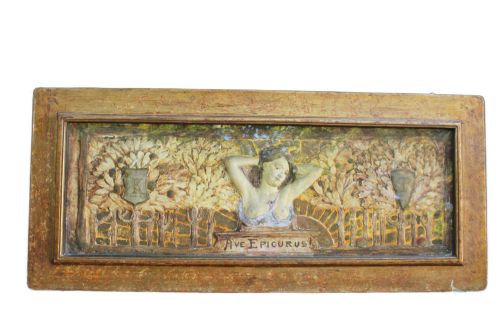
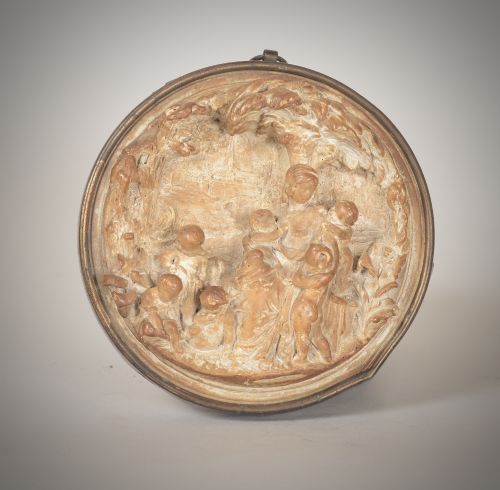
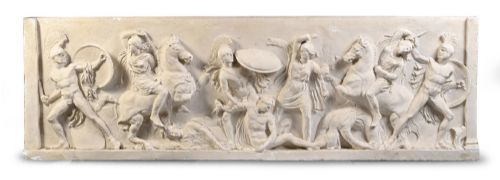
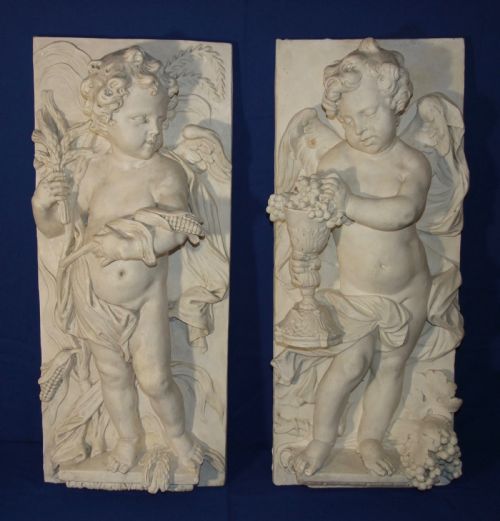
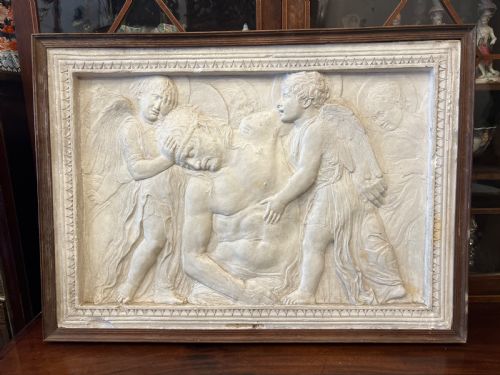
A plaster wall plaque offers relief sculpture in cast gypsum and plaster, taking the form of classical friezes, religious subjects, and portraits. These pieces capture historical sculpture in a domestic format, ranging from grand tour souvenirs to detailed art school casts.
The nineteenth century provides the bulk of examples found here, alongside eighteenth-century panels and early twentieth-century German works. Buyers frequently encounter French and British pieces spanning neoclassical, Renaissance revival, and Arts and Crafts styles.
Forms include wall reliefs, framed friezes, shadowboxes, and architectural moulds. Subjects span from classical horse riders and mythological figures to Christian saints and devotional scenes.
Materials and construction methods
Plaster, gypsum, and occasionally marble dust form the primary casting materials, often reinforced or framed with wood and metal elements. Makers poured these substances into moulds to achieve intricate surface detail.
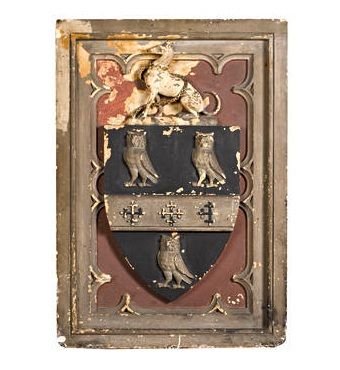
Surface treatments vary widely, incorporating paint, polychrome pigments, gesso, and bronzed finishes to imitate heavier metals or stone. Detail work was frequently enhanced by hand-carving or deep moulding before finishing.
A nineteenth-century cat mould from Osborne House proves that historical household pets received the same sculptural immortality as emperors.
Assessing quality in cast wall pieces
Quality rests in the crispness of the cast and the depth of the relief work, where sharper lines indicate superior moulds and careful execution. Finer pieces retain subtle details in facial expressions, drapery, and lettering.
The secondary treatment, whether polychrome paint, bronzing, or gilding, dictates the visual weight of the object. Skilled finishing preserves the integrity of the plaster underneath without obscuring the form.
The Plaster Wall Plaque Glossary
- Plaster
- A building and casting material made from gypsum, water, and other ingredients, poured into moulds to create solid relief sculptures.
- Relief
- A sculptural technique where the sculpted elements remain attached to a solid background of the same material.
- Polychrome
- The practice of decorating architectural elements, sculpture, or pottery in a variety of colours.
- Gesso
- A white paint mixture consisting of a binder mixed with chalk, gypsum, or pigment, used to prepare surfaces for painting.
- Grand Tour
- A traditional trip of Europe undertaken by upper-class European young men of sufficient status, yielding souvenirs such as plaster casts.
Plaster Wall Plaque: Frequently Asked Questions
What is the difference between plaster and marble dust reliefs?
Plaster reliefs are cast from standard gypsum plaster mixtures, which are relatively lightweight and take fine surface details easily. They often feature painted or bronzed finishes.
Marble dust versions incorporate powdered stone into the mix, resulting in a denser, heavier object that mimics the cold touch and appearance of carved marble.
How do I clean an antique plaster wall plaque?
Antique plaster requires gentle maintenance using a soft, dry brush to remove dust from recessed carved areas. Avoid using water or liquid cleaners, which can dissolve gesso and damage painted or bronzed surfaces.
Conservators recommend dry cleaning methods to preserve the original patina and any delicate polychrome pigments. Keep pieces away from damp environments to prevent structural degradation.
Are these pieces original art or copies?
Many plaster wall plaques serve as historical copies or educational casts of famous sculptures, such as works by Donatello or classical Greek reliefs. Art school casts and grand tour pieces were intentionally created as accessible representations of major monuments.
While they are reproductions of earlier sculptures, the castings themselves are often centuries old and possess their own antique status and craftsmanship.