




Plaster Portrait Statue
A plaster portrait statue brings classical dignity and historical likeness into a room, offering the sculptural weight of marble without the same heft.
Plaster Portrait Statue
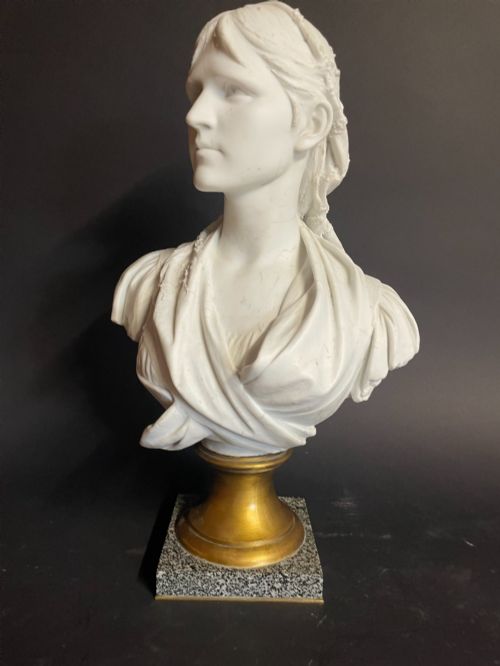
A plaster portrait statue captures likenesses of historical figures, classical subjects, and notable individuals through moulded gypsum and plaster. These pieces translate stone and bronze traditions into more accessible sculptural forms intended for domestic display.
The selections span nineteenth-century studies to 1930s works, encompassing Neoclassical, Edwardian, and Art Deco aesthetics. Most examples take the form of library busts representing poets, emperors, and composers.
Origins range from Italian workshops to Austrian studios, reflecting a widespread European tradition of reproducing classical sculpture. Collectors encounter subjects from Shakespeare and Beethoven to anonymous young men and ladies.
Materials and construction
Makers utilised gypsum plaster poured into moulds to capture fine facial details and drapery. Some pieces incorporate painted finishes, patination, or terracotta elements to simulate bronze or aged stone.
Support structures occasionally integrate wood brackets or granite bases to anchor the heavier busts securely. Surface finishes range from plain white plaster to aged polychrome paint.
Plaster Portrait Statue Retail Price Guide 2026
Typical asking prices for plaster portrait statue among the pieces listed under this phrase on Sellingantiques today, from the lower quarter to the upper quarter. They describe what is for sale here now, not the wider market.
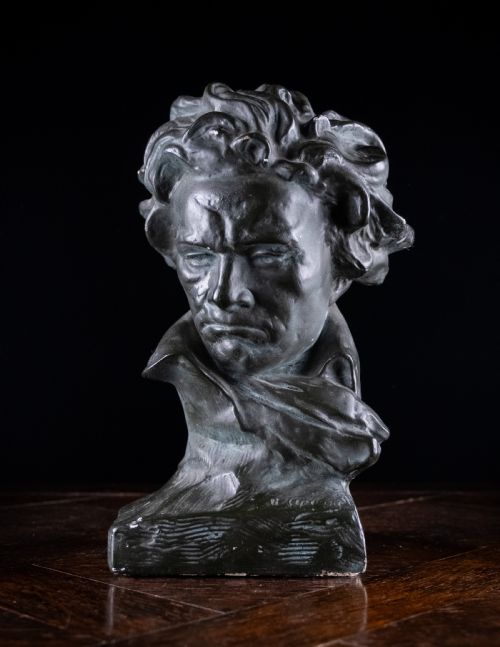
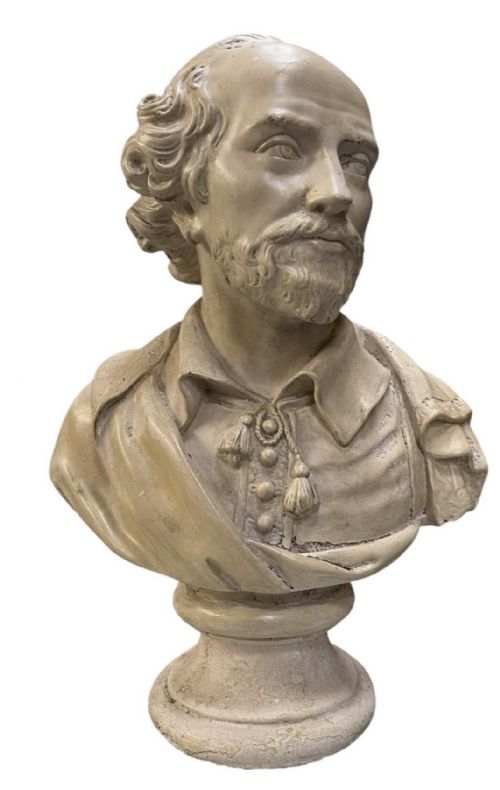
Ludwig van Beethoven appears here watching over rooms alongside Homer, Napoleon, and Shakespeare.
Factors of distinction
Crispness of moulding separates superior portrait statues from softer, worn examples where details have filled in over time. The precision in rendering hair, expression, and drapery dictates the visual success of the piece.
The integrity of the surface patination and original paint layers influences the character of the object. Weight, density of the plaster, and the quality of any integrated bracket or base contribute to the overall execution.
Raffaelo Monti·Antonio Rossellino
The Plaster Portrait Statue Glossary
- Plaster
- A building and sculpting material made from gypsum, water, and other ingredients, used for casting detailed three-dimensional forms.
- Library bust
- A sculptural head and shoulders portrait traditionally displayed on bookshelves or library ledges to honour writers, thinkers, and historical figures.
- Patination
- The surface ageing, colouring, or applied coating that gives older plaster the appearance of bronze, terracotta, or weathered stone.
- Neoclassical
- A style reviving classical Greco-Roman art and architecture, prominent in nineteenth-century sculpture and portraiture.
- Terracotta
- Fired clay used for sculptural works, sharing similar portrait forms with plaster library pieces.
Plaster Portrait Statue: Frequently Asked Questions
How were these busts displayed originally?
Libraries, studies, and drawing rooms housed these sculptures to signal intellectual and classical tastes. They frequently sat atop brackets, bookcases, or mantelpieces.
Heavier examples utilised wooden wall brackets or sturdy pedestals to support the substantial weight of the cast gypsum.
Are these pieces solid plaster?
Most library busts are cast with hollow interiors or internal support cores to reduce weight while maintaining structural strength.
Solid sections typically occur around the base and shoulders, while the upper head and neck remain lighter.
How do I distinguish nineteenth-century pieces?
Nineteenth-century works often display tighter moulding crispness, specific surface patination, and subjects drawn from classical literature and history.
Makers' marks, impressed numbers, and the specific ageing of the paint layers help date individual examples.
How should I clean a plaster bust?
Dusting gently with a soft dry brush preserves the delicate surface patination and painted finishes without introducing moisture.
Water and liquid cleaners should be avoided because plaster absorbs moisture readily and soft surfaces easily dissolve.