






Plain Stem Goblet
A plain stem goblet brings solid Georgian glass to the table, offering simple forms and heavy lead metal that collectors prize.
Plain Stem Goblet
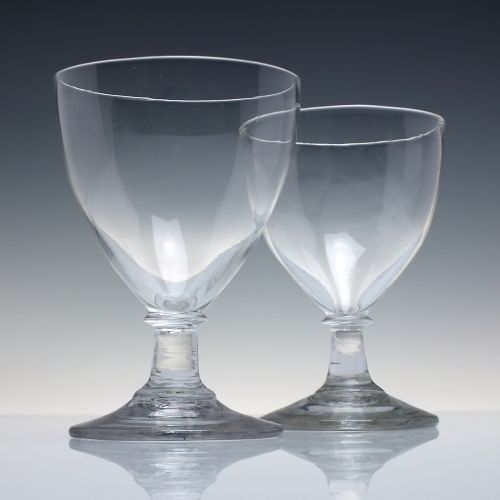
A plain stem goblet belongs to the broader world of 18th Century and Georgian glassware, appearing across decades like 1740, 1750, 1760, 1770, and 1800. These pieces include wine glasses, ale glasses, cordial glasses, and rummers, alongside larger goblets designed for heavy daily use.
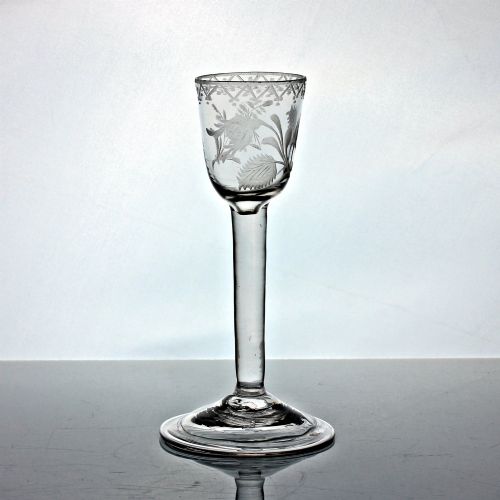
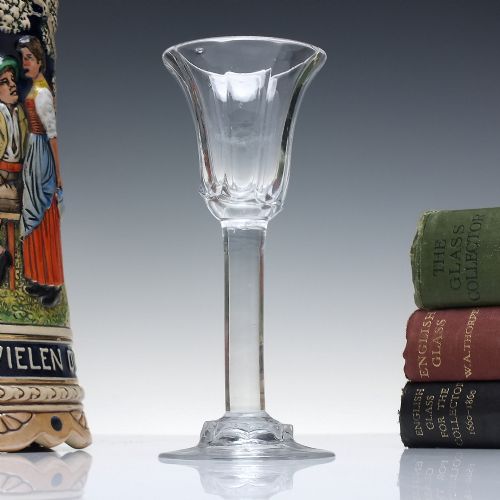
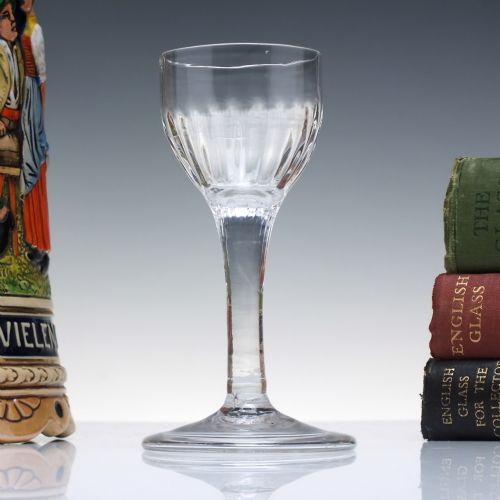
The version most likely to meet you on this page is the English drinking vessel with a straight, unadorned stem supporting an ovoid, trumpet, or ribbed bowl. Collectors also encounter pieces featuring engraved decoration, monograms, or Jacobite motifs on clear glass.
Originating primarily in English workshops during the Georgian era, these items demonstrate functional design through sturdy construction and straightforward silhouettes. They bridge the gap between simple tavern ware and formal dining table accessories.
Materials and construction
These vessels rely on lead glass, clear lead glass, and flint glass, materials prized for their weight and clarity during the 18th Century. Makers shaped the molten metal through blowing, often employing moulds to create ribbed, nut moulded, or inverted petal patterns on the bowls.
The stems remained straight and solid without air twists or baluster nodes, while feet were frequently folded at the edge for extra strength. Internal details such as a single air tear inside the stem occasionally occur from the manufacturing process.
Plain Stem Goblet Retail Price Guide 2026
Typical asking prices for plain stem goblet among the pieces listed under this phrase on Sellingantiques today, from the lower quarter to the upper quarter. They describe what is for sale here now, not the wider market.
Listings feature 18th Century and Georgian pieces made from lead glass, clear lead glass, and flint glass, spanning forms from wine glasses to rummers.
Judging quality and form
Quality rests in the balance of the vessel, the clarity of the metal, and the crispness of any engraved detail. Superior examples display heavy lead glass with a bright ring and substantial weight in the hand.
The Plain Stem Goblet Glossary
- Plain stem
- A straight, unadorned glass stem lacking twists, knops, or facets. It defines the central group of 18th Century drinking vessels seen here.
- Lead glass
- A heavy, clear glass formula containing lead oxide. It offers superior brilliance and weight compared to standard lime glass.
- Folded foot
- A glass foot where the outer rim is doubled under to form a thicker edge. This technique added durability to Georgian drinking vessels.
- Air tear
- An elongated bubble trapped inside the stem or foot during blowing. Makers sometimes incorporated these intentionally for visual interest.
- Ovoid bowl
- An egg-shaped drinking vessel bowl typical of Georgian goblets and wine glasses. It provides a comfortable shape for holding and drinking.
- Nut moulded
- A blown glass pattern featuring small raised indentations resembling the surface of a textured nut. This technique adds grip and visual texture to the bowl.
Plain Stem Goblet: Frequently Asked Questions
What is a plain stem goblet?
A plain stem goblet is an 18th Century English drinking vessel featuring a straight, unadorned glass stem supporting an ovoid or trumpet-shaped bowl. These pieces were made from lead glass and date primarily from the Georgian period.
They represent a straightforward approach to drinking vessel design, relying on the weight and clarity of the metal rather than complex surface ornamentation.
How were these glasses used?
These vessels served for drinking wine, ale, and cordials during Georgian meals and gatherings. Their sturdy lead glass construction suited them for regular table use rather than display alone.
Larger versions functioned as goblets and rummers, holding generous measures of liquor or punch during social occasions in the 18th Century.
How do I date a plain stem glass?
Dating relies on observing form changes, such as the transition from folded feet to lighter unfoldeable bases, alongside the specific bowl shape and manufacturing traits. Most recorded examples date between 1740 and 1800.
Comparing the weight of the lead glass, the style of engraving, and the proportions of the stem helps place the piece within the 18th Century timeline.
What does an air tear mean?
An air tear is a small, elongated bubble trapped within the solid stem or foot of a glass during the blowing process. In Georgian pieces, these occurred naturally or were sometimes coaxed into the metal for decoration.
Their presence adds a point of interest for collectors examining the hand-blown nature of 18th Century glassware.