
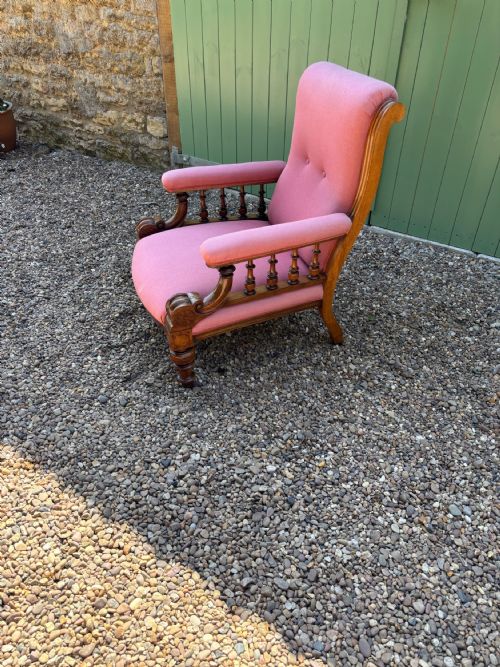


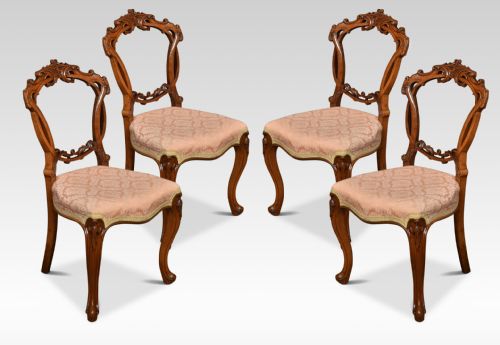


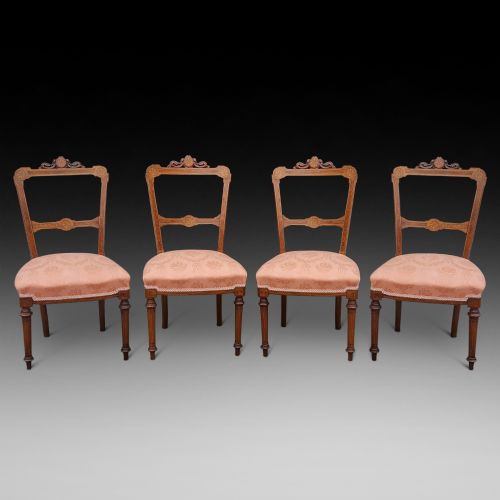


Pink Upholstered Parlour Chairs
Pink upholstered parlour chairs bring nineteenth-century reception rooms to life with soft textiles and carved timber frames.
Pink Upholstered Parlour Chairs
Pink upholstered parlour chairs comprise seating forms designed for nineteenth-century reception rooms and private chambers, spanning the Victorian, Edwardian, and Regency periods. Buyers searching for pink upholstered parlour chairs encounter varied seating types including salon chairs, armchairs, ladies chairs, and larger salon suites.
The selections on this page appear predominantly in Victorian and Edwardian iterations, accompanied by occasional Regency pieces. These chairs bridge the gap between formal dining seating and private relaxation, reflecting the changing social habits of domestic interiors across the nineteenth century.
Makers and manufacturers produced these parlour seats in forms such as side chairs, balloon back salon chairs, and low nursing chairs. Each piece provides a window into the upholstery trends and woodworking capabilities of its specific decade.
How they were made
Cabinet makers constructed the foundational frames of these parlour chairs using dense hardwoods like mahogany, walnut, rosewood, and general hardwood. These timbers provided the structural integrity needed for carved details, balloon backs, and marquetry inlay.
Upholsterers applied textile coverings including fabric, velvet, and damask over internal padding to finish the seats and backs. The combination of turned or carved wooden supports with soft textile upholstery defined the finished appearance of each salon chair.
Current listings feature hardwood frames in mahogany and walnut, paired with velvet, damask, and standard upholstery fabric.
What varies in quality
Quality in these parlour chairs rests in the crispness of the timber carving and the selection of cabinet woods. Walnut and mahogany frames with intricate decorative elements or marquetry inlay represent more ambitious workshop output than plain structural carcases.
The proportion of the frame and the integration of the textile upholstery dictate the visual success of the piece. Chairs retaining harmonious lines between the hardwood frame and the applied fabric show greater design cohesion.
The Pink Upholstered Parlour Chairs Glossary
- Salon chair
- A light decorative chair intended for use in a drawing room or reception space rather than heavy daily dining. These pieces often feature exposed wooden frames and refined carving.
- Balloon back
- A chair back shaped in an open, continuous oval loop resembling a balloon, popular during the Victorian era. This form required skilled woodworking to bend and shape the timber.
- Damask
- A reversible figured fabric traditionally woven on a jacquard loom, frequently utilised for historical upholstery. Its pattern relies on the contrast between warp-faced and weft-faced satin weaves.
- Marquetry
- The art of applying decorative pieces of veneer to a structural structure to form geometric or pictorial designs. Craftsmen embedded thin slices of contrasting wood into the primary timber surface.
Pink Upholstered Parlour Chairs: Frequently Asked Questions
What rooms suit pink upholstered parlour chairs?
These compact parlour and salon chairs fit well into modern living rooms, dressing rooms, or reading corners where extra seating is required. Their historical frames add character without dominating smaller floor spaces.
Pairing a single ladies chair or side chair with existing furniture creates an intentional focal point in a contemporary interior. The pink textile upholstery introduces warmth and colour to neutral spaces.
How do I date a parlour chair?
Dating relies on identifying stylistic markers such as balloon backs, cabriole legs, or marquetry inlay alongside the primary timber used. Victorian pieces often employ walnut or mahogany, while Edwardian examples may show lighter marquetry work.
Comparing the joinery methods and the silhouette against documented nineteenth-century forms helps narrow down the decade of production. Regional British and continental workshops each left distinct structural traits.
Were these chairs used for dining?
Parlour and salon chairs were generally intended for reception rooms, sitting rooms, and private chambers rather than formal dining tables. Dining chairs were constructed as sets specifically for heavy mealtime use.
Some smaller salon and side chairs could pull up to a table temporarily, but their primary purpose involved social gathering and conversation. The presence of delicate open frames or low seats distinguishes them from dining furniture.
How do I care for antique upholstery?
Protecting historical textiles involves keeping chairs out of direct sunlight to prevent the pink fabric or velvet from fading over time. Gentle vacuuming with a soft brush attachment removes surface dust safely.
Avoid placing these chairs in overly damp or dry environments that might compromise the internal padding or crack the hardwood frames. Professional textile conservationists can advise on deep cleaning when necessary.