

Victorian Parlour Seating
Victorian parlour seating comprises formal chairs, settees and salon suites designed to furnish nineteenth-century reception rooms in mahogany, walnut and rosewood.
Victorian Parlour Seating
Victorian parlour seating covers a varied group of furnishings built for formal reception spaces during the nineteenth century. The pieces recorded here span dining chairs, armchairs, sofas, settees and complete salon suites produced across the Victorian and Edwardian periods.
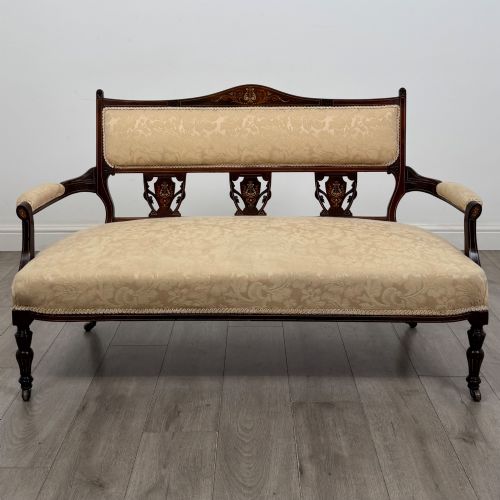
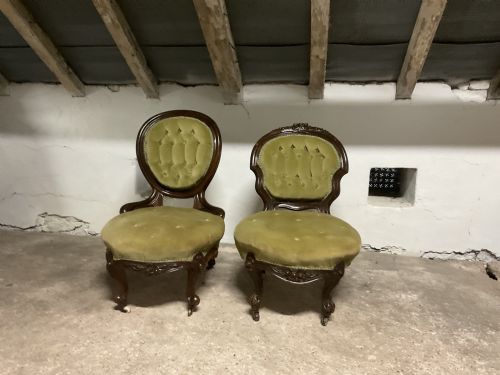
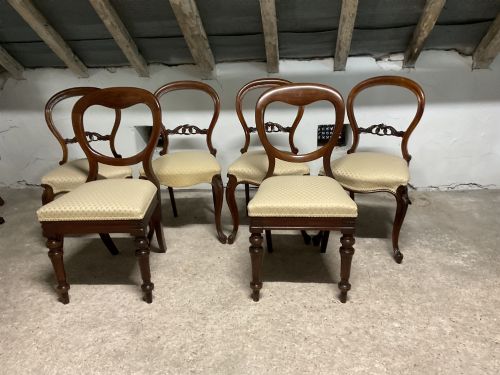
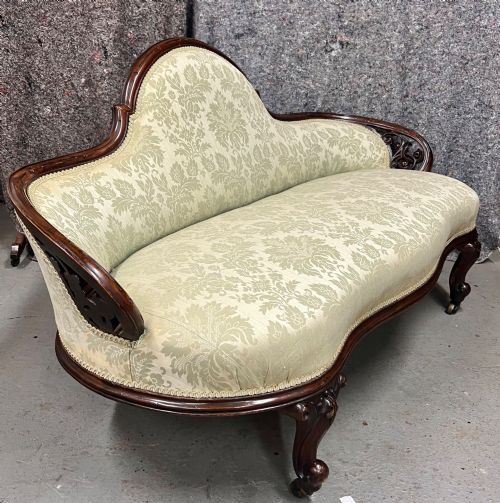
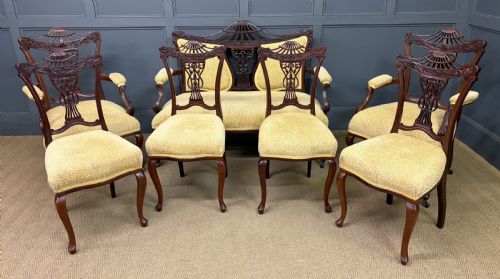
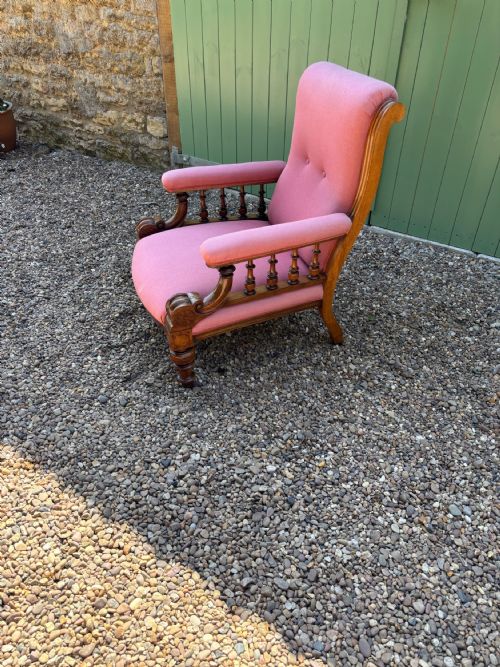
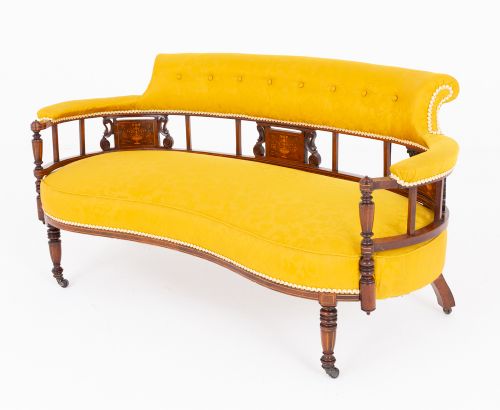
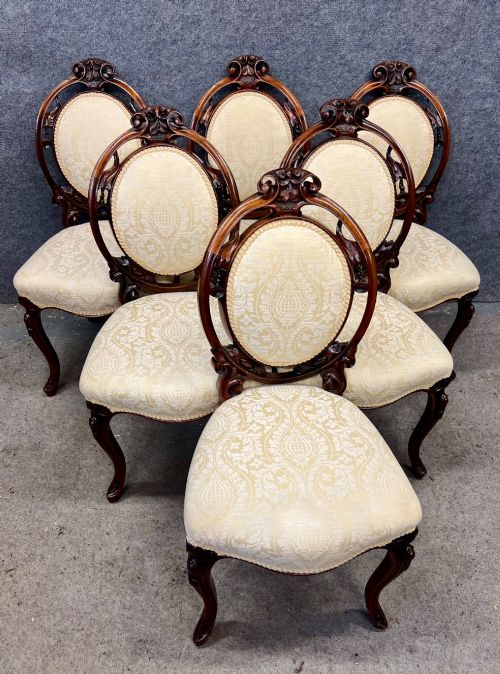
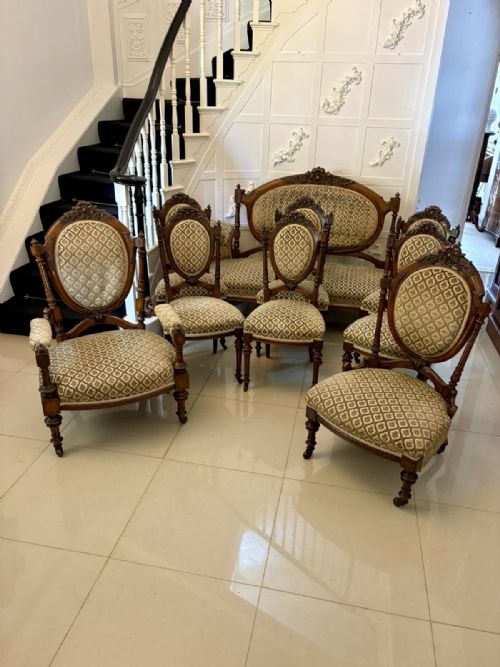
Buyers will encounter single side chairs, matched dining sets, and multi-piece salon suites involving walnut, mahogany or rosewood frames. Object forms range from balloon back dining chairs and library armchairs to nursing chairs, window seats and inlaid settees.
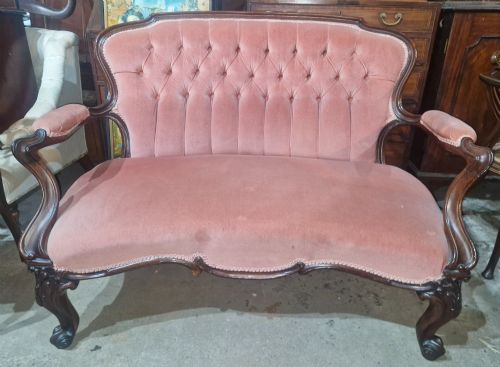
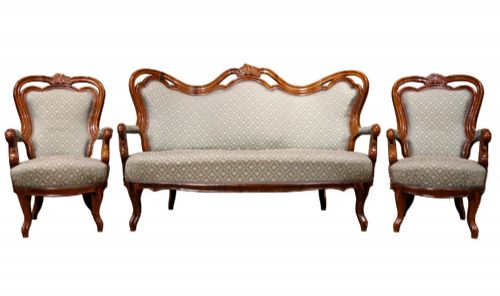
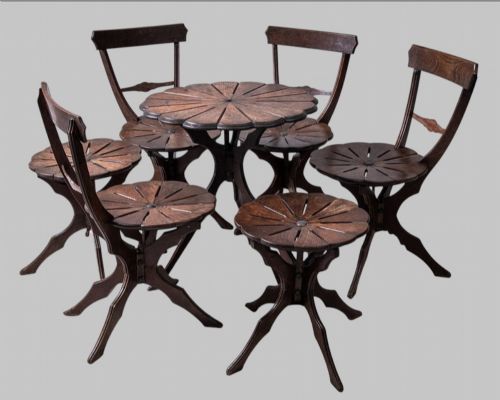
Originating largely from the nineteenth century, these pieces reflect changing domestic tastes through styles such as Rococo Revival, Alpine Folk Art and late Victorian inlay work. The selection runs from simple side seating to exhibition quality suites comprising multiple matching items.
Materials and construction methods
Frames are constructed from dense hardwoods such as mahogany, walnut and rosewood, chosen for their strength in turned, carved and pierced forms. Timber components are shaped into balloon backs, curved armrests and cabriole or turned legs.
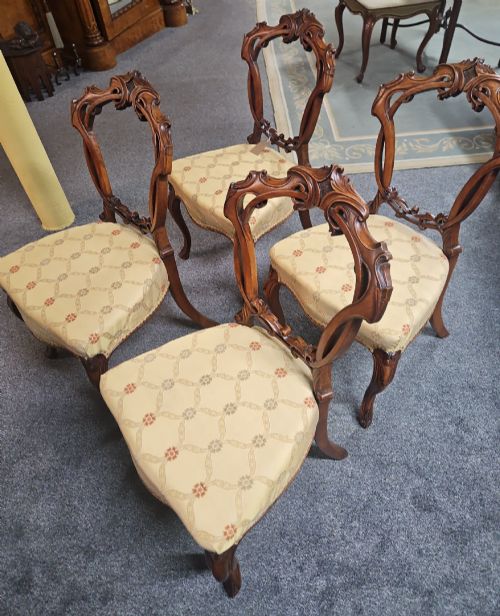
Upholstery relies on traditional textiles, velvet and needlepoint fabric secured over padded foundations. Inlaid decoration utilises contrasting woods, while carved details adorn the crest rails and frames of walnut and rosewood parlour suites.
Period designations across the inventory span early, mid and late Victorian eras alongside Edwardian and nineteenth century examples.
Distinctions in quality and execution
Quality separates standard production seating from exhibition pieces through the crispness of hand carving on walnut and rosewood frames. Superior examples display deeply pierced splats, finely turned legs and harmonious proportions across entire salon suites.
The choice of primary timber and the complexity of inlaid decoration dictate the standing of individual chairs and settees. Matching sets of twelve or nine pieces demonstrate greater consistency in timber selection and joinery than assembled groups.
The Victorian Parlour Seating Glossary
- Balloon back
- A chair back shaped in a continuous curved loop resembling the outline of a balloon. This form is common in Victorian mahogany and rosewood dining chairs.
- Salon suite
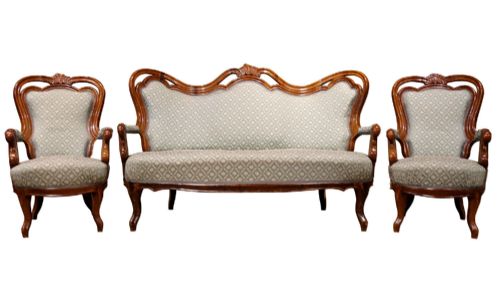
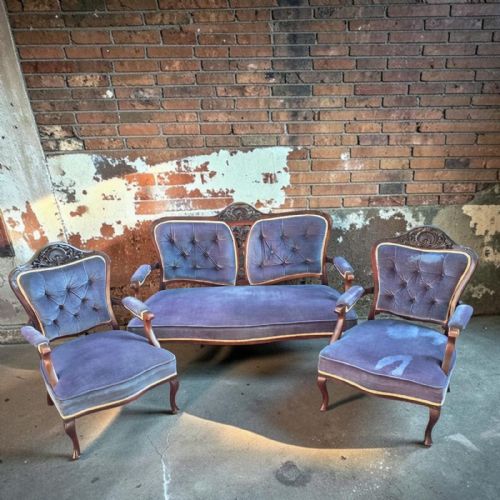
- A matched set of upholstered seating comprising a settee and matching armchairs or side chairs. These suites furnished formal nineteenth-century reception rooms.
- Pierced splat
- A vertical central strip of wood within a chair back that has been pierced or fretted into decorative patterns. It offers both structural support and visual ornamentation.
- Nursing chair
- A low-seated upholstered chair designed for comfort and ease of tending to infants. They frequently feature carved walnut or mahogany frames.
- Rococo Revival
- A nineteenth-century design style drawing on eighteenth-century French motifs with asymmetric curves and naturalistic carving. It appears on walnut and rosewood parlour furniture.
Victorian Parlour Seating: Frequently Asked Questions
What is a salon suite?
A salon suite is a matched group of upholstered seating, usually consisting of a settee and several matching chairs intended for a formal parlour.
These suites provide a cohesive decorative scheme for nineteenth-century reception rooms through uniform timber frames and upholstery fabrics.
How do I identify balloon back chairs?
Balloon back chairs feature a solid wood backrest curved into a continuous loop that resembles a round or oval balloon.
This distinct silhouette is frequently found on Victorian dining and side chairs made from mahogany or rosewood.
Where were parlour chairs placed?
Parlour chairs were positioned around formal reception rooms for entertaining guests, conversing and playing music.
Different forms such as nursing chairs, library chairs and side chairs served specific domestic activities within the Victorian interior.
What woods were used for Victorian seating?
Cabinet makers utilised dense hardwoods including mahogany, walnut and rosewood to construct sturdy frames for parlour seating.
These timbers allowed for intricate hand carving, turning and the application of decorative wood veneers and inlay.
Are multi-piece suites matched?
Multi-piece salon suites are designed as unified sets sharing identical timber framing, carving styles and upholstery materials.
Larger configurations often include a settee accompanied by varying numbers of matching armchairs and side chairs.