



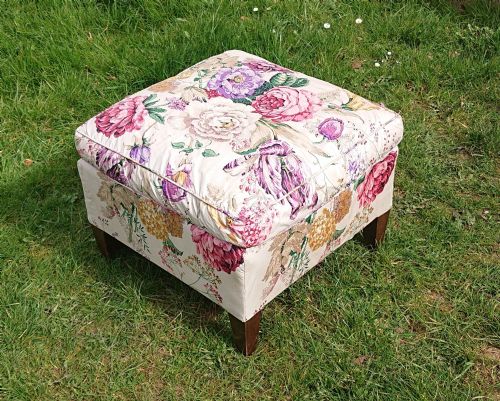


Pink Upholstered Ottoman
A pink upholstered ottoman brings soft colour and versatile seating to a room, ranging from compact Victorian footstools to long French window seats.
Pink Upholstered Ottoman
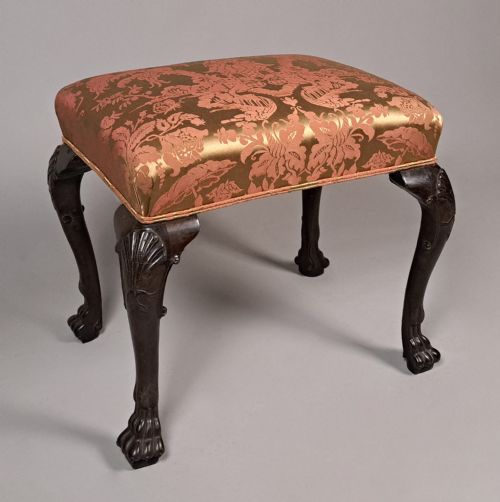
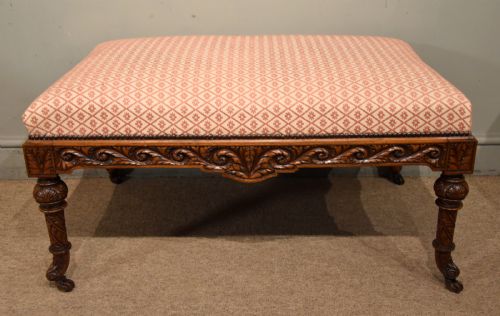
A pink upholstered ottoman takes several historic forms, appearing most frequently on this page as Victorian and 19th-century footstools, dressing stools, and salon stools. These low seating pieces include rectangular walnut salon stools, bobbin leg stools, and cushion top footstools that serve both functional and decorative purposes in domestic interiors.
Beyond standard footstools, the selection encompasses longer French window seats and day beds alongside dedicated ottoman seats. These variations span periods from the mid-nineteenth century into the Edwardian era, reflecting diverse aesthetic influences from English country houses to French provincial and second empire styles.
How they were made
Construction relies upon traditional timber frames shaped from mahogany, rosewood, walnut, and general wood or timber. Joinery supports the low profiles of footstools and longer day beds, providing sturdy structural foundations beneath the upholstery.
The defining characteristic of these pieces is their soft covering, utilising fabric and velvet alongside detailed needlepoint work. Brass elements occasionally appear on frames and castors, adding metallic detail to the wooden structures.
Pink Upholstered Ottoman Retail Price Guide 2026
Typical asking prices for pink upholstered ottoman among the pieces listed under this phrase on Sellingantiques today, from the lower quarter to the upper quarter. They describe what is for sale here now, not the wider market.
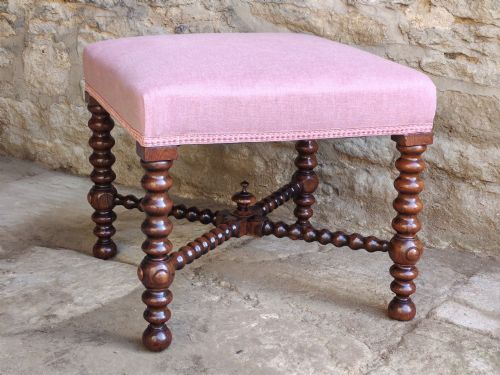
Bobbin legs bring a rhythmic, spool-like charm to nineteenth-century footstools.
What varies in quality
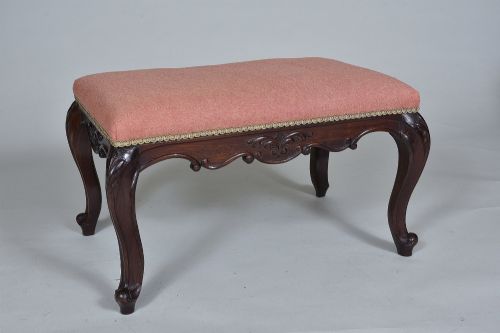
Quality in a pink upholstered ottoman rests upon the selection and treatment of the timber frame, where dense rosewood or walnut denotes superior construction compared to softer general timbers. Carved details, such as cabriole legs or bobbin turnings, demonstrate the level of craftsmanship invested by the maker.
The execution of the upholstery and needlepoint also dictates the standard of the piece, with tightly secured fabric and complex textile work elevating the visual weight of the furniture. Attribution to specific makers or workshops further distinguishes exceptional examples from standard domestic seating.
The Pink Upholstered Ottoman Glossary
- Ottoman
- A low, upholstered seat or footstool without arms or a back, designed for resting the feet or sitting.
- Dressing stool
- A small seat designed for use at a dressing table, typically featuring a padded top and a compact wooden frame.
- Bobbin leg
- A turned furniture leg shaped to resemble a series of wooden bobbins or spools stacked end to end, popular in nineteenth-century joinery.
- Needlepoint
- A type of counted thread embroidery stitched on canvas, frequently used to cover the tops of Victorian footstools and ottomans.
- Cabriole leg
- A furniture leg that curves out and then in, resembling the leg of an animal, commonly seen on Victorian mahogany stools.
Pink Upholstered Ottoman: Frequently Asked Questions
What is a pink upholstered ottoman used for?
These pieces function primarily as footstools for resting the feet or as low seating in dressing rooms, salons, and bedrooms. Longer variations such as window seats and day beds also provide secondary seating areas by windows or at the foot of a bed.
Their compact dimensions allow them to be moved easily around a room, combining practical utility with decorative textile colour.
How do I date a Victorian ottoman?
Dating relies on examining the timber species, leg turning styles, and upholstery techniques visible on the piece. Victorian examples often feature dense rosewood or walnut frames with specific details like bobbin legs or cabriole legs.
Reference to specific decades within the nineteenth century helps narrow down the period of manufacture when stylistic markers align with known production eras.
Where should I place an antique stool?
Antique stools fit well in living rooms placed before armchairs or sofas to serve as footrests. They also function effectively in hallways or bedrooms as occasional perches.
Longer window seats naturally suit placement beneath large windows or along empty corridors where their length fills the space appropriately.
Are these ottomans comfortable to use?
Most pieces feature padded cushion tops upholstered in fabric, velvet, or needlepoint designed to provide a soft surface for resting. The underlying frame construction offers stable support beneath the padding.
While historic padding materials may vary in firmness compared to modern furniture, they remain functional for sitting and resting feet.