

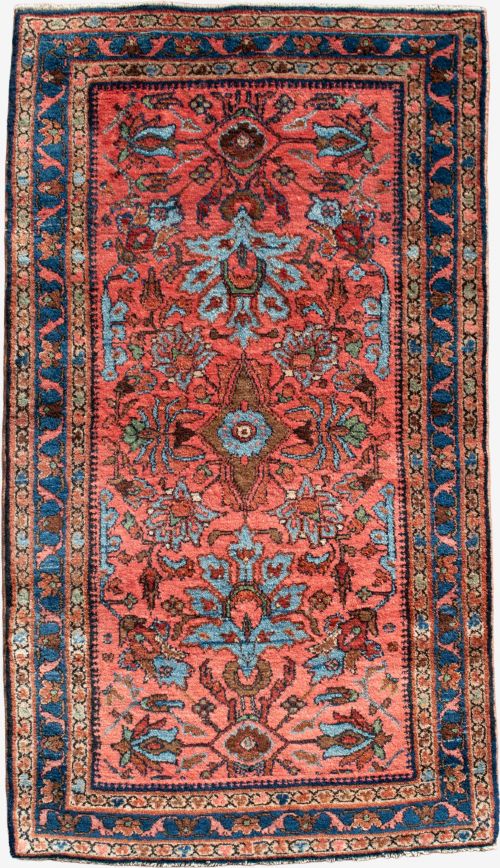
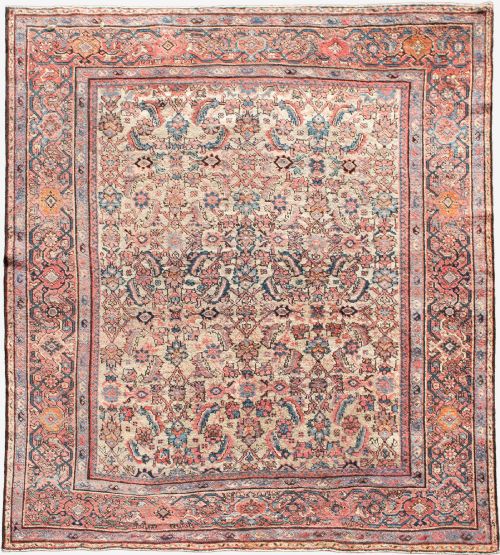
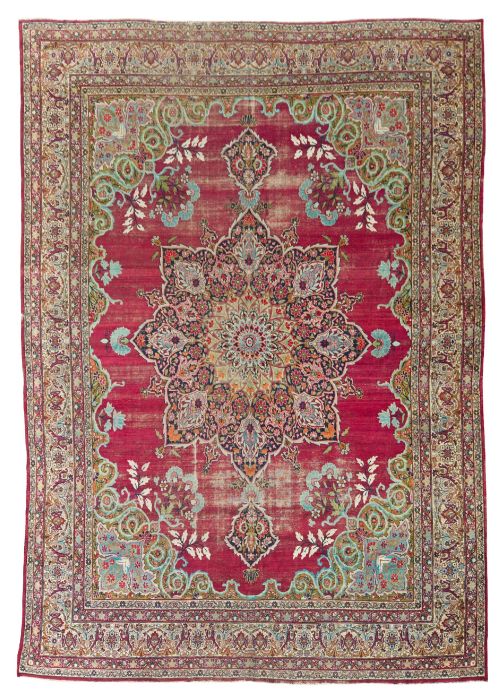
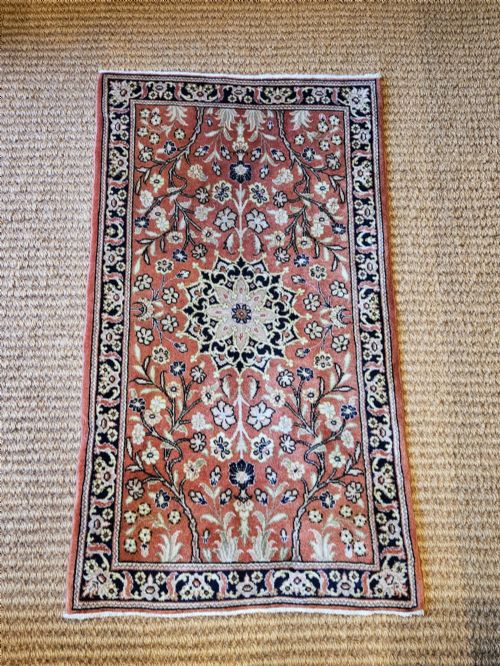
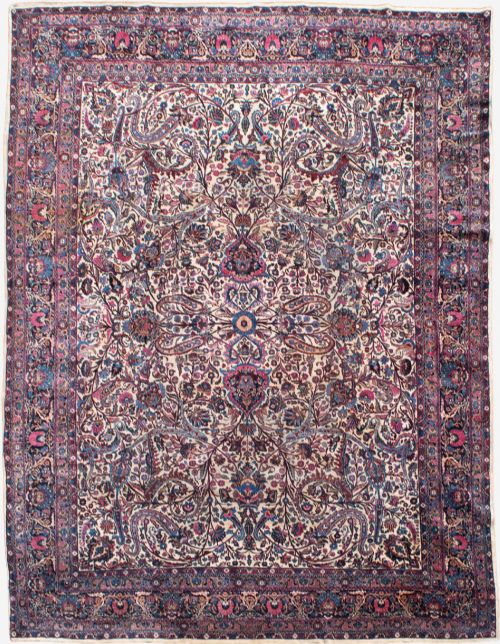


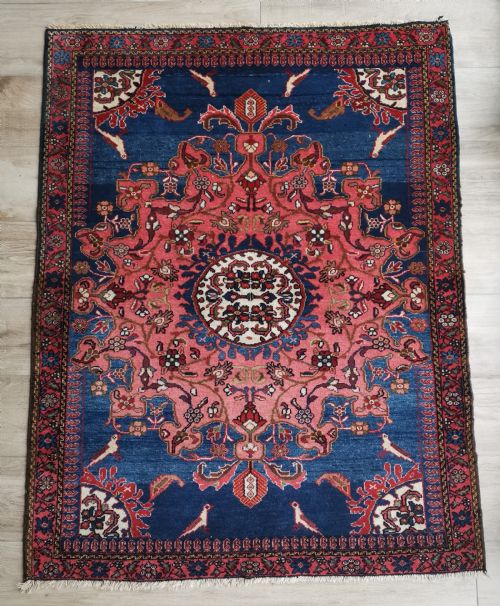


Pink Floral Persian Rug
A pink floral persian rug brings warmth and botanical depth to a room through traditional hand-woven wool.
Pink Floral Persian Rug
A pink floral persian rug encompasses hand-woven wool carpets originating from various historical weaving centres across Persia and neighbouring regions. When searching for a pink floral persian rug, buyers encounter diverse room sizes, hearth-sized formats, and long runners produced from the late nineteenth century into the early twentieth century.
The selection ranges from large carpets to smaller village and city pieces, reflecting traditional Persian designs. Buyers frequently find Kirman, Sarouk, Kashan, and Malayer examples featuring distinct floral motifs and rosy colour palettes.
How they were made
These textiles utilise hand-woven wool pile knotted onto cotton foundations, a traditional construction method providing durability. Artisans in workshops and villages tied dense knots to execute intricate floral patterns across the rug surface.
Dyers employed natural methods to achieve various shades of pink and rose within the wool yarns. The combination of wool and cotton supports the structure of both large roomsize carpets and compact hearth rugs.
Pink Floral Persian Rug Retail Price Guide 2026
Typical asking prices for pink floral persian rug among the pieces listed under this phrase on Sellingantiques today, from the lower quarter to the upper quarter. They describe what is for sale here now, not the wider market.
Several carpets stretch over five metres long, ensuring plenty of room for wandering footsteps.
What varies in quality
Knot density and fineness of execution separate standard village pieces from high city workshops. Finer rugs display precise botanical detail and sophisticated colour gradation.
Structural integrity across the cotton foundation and wool pile determines the resilience of the carpet. Pieces exhibiting well-preserved pile and balanced proportions represent the higher tier of these woven works.
The Pink Floral Persian Rug Glossary
- Pile
- The upright loops or cut ends of yarn that form the soft surface of the rug. This wool layer absorbs wear and displays the woven design.
- Foundation
- The underlying structural grid of warp and weft threads, typically made of cotton, that supports the knotted wool pile.
- Runner
- A long, narrow carpet format designed for corridors, hallways, or beside beds. These pieces maintain elongated proportions.
- Knot
- The individual loops of wool tied around the foundation threads by hand. Higher numbers per square area indicate greater fineness.
- Warp
- The vertical foundation threads running the length of the rug fringe to fringe. Weft threads cross horizontally to bind the structure.
Pink Floral Persian Rug: Frequently Asked Questions
Where were these rugs made?
These rugs originated in various weaving centres, towns, and villages across Persia, including Kirman, Sarouk, Kashan, and Malayer. Certain examples also stem from regional traditions in India and Turkey.
Production took place largely between the late nineteenth century and the early decades of the twentieth century.
How do I care for a wool rug?
Maintenance involves regular gentle vacuuming without a rotating brush to protect the wool pile and cotton foundation. Professional cleaning suited for antique textiles preserves the natural fibres.
Placing the rug out of direct sunlight helps maintain the rose and pink colour tones.
What is a roomsize carpet?
Roomsize carpets provide substantial dimensions intended to anchor major living spaces, dining rooms, or parlours. These larger formats often measure over four metres in length.
They display expansive floral compositions suited to open floor plans.
How are different regional types distinguished?
Distinctions rely on specific floral motifs, border arrangements, and structural characteristics associated with named weaving towns. For instance, Kirman rugs often feature detailed botanical fields, while Bidjar pieces present robust construction.
Examining the knotting style and materials provides further clues to origin.