

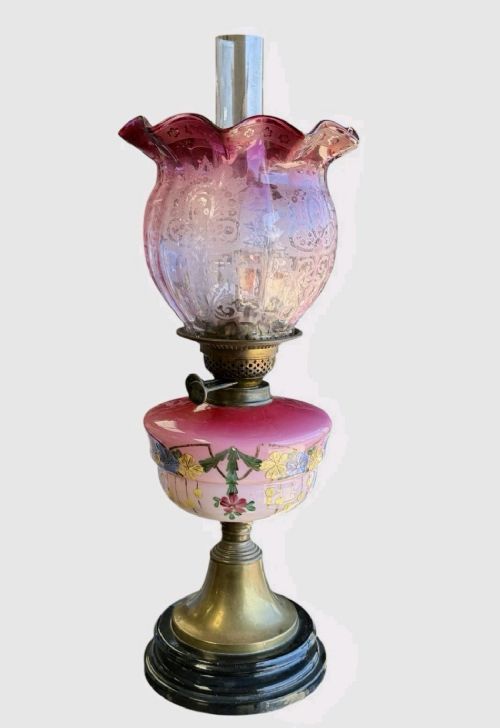


Pink Floral Oil Lamp
These pink floral oil lamp designs bring a warm, decorative glow and rich Victorian character to a room.
Pink Floral Oil Lamp
When you search for a pink floral oil lamp, you encounter lighting fixtures and interchangeable shades dating from the nineteenth and early twentieth centuries. These objects span the Victorian, Edwardian, and Art Nouveau periods, showcasing the decorative domestic lighting of those eras.
The selections on this page most commonly take the form of complete table oil lamps, hanging lamp shades, and decorative font shades. They combine glass, porcelain, and ceramic bodies with painted floral decoration.
Origins represented in the evidence include English manufacture, with specific makers such as Hinks and Taylor Tunnicliff appearing alongside broader Victorian and Edwardian examples.
How they were made
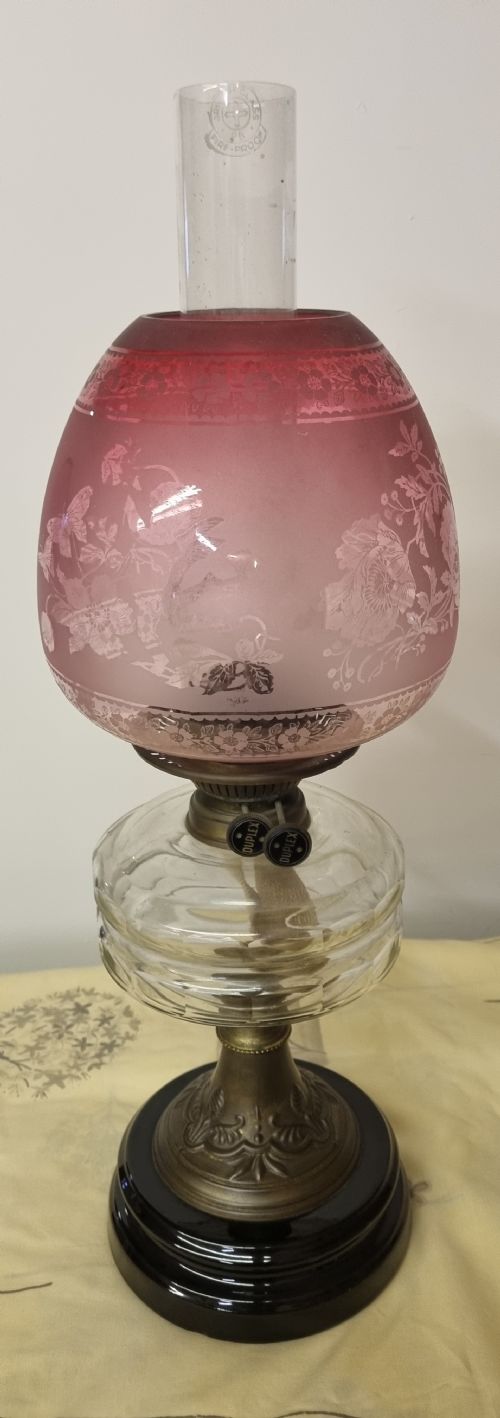
These lamps and shades utilise moulded and blown glass, including cranberry glass, opaline glass, and crystal, alongside ceramic, porcelain, and faience bodies. Metal components incorporate brass and bronze to provide structural support and mounting hardware.
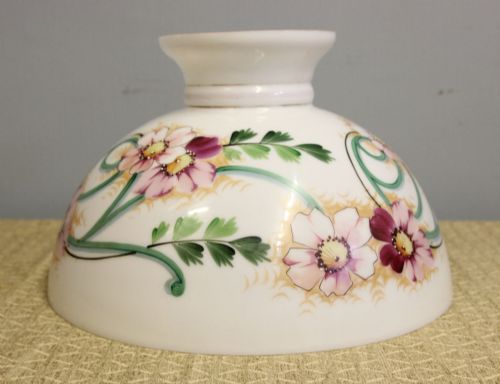
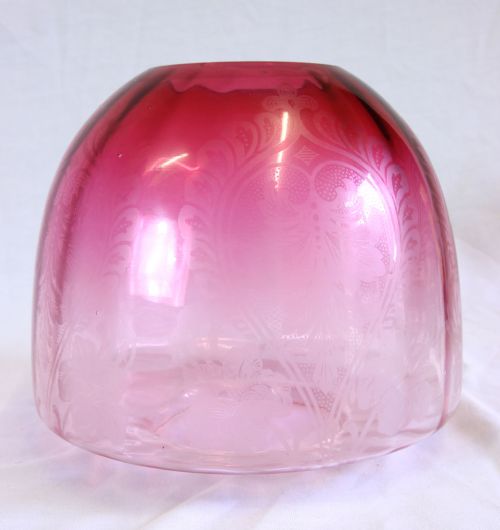
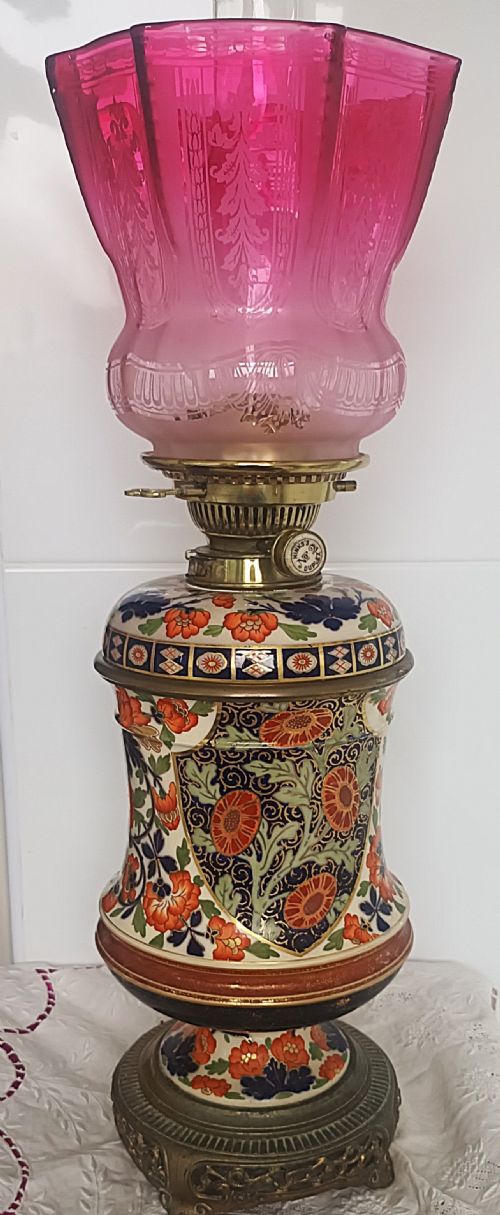
Decoration relies on hand-painted floral motifs, enamel work, and gilt detailing applied to the glass or ceramic surfaces. Frilled rims and etched patterns on the glass shades add texture and visual depth to the finished pieces.
Pink Floral Oil Lamp Retail Price Guide 2026
Typical asking prices for pink floral oil lamp among the pieces listed under this phrase on Sellingantiques today, from the lower quarter to the upper quarter. They describe what is for sale here now, not the wider market.
Listings feature periods spanning the Victorian era, the Edwardian period, and the Art Nouveau style.
What varies in quality
Quality rests upon the crispness of the hand-painted floral decoration and the sophistication of the glasswork, such as cranberry colouring and delicate etching. Pieces featuring named makers or combined ceramic and metal elements tend to show greater refinement.
The weight and finish of the brass or bronze mounts, alongside the proportion and integrity of matching shades and fonts, dictate the overall standard of the lamp.
Hinks·Taylor Tunnicliff
The Pink Floral Oil Lamp Glossary
- Font
- The reservoir that holds the lamp oil before it reaches the burner. It sits atop the base and often carries the primary painted decoration.
- Cranberry glass
- A rich pinkish-red glass created by adding gold chloride to the molten mixture. It forms the vibrant body of many Victorian shades and fonts.
- Opaline glass
- A translucent, pale glass that diffuses light softly. It provides a smooth background for hand-painted floral designs.
- Faience
- Tin-glazed earthenware popular in decorative arts. It offers an opaque, ceramic surface suited to enamelled painting.
- Frilled shade
- A lamp shade with a ruffled or crimped rim created while the glass remains hot. This technique adds an ornamental edge to the piece.
Pink Floral Oil Lamp: Frequently Asked Questions
What periods do these lamps come from?
The pieces span the Victorian era, the Edwardian period, and the early twentieth century. Most examples date from the nineteenth century.
Design styles shift from ornate Victorian floral painting towards cleaner Art Nouveau and Edwardian lines in the later pieces.
What materials are used in these lamps?
Construction relies heavily on glass, including cranberry and opaline varieties, alongside porcelain, ceramic, and faience bodies. Brass and bronze provide the structural mounts and hardware.
Decoration is applied through hand painting, enamelling, and gilt highlights.
Are lamps and shades sold separately?
Listings include both complete table oil lamps and individual hanging or font shades. This allows collectors to find matching components or standalone display items.
Shades often feature distinctive cranberry colouring, frilled rims, or hand-painted floral motifs.
How do I identify a Victorian oil lamp?
Victorian examples typically combine rich cranberry glass, brass fittings, and hand-painted floral ceramic or porcelain bodies. They reflect the domestic lighting styles of the late nineteenth century.
Maker marks or specific ceramic bodies can sometimes help pinpoint the exact English origin.