

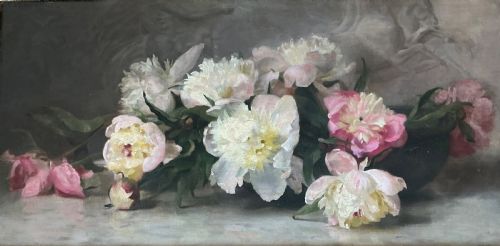


Pink Floral Canvas Painting
A pink floral canvas painting brings the quiet warmth of a garden indoors, captured in oils across a century of changing artistic styles.
Pink Floral Canvas Painting
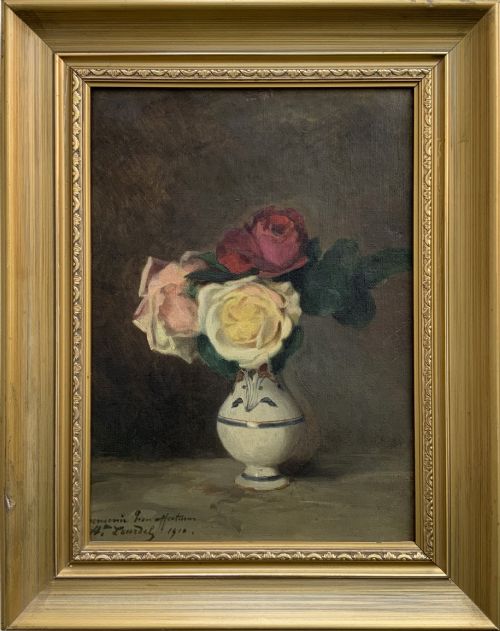
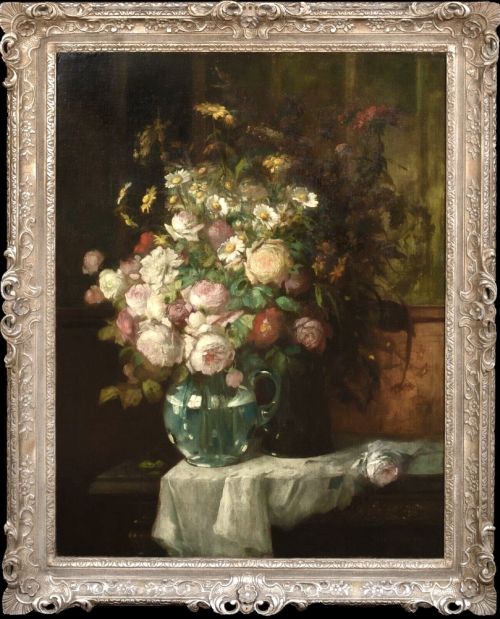
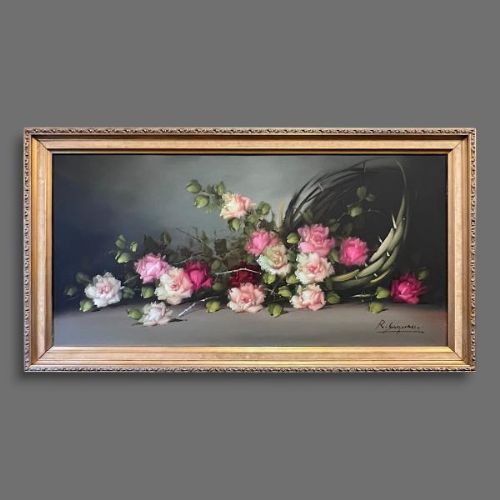
A pink floral canvas painting focuses on botanical subjects rendered in oil paint, spanning periods from the nineteenth century through the mid-twentieth century. These works capture roses, peonies, and mixed garden blooms arranged in vases, baskets, or simply resting upon tables.
The selection ranges from Victorian and Edwardian studies to British Impressionism, French Post-Impressionist compositions, and mid-century modern interpretations. Buyers will encounter both grand nineteenth-century still life works and more intimate modernist pieces by named artists and regional painters alike.
Materials and Technique
These pieces rely on oil paint applied to woven canvas stretched over wooden frames, though occasional works utilise board support. Artists built up petals and foliage through layered brushwork, sometimes pairing the canvas with gilded wood or gilt frames.
The physical build of each piece reflects its era, from nineteenth-century stretcher frames with heavy gilt moulding to simpler twentieth-century supports. Pigments capture the shifting tones of pink roses, peach blossom, and sweet williams against dark or softly lit backgrounds.
Pink Floral Canvas Painting Retail Price Guide 2026
Typical asking prices for pink floral canvas painting among the pieces listed under this phrase on Sellingantiques today, from the lower quarter to the upper quarter. They describe what is for sale here now, not the wider market.
Materials recorded across the selection include oil paint, canvas, wood, gilded wood, and gilt.
Assessing Quality and Execution
Quality rests upon the artist's handling of light, shadow, and botanical structure, distinguishing confident brushwork from rigid reproduction. Stronger examples demonstrate careful observation of tone within the petals and a balanced composition across the picture plane.
The integrity of the canvas and the preservation of the oil paint layer determine the durability of the piece. Well-kept surfaces retain rich pigment depth without heavy cracking or awkward later retouching that obscures the original hand.
Konstantin Stoitzner·Edward Ladell·Gertrude Hayes·Ernest Higgins Rigg·Owen Bowen·Freda Marston·Stuart Armfield·Henry Schouten·William Thomas Wood·Louisa Mary Bancroft·Jules Felix Ragot
The Pink Floral Canvas Painting Glossary
- Impressionism
- A nineteenth-century painting style focusing on transient visual impressions, light, and unblended brushstrokes. This approach appears frequently in floral still life works designed to capture vibrant colour.
- Still life
- An artwork depicting mostly inanimate subject matter, typically commonplace objects such as flowers in a bowl or basket. Floral studies allow painters to explore texture, form, and colour arrangement.
- Giltwood
- Wood that has been treated with gold leaf or gold paint, commonly used for traditional picture frames. These ornate surrounds often complement the period of the painting they enclose.
- Canvas
- A heavy woven fabric used as a surface for oil painting, stretched tightly over a wooden frame. It provides a flexible yet durable support for heavy pigment application.
- Naive art
- Visual art created by a person without formal training, often characterised by a childlike simplicity in perspective and line. These works offer a distinct, unpretentious charm.
Pink Floral Canvas Painting: Frequently Asked Questions
How do I date a floral painting?
Dating relies on stylistic clues, frame construction, and the signature or canvas stamps on the reverse. Victorian and Edwardian works often feature heavier, highly detailed realism or traditional impressionism, while mid-century pieces display looser brushwork and modernist palettes.
Examining the preparation of the canvas and the style of the signature helps narrow the decade of creation. Comparing the work to documented pieces by the same period or artist provides further confirmation.
What subjects accompany the pink flowers?
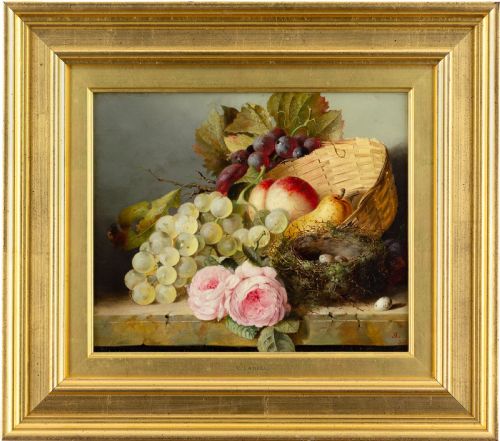
Artists frequently set pink roses, peonies, sweet williams, and orchids alongside fruit such as peaches, grapes, and oranges. Wicker baskets, ceramic vases, and draped cloth also appear regularly to anchor the composition.
These secondary elements help create depth and provide contrasting textures against the soft petals of the main botanical subject.
How should I hang and light an oil painting?
Oil paintings on canvas need stable indoor humidity away from direct sunlight and sudden temperature changes. Natural indirect light or a dedicated picture light placed above the frame reveals the true depth of the pigments without risking heat damage.
Ensuring the wall fixings match the weight of the wooden frame and canvas prevents structural strain over time.
What is the difference between impressionist and naive floral art?
Impressionist floral paintings focus on the play of light and atmosphere using visible, blended brushstrokes to suggest form. Naive art approaches the subject with flat perspective and simplified outlines, lacking formal academic training.
Both styles interpret pink floral subjects, but impressionism prioritises optical blending while naive art emphasises direct, unpolished expression.