

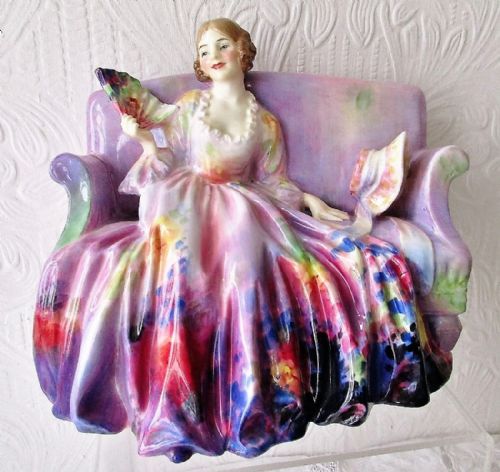
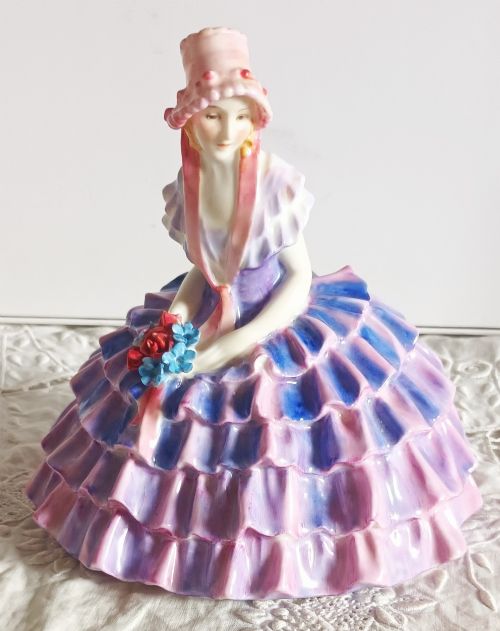
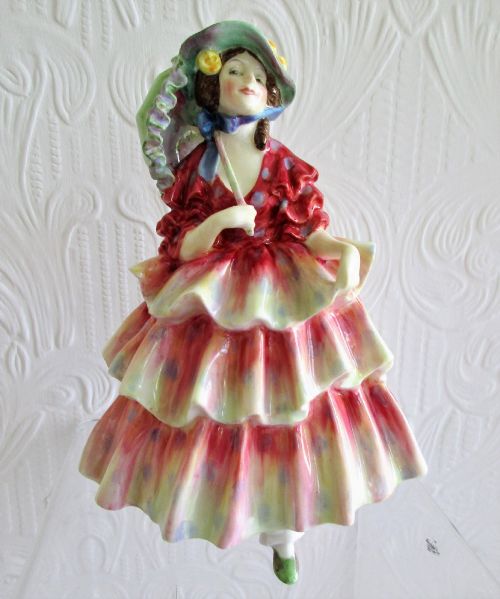
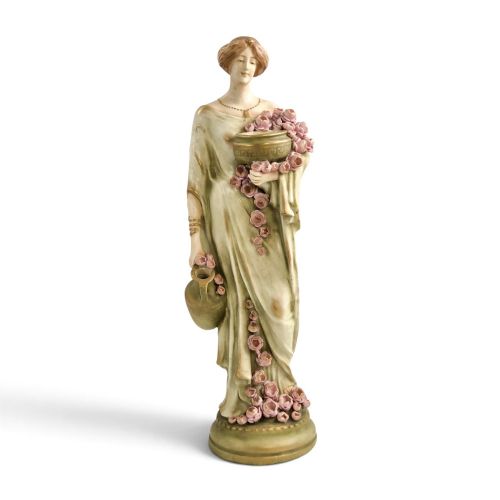

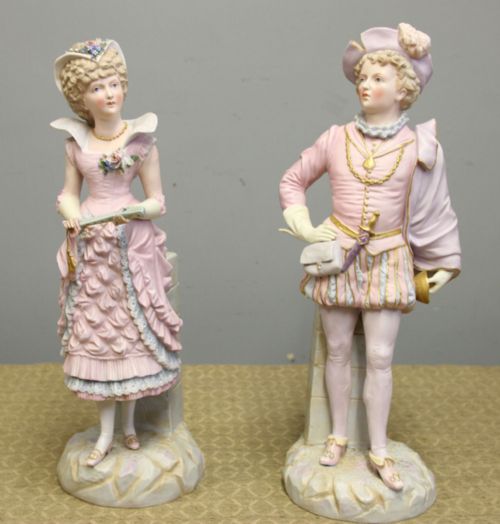

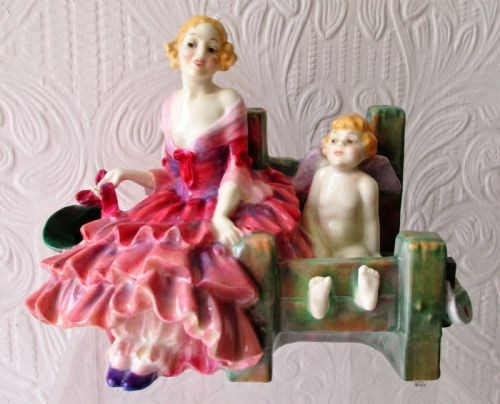
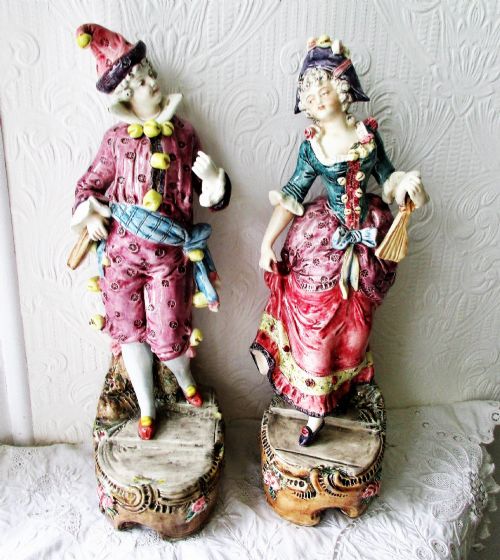
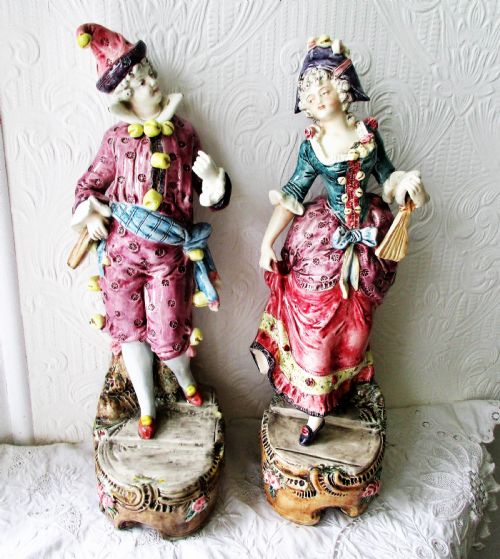
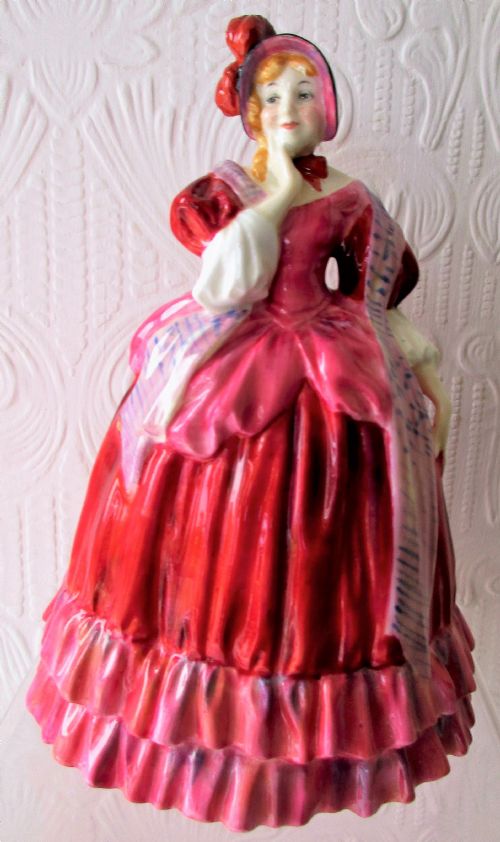
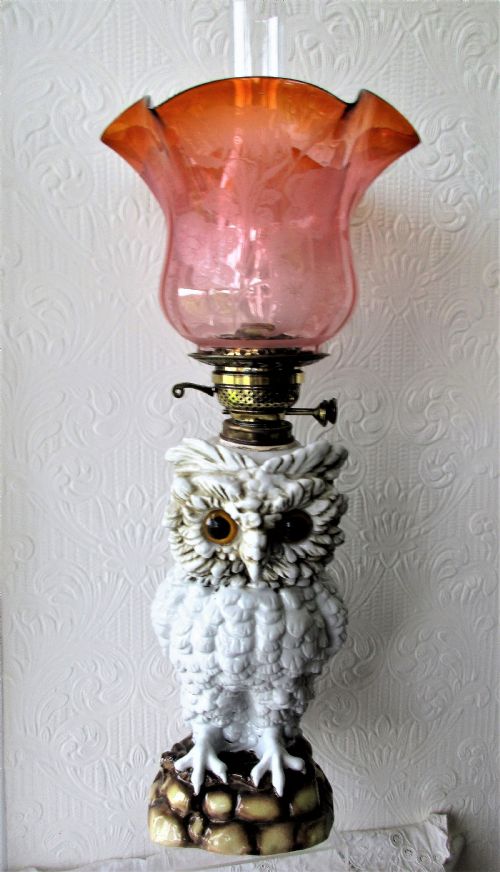
Pink Ceramic Figure
A pink ceramic figure brings the hand of the modeller and the warmth of nineteenth-century kilns directly into a room.
Pink Ceramic Figure
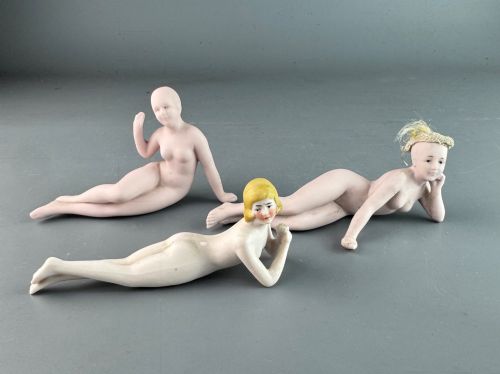
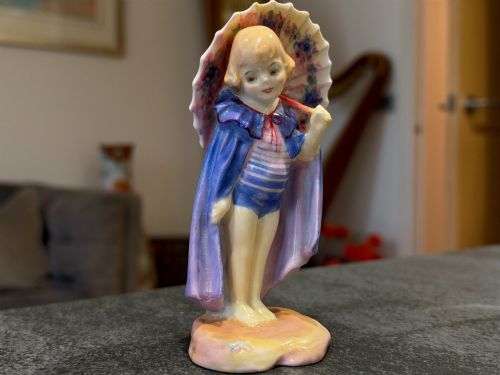
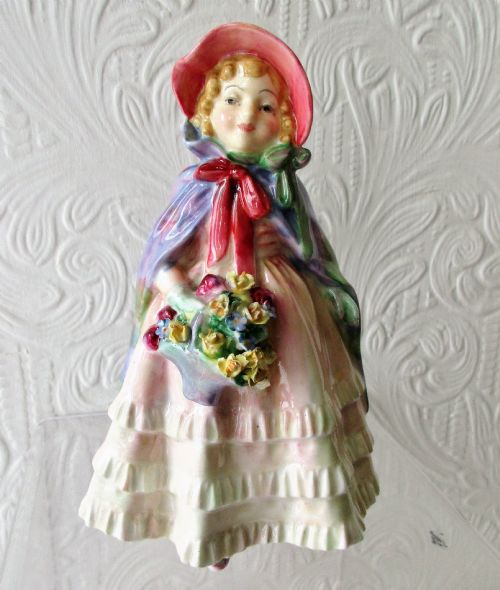
A pink ceramic figure encompasses a wide scope of modelled and glazed objects, running from eighteenth-century Georgian pastoral subjects to twentieth-century Art Deco studies. When searching this phrase, a buyer encounters everything from delicate English porcelain figures and Staffordshire flatbacks to monumental continental earthenware groups.
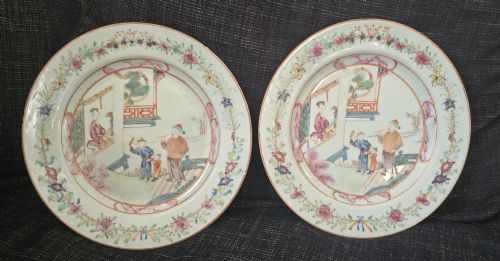
The selections span distinct European and Asian traditions, including French faience, German porcelain from Sitzendorf and Volkstedt, and Chinese famille rose ceramics. Figures of gallants, dancers, maidens and animals dominate the inventory, often modelled as pairs or incorporated into candlesticks and oil lamps.
The pieces cross multiple aesthetic movements, touching Rococo Revival, Victorian sentimentality, Art Nouveau fluidity and Art Deco linearity. Buyers find works originating from private homes, formal cabinets and display shelves across several centuries of ceramic history.
How They Were Made
Makers utilised soft-paste and hard-paste porcelain, bone china, earthenware and bisque to form these bodies, applying polychrome glazes and enamel details by hand. Many works incorporate gold leaf highlights or gilt borders to accentuate the moulded drapery and facial expressions.
Complex pieces required multiple piece-moulds to cast separate limbs, garments and base elements before skilled artisans assembled the damp clay parts. Firing in high-temperature kilns set the ceramic body, followed by subsequent lower-temperature firings to fuse surface enamels and gilding.
Pink Ceramic Figure Retail Price Guide 2026
Typical asking prices for pink ceramic figure among the pieces listed under this phrase on Sellingantiques today, from the lower quarter to the upper quarter. They describe what is for sale here now, not the wider market.
Several Victorian figures hold unexpected companions, carrying everything from live puppies and kittens to musical instruments and household stock lists.
What Varies in Quality
The reputation of the manufactory and the clarity of factory marks or incised model numbers influence the standing of a piece within its period. Early English and continental works from established kilns demonstrate finer detail in the initial pressing and finishing stages compared to later commercial output.
Royal Doulton·Royal Dux Bohemia·Bourdois and Bloch·Sitzendorf·Volkstedt
The Pink Ceramic Figure Glossary
- Bisque
- Unglazed porcelain fired once to a porous, matte state that resembles marble. This finish allows sculptors to capture fine anatomical details and facial expressions without glaze obscuring the lines.
- Flatback
- A ceramic figure modelled with a finished front and a plain, unpainted flat rear designed to stand flush against a wall or mantelpiece. This method was common in nineteenth-century Staffordshire production.
- Famille rose
- A palette of Chinese porcelain enamels dominated by opaque pink or rose colours derived from gold. Introduced in the Qing dynasty, it allowed for subtle tonal gradations in robes and floral motifs.
- Faience
- Tin-glazed earthenware produced in France and other European regions, known for absorbent clay bodies and opaque white glazes painted over with bright pigments.
- Paste
- The specific ceramic mixture used to form the body of a piece, divided into hard-paste and soft-paste compositions. The recipe dictates the firing temperature and the translucency of the finished object.
Pink Ceramic Figure: Frequently Asked Questions
How should I clean my antique porcelain figure?
Dust the surface gently using a soft, dry brush to prevent accumulation in crevices and around delicate painted details.
Avoid submerging pieces in water, particularly older items with cold-painted decoration or exposed bisque, as moisture can damage fragile pigments and historic repairs.
Were these figures meant for display only?
Most sculptural figures served purely as decorative mantelpiece ornaments or cabinet showpieces to display taste and wealth in period interiors. Some examples, however, served functional roles as candlesticks, oil lamps or table centrepieces alongside their sculptural form.
How do I distinguish eighteenth-century pieces from later revivals?
Examine the weight, the composition of the paste, and the style of the base, as earlier figures often show unglazed foot rims and softer enamel palettes. Factory marks offer guidance, though nineteenth-century revival manufactories frequently copied earlier styles and marks.
Can I place these figures in a brightly lit room?
Direct, harsh sunlight can fade delicate hand-painted enamel colours and gilt highlights over extended periods. Position figures away from south-facing windows to preserve the original vibrancy of the glaze and pigments.